

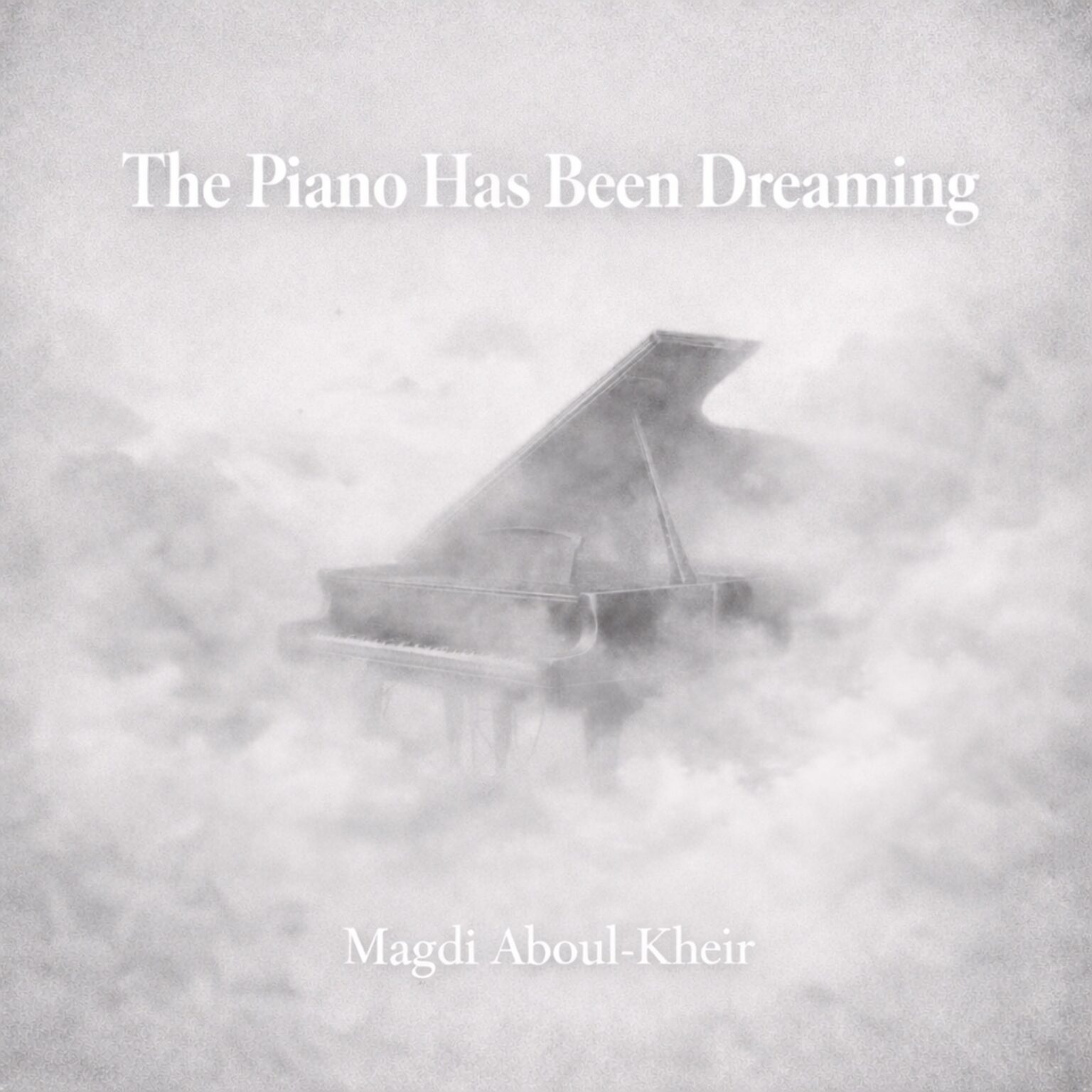
In a musical landscape often dominated by maximal production and relentless momentum, The Piano Has Been Dreaming by Magdi Aboul-Kheir offers a deliberate retreat into intimacy. This eight-piece piano album unfolds like a contemplative diary written in sound, inviting listeners to linger in emotional spaces that feel suspended between memory and imagination. Rather than seeking spectacle, the composer focuses on restraint, crafting a series of miniature soundscapes that quietly reveal their emotional depth. Clocking in at just under half an hour, the record demonstrates how brevity can still encompass a remarkably expansive inner world. Each composition feels like a moment captured in twilight, where thoughts soften, and emotions become clearer.
The album’s conceptual strength lies in its simplicity. Aboul-Kheir works primarily with felt piano and grand piano textures, allowing the natural timbre of the instrument to guide the listener through subtle emotional shifts. There are no unnecessary embellishments or dramatic flourishes; instead, the composer relies on carefully placed harmonies and melodic phrasing to convey meaning. This minimalist philosophy is evident from the opening track, “Echoes of Tenderness.” The piece establishes the album’s tone immediately, unfolding gently with delicate motifs that seem to hover in the air before dissolving into silence. It feels less like a traditional composition and more like a quiet conversation with memory, where every note carries the weight of reflection.
As the album progresses, Aboul-Kheir deepens the emotional narrative through pieces such as “Beauty, Wine and Truth” and “Letters Never Sent.” The former introduces a sense of warmth and nostalgia, with melodic lines that glide gracefully across the piano’s register. It evokes the feeling of shared moments—perhaps a quiet evening or a long-remembered conversation—captured through sound rather than words. “Letters Never Sent,” by contrast, leans into introspection. Its gentle pacing and contemplative harmonies suggest unresolved emotions or thoughts left unspoken. The track’s delicate phrasing allows listeners to project their own stories onto the music, transforming the piece into something deeply personal.
Midway through the album, “Sanctuary of Dreams” and “Gravity of the Heart” expand the emotional scope of the project. In these pieces, Aboul-Kheir explores the tension between comfort and vulnerability. “Sanctuary of Dreams” unfolds with a serene, almost meditative character, inviting the listener into a place of calm introspection. Its melodic simplicity reinforces the album’s underlying theme: that emotional clarity often emerges from quietness rather than complexity. Meanwhile, “Gravity of the Heart” introduces a slightly heavier emotional tone. The harmonic progression feels more grounded and contemplative, suggesting the weight of love, attachment, and the difficult act of letting go.
The album’s darker shades emerge most clearly in “The Shadow’s Shadow.” Here, Aboul-Kheir allows the piano’s lower registers to take the lead, creating a more introspective and slightly mysterious atmosphere. The piece reflects the album’s exploration of inner landscapes—the emotional spaces where uncertainty and reflection coexist. Yet even in these darker moments, the composer maintains a sense of calm balance. Rather than descending into despair, the music simply acknowledges the presence of shadow as a natural part of the emotional spectrum. This thoughtful handling of mood is one of the album’s most compelling qualities.
Another highlight arrives with “Last Light and Fading Thoughts,” a composition that perfectly captures the album’s twilight imagery. The piece feels like the closing chapter of a long day, when thoughts drift slowly, and memories rise gently to the surface. The pacing here is particularly effective; the pauses between phrases allow the music to breathe, emphasising the emotional resonance of each note. In many ways, this track represents the album’s central aesthetic—an embrace of quietness as a space for reflection and emotional clarity.
The final piece, “Eternal Home,” brings the album to a thoughtful and comforting conclusion. Its melodic progression feels familiar and reassuring, as if the listener has finally arrived at a place of inner peace after the journey through memory and introspection. The composition does not seek dramatic resolution, but offers a gentle sense of acceptance. The final notes linger softly, leaving behind a feeling of calm that mirrors the reflective tone established at the album’s beginning.

Part of what makes The Piano Has Been Dreaming so compelling is how it fits within the broader creative landscape of Aboul-Kheir’s work. The composer’s catalogue ranges widely in style, from ambient explorations to electronic compositions and orchestral works. Projects like Into the Retroverse and Nubes Sonorae (Ambient Cloudscapes) showcase his interest in atmospheric textures and sonic experimentation. In contrast, this piano album strips everything back to the essentials. The result is a work that highlights Aboul-Kheir’s melodic instincts and emotional sensitivity as a pianist and composer.
Ultimately, The Piano Has Been Dreaming stands as a quietly powerful testament to the expressive potential of the piano. In an era where complexity often dominates musical production, Aboul-Kheir demonstrates the beauty of restraint. His compositions invite listeners to dwell within them, to sit with the feelings they evoke and explore the memories they awaken. Through eight carefully crafted miniatures, the album creates a contemplative world that feels intimate and universal. It is the kind of record that rewards patience and attentive listening, revealing new emotional nuances with each return. For those willing to slow down and listen closely, The Piano Has Been Dreaming offers a rare and meaningful musical experience.
For more information, follow Magdi Aboul-Kheir:
FACEBOOK – SPOTIFY – SOUNDCLOUD – BANDCAMP – INSTAGRAM