
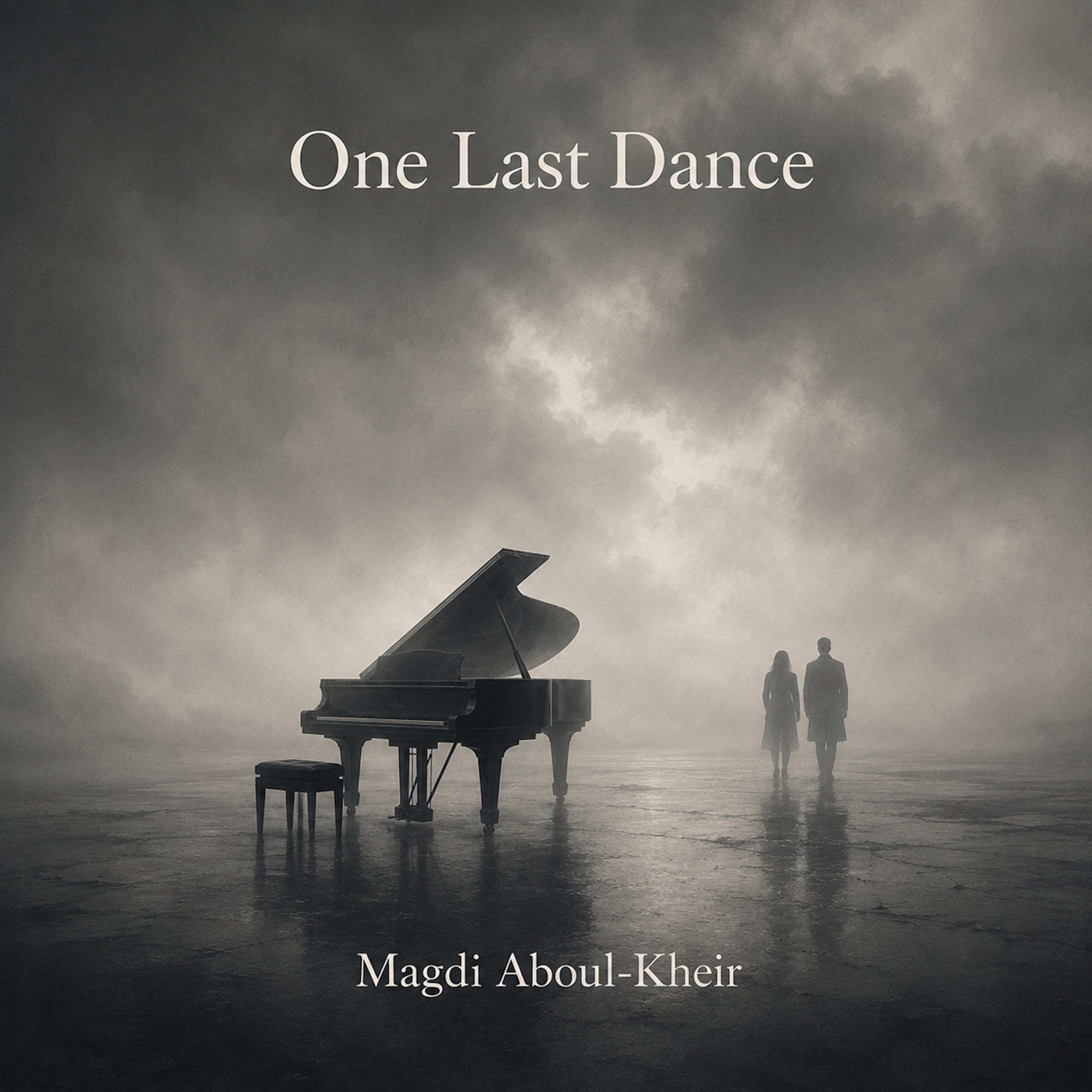
Magdi Aboul-Kheir’s One Last Dance is a fantastic example of that philosophy with remarkable elegance; instrumental piano albums are often successful by saying more with fewer notes. Rather than relying on technical spectacle or the grand flourishes of orchestration, the Germany-based composer makes a collection that thrives on emotional subtlety, melodic clarity, and thoughtful pacing. The ten compositions on the album are sequenced deliberately, unfolding as a series of linked meditations that take listeners through moments of nostalgia, hope, quiet acceptance, and low-key joy. Each work adds to a larger emotional narrative but without forcing a particular meaning, so the listener can connect with the music through their memories and emotions. That openness is one of the album’s best qualities. One Last Dance is not a performance to astound but an exchange whispered in the expressive language of the piano, a call for the listener to slow down and appreciate the beauty of life’s quieter moments.
The sonic quality of the album immediately sets a scene of warmth and intimacy. Aboul-Kheir plays the felt piano with deliberation, and the result, combined with the lush resonance of a concert grand, is a unique palette that is both fragile and wide-open. He doesn’t drown the listener in dense arrangements but instead allows each note enough room to ring out, creating a cinematic sense of space. There is a conscious use of silence in the music, which imparts weight to each melodic phrase, heightening its emotional impact. The recording is pristine but not clinical, and the natural texture of the instruments is preserved. There is remarkable clarity throughout. This restraint emphasizes the album’s pensive nature, urging attentive listening rather than passive consumption. Music meant to unfold slowly and reveal new emotional colors with each repeat listen.
The opening numbers set the emotional tone with praiseworthy confidence. The album opens with “From Depth to Depth,” with quiet resolve and deliberate phrases hinting at an internal voyage of contemplation rather than despair. The piece never rushes to resolution but lets its themes blossom naturally before giving way to “Carousel of the Mind,” a piece that reflects the unpredictable movement of memory itself. The recurring melodic ideas here seem to circle gently around each other, suggesting thoughts that are returned to again and again on familiar emotional ground but that change subtly with each return. “Veil of Frog” provides an intriguing atmospheric change with little harmonic movement, while “Calliope’s Embrace” contains one of the album’s most elegant melodic gestures, a mixture of lyricism and well-thought-out simplicity. Each piece has its personality but fits perfectly into the overall emotional architecture of the album.
The record, as it moves into its middle chapters, expands its emotional palette without losing its cohesion. “Two Sides of Tomorrow” is a study in contrasts, with balanced harmonic ideas suggesting uncertainty giving way to confidence. It explores the emotional complexity of looking into the future while still being shaped by what has happened before. Next comes “A Quiet Yes,” which is startlingly tender. The song is an affirmation not in a dramatic resolution but in gentle, melodic development. This is one of the album’s most intimate moments, a testament to Aboul-Kheir’s ability to convey profound emotional ideas with remarkable economy. “When Smiles Return” introduces brighter harmonic colors that sound deserved rather than contrived. The piece does not deny an earlier melancholy but admits it and gently guides the listener toward a new emotional clarity. The careful sequencing gives the album an organic sense of progression that is deeply satisfying from start to finish.
One Last Dance is storytelling with a melody. Melody is the heart of every Aboul-Kheir composition, and he resists the temptation to impress the listener with technical complexity for its own sake. His classical training is evident in the precision of his phrasing and the structural balance, but it never sounds academic or distant. The writing is informed by subtle influences of minimalism, chamber music, ambient composition, and cinematic scoring without losing its identity. Instead, these different musical experiences merge into a language that feels entirely personal. Each piece shows careful craftsmanship, yet remains emotionally accessible, allowing listeners from all musical backgrounds to connect with it without requiring specialist knowledge. That combination of sophistication and openness is one of the album’s lasting triumphs.
The album closes with a finale that is particularly satisfying as a conclusion to the emotional journey begun on the opening track. “Enchanted by Your Light” shimmers with a kind of understated hopefulness, its harmonies glowing but never corny. The title track, “One Last Dance,” is the emotional core of the record, tying together much of the sentiment explored in the preceding tracks. Farewell is not a bitter end but a sign of gratitude and dignified surrender. Its melodic lines are infused with both longing and contentment, creating an emotional equilibrium that lingers long after the last chord fades. The last song, “Afterthoughts,” is a perfect epilogue, leaving room for reflection rather than a dramatic closure. Its quiet beauty begs listeners to want to take the journey they just went on again, reinforcing the cyclical nature of memory and emotional growth.
This album shows a huge artistic growth from Aboul-Kheir’s previous works, especially ‘The Piano Has Been Dreaming.’ His past work has shown a remarkable talent for introspective composition, and One Last Dance broadens that emotional vocabulary with more confidence and a wider range of expression. There is an increased brightness within the harmonic language without sacrificing the contemplative qualities that define his musical voice. The pacing feels more confident, the thematic development more consistent, and the emotional shifts more seamlessly woven. Each piece has a place in the album’s larger story, making the album feel less like a collection of piano pieces and more like a singular artistic statement. It speaks to a composer who has become more and more adept at letting simplicity carry substantial emotional weight.

Ultimately, One Last Dance works because it knows the enduring power of restraint. In a time when music is often loud in its fight for attention, Magdi Aboul-Kheir instead gives his listeners the room to slow down, to think, and simply to be in the emotional spaces his compositions evoke. The album embodies vulnerability without melancholy, hope without naiveté, and nostalgia without getting stuck in the past. It creates an experience that feels deeply personal and yet universally relatable through graceful melodies, emotive performances, and painstaking sequencing. The arrangements are carefully crafted and reward patient and attentive listening; you find new emotional details each time you return to the album. One Last Dance is no ordinary modern piano album but rather a beautifully conceived reflection on memory, love, acceptance, and the quiet resilience of the human spirit, solidifying Magdi Aboul-Kheir as a composer whose greatest gift is making simplicity deeply meaningful.
For more information, follow Magdi Aboul-Kheir:
FACEBOOK – SPOTIFY – SOUNDCLOUD – BANDCAMP – INSTAGRAM