

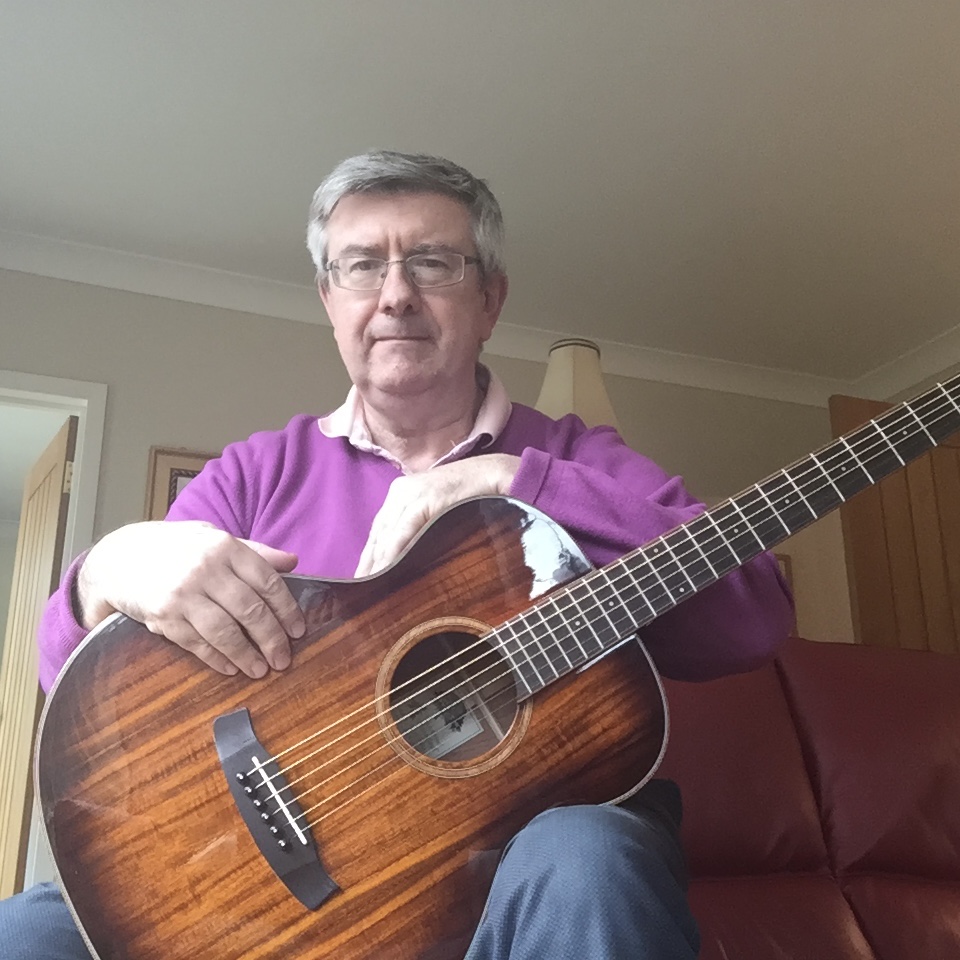
Martin Lloyd Howard’s “Highland Mist” is proof that a solo guitar can carry the cinematic weight of an entire landscape. In this new work, Howard takes a very different tack from his earlier investigation of flamenco and Elizabethan color palettes in “Hidden Andalucia,” exchanging the sunny textures of Iberia for the dark, misty wilds of the Scottish Highlands. The feeling of intimacy is unmistakable from the very first notes. Howard’s fingers flit across the strings in a light, rhythmic independence so that individual notes have room to breathe, while the underlying harmony quietly hints at something much larger outside the frame. There’s no vocal to guide the listener to a particular emotional interpretation and no elaborate arrangement trying to announce its importance. Instead, “Highland Mist” creates its world through tone, phrasing, resonance, and silence. It is like music heard standing alone on a hillside before dawn when the landscape is hardly visible and every distant shape seems to have a story. The greatest achievement of the composition might be the atmosphere of solitude. Howard creates enough sonic space for the listener to picture themselves there.
Much of the magic is Howard’s adventurous use of DADGAD tuning, a technique strongly associated with Celtic and folk guitar traditions. Instead of treating the tuning as a technical novelty, Howard uses it as the compositional foundation of “Highland Mist.” The altered relationships between the strings cause the chords to open in an unusual way, allowing some notes to ring simultaneously in ways that sound both ancient and contemporary. His fingerstyle work imparts the guitar an almost vocal character, melodic phrases answering each other as if two distant voices were talking through fog. There is a subtle syncopation in the opening that prevents the piece from being merely picturesque. There is a movement beneath the surface of the calm, a quiet pulse that moves the composition forward. When you hear the finished piece, it makes perfect sense. Howard has described finding an initial fingerstyle chord pattern while experimenting with DADGAD for another project. It sounds less like a composition put together to a strict blueprint and more like an evocative musical idea that gradually revealed its landscape. The result is mystical without excess theatricality, atmospheric without vagueness.
What makes “Highland Mist” so interesting is Howard’s approach to making technical decisions emotional. The Celtic coloring is down to the DADGAD tuning, but it’s his touch that imparts the track its personality. Each note seems considered, but the performance is never sterile or over-polished. The dynamics ebb and flow naturally, with softer passages building the feeling of distance before the guitar comes closer again. Howard’s background as a classically trained guitarist is key here. He’s spent years extending himself beyond classical guitar into blues, folk, rock, and alternate tuning systems. That wide experience provides his playing with a disciplined yet exploratory vocabulary. For “Highland Mist” he puts aside his familiar 50-year-old handmade classical nylon-string guitar for a Tanglewood steel-string acoustic. That is a major change. The steel strings provide a brighter resonance to the composition and a slightly rougher edge, both of which work beautifully for the imagined terrain. The guitar doesn’t sound like a pristine studio object. It sounds like an instrument reacting physically to the room, the player, and the music.
The recording process makes the authenticity even stronger. “Highland Mist” was recorded in Howard’s home loft using only a single Rode NT4 microphone placed approximately nine inches from the guitar’s neck/body join. In an era where music can be enrobed in layers of digital processing, many microphones, infinite editing, and perfect studio correction, there is something refreshingly direct about this approach. The recording emphasizes the physical character of the instrument. You can easily imagine the room around the guitar, the subtle changes in dynamics, the fingers moving over the strings, and the natural resonance that accompanies each chord. Howard doesn’t hide those details; he weaves them into the experience. That simplicity also keeps the composition from feeling artificially cinematic. The music itself—the cinematic quality, not production tricks. You can easily imagine the piece paired with a sweeping sequence of Highland valleys, remote roads, dark lochs, or mountains disappearing into clouds, but the imagery never feels forced. Howard sets the atmosphere and leaves the film to the listener to fill in the rest. It is a rare gift in instrumental music: the ability to suggest a story, not dictate it.
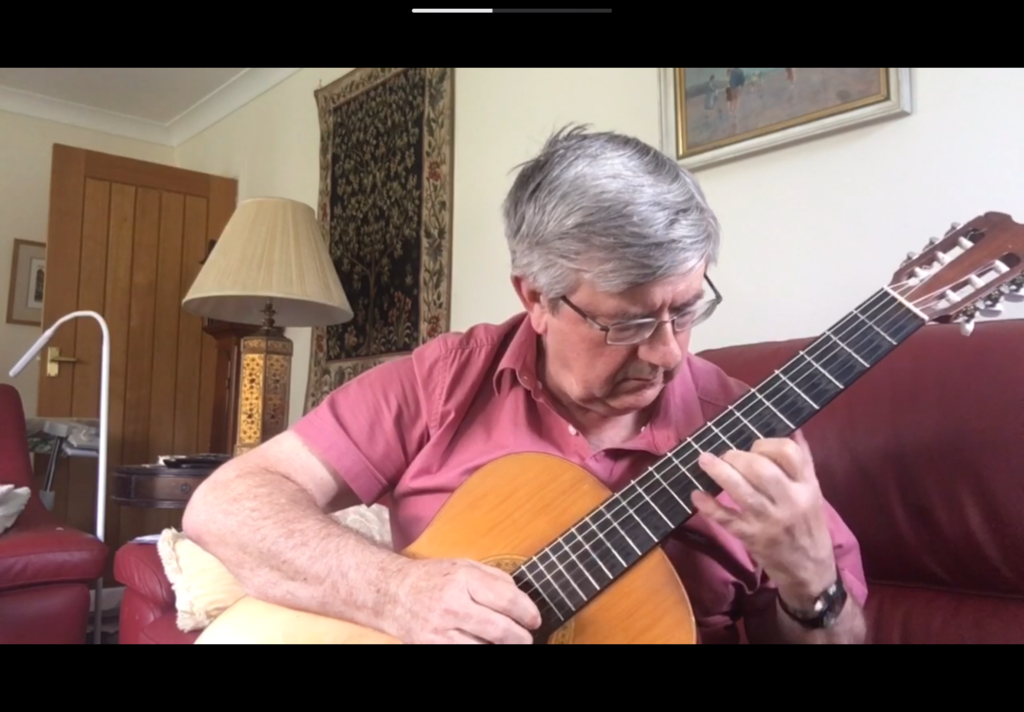
All in all, “Highland Mist” is another confirmation of Martin Lloyd-Howard’s talent for making the solo guitar feel like a doorway, not just a tool. The piece is about the mist and mystique of the Scottish Highlands, but its emotional reach is wider than geography. There is solitude here, of course, but also wonder, stillness, and the quiet exhilaration of encountering something larger than oneself. Howard’s DADGAD tuning gives the composition its Celtic soul; Howard’s fingerstyle work gives movement and narrative; the steel-string guitar adds the earthy edge; and the stripped-back recording preserves the performersense that the performance is a person sitting with an instrument and discovering a landscape thru sound. “Highland Mist” doesn’t require words; its guitar phrases speak in images. Every chord is another patch of fog, another far-off ridge, another possibility. It is music for travel, film, memory, and imagination, but above all it is music that respects the listener’s ability to make meaning. Once again Howard has shown that a guitar played with care can hold a whole world. In this world of rugged, mysterious, and beautifully alone, the mountains stand silent, the mist is moving, and every note seems to go out over the horizon with a story on its back.
For more information, follow MARTIN LLOYD HOWARD
SPOTIFY – SOUNDCLOUD – YOUTUBE