
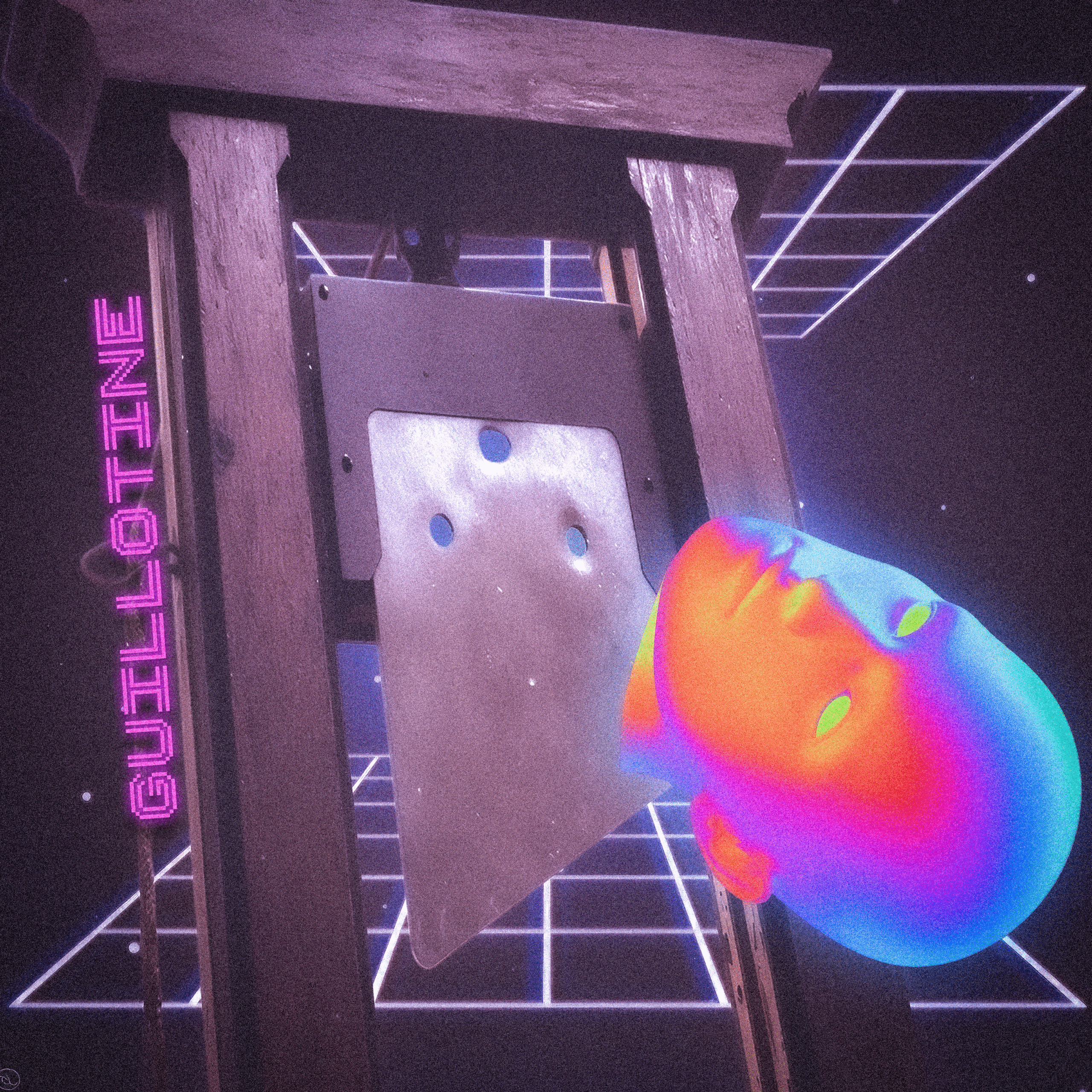
There are songs that borrow imagery from history because it looks dramatic, and then there are songs that use history as a mirror. OpCritical’s “Guillotine” belongs firmly to the latter category, arriving on August 24, 2026, as the band’s seventh single and music video of an extraordinarily busy year. The track reaches back to revolutionary France, specifically the explosive resentment that followed years of glaring inequality, political privilege, taxation, and hunger, but its real target is the present. OpCritical is interested in what happens when those with enormous wealth become increasingly detached from the people struggling below them, and “Guillotine” turns that concern into something deliberately theatrical, confrontational, and impossible to ignore. Rather than approaching its subject with the measured distance of a history lesson, the band throws the listener directly into a cinematic version of the revolution, surrounding the message with energetic rock, alternative-pop elements, orchestration, and dramatic sound design. The result is a song that feels less like a conventional protest single than the soundtrack to a historical uprising imagined through the lens of modern frustration. There is anger here, certainly, but there is also a clear sense of spectacle. From its title alone, “Guillotine” announces that OpCritical is not interested in whispering its political concerns into the background.
Musically, this theatrical ambition becomes one of the track’s greatest strengths. “Guillotine” builds its identity around the energetic force of rock while incorporating alternative-pop accessibility and orchestral textures that provide the composition an unusually expansive scale. Rather than keeping the arrangement stripped down, OpCritical seems determined to make the music feel as large as the subject matter. There is a movie-score quality running through the production, as though the listener has been transported from the safety of a modern listening environment into the crowded streets of revolutionary Paris. The sound design contributes heavily to that illusion, adding atmosphere and tension around the central rock framework. This aspect is important because the song could easily have become overwhelmed by the weight of its own message. Instead, the production provides the lyrics a dramatic vehicle, ensuring that the political commentary arrives with momentum rather than sounding like a speech set to music. The band understands the emotional power of escalation, allowing the arrangement to feel increasingly urgent as its central argument takes shape. It is a deliberately grand approach, but “Guillotine” earns that grandeur because its subject is itself concerned with enormous social forces: wealth, power, resentment, inequality, and the point at which patience finally breaks.
The historical metaphor is blunt, but that is clearly part of OpCritical’s strategy. The band is not attempting to offer a delicate reinterpretation of the French Revolution; it is drawing a straight line between the conspicuous excesses of an aristocratic ruling class and contemporary concerns about oligarchic wealth. In the accompanying video, that argument becomes visual through disembodied heads surrounded by money, jewelry, gold, and other symbols of extravagant wealth. It is an intentionally provocative image, turning luxury into something grotesque rather than aspirational. The contrast between abundance and deprivation sits at the heart of the song, with OpCritical presenting inequality as a pressure that eventually becomes impossible for ordinary people to absorb. The refrain, “Right now, grab the pitchforks, heads off, straight to the guillotine,” deliberately adopts the imagery of revolutionary violence to dramatize that breaking point. Read literally, it is extreme; understood within the song’s historical framing, it functions as a warning about what can happen when inequality and resentment are allowed to grow unchecked. That distinction matters. The most striking thing about “Guillotine” is not simply its anger toward wealthy elites, but its underlying suggestion that societies should pay attention before frustration reaches a point where confrontation becomes inevitable. OpCritical is using the past as a cautionary tale, arguing that history becomes dangerous when people remember only its spectacle and forget the conditions that produced it.
That makes the song’s contemporary relevance impossible to separate from its historical setting. OpCritical explicitly frames “Guillotine” as part of a broader response to concerns about the growing distance between oligarchs and ordinary citizens, making it the third installment in a trilogy examining excess, inequality, and concentrated power. The band’s larger project is clearly not built around one isolated political statement. Formed in 2026 in response to what its members describe as dangers facing the world, OpCritical has positioned its music as an ongoing vehicle for social criticism, with further releases planned around themes of injustice and democracy. Within that context, “Guillotine” feels like one of the more aggressively theatrical entries in the campaign. It does not ask the listener to sit comfortably on the sidelines. Instead, it wants the listener to confront the uncomfortable question of how much inequality a society can tolerate before its social contract begins to fracture. That question gives the track more substance than its provocative imagery might initially suggest. Beneath the pitchforks, torches, and guillotine symbolism is a serious concern about power becoming insulated from consequence. Whether one agrees with every aspect of OpCritical’s political framing or not, there is no denying that the band understands the value of making its audience stop and engage with an uncomfortable idea.
Ultimately, “Guillotine” works because OpCritical has matched its message with a sound capable of carrying it. The combination of rock energy, alternative-pop immediacy, orchestral drama, and cinematic production provides the single a scale that suits its revolutionary subject, while the video reinforces the argument through deliberately unsettling images of wealth and power. This is not background music, and it was never intended to be. It is a protest song dressed in the clothes of a historical epic, a contemporary warning delivered through the language of revolution. Most importantly, the track demonstrates that OpCritical understands protest music as something that should provoke an emotional response as well as communicate an idea. “Guillotine” wants listeners to feel the tension before they analyze it, to experience the claustrophobic pressure of inequality before stepping back to consider its implications. There is an undeniable theatricality to the whole production, but beneath that spectacle is a message about accountability, democracy, and the consequences of allowing enormous disparities in wealth and power to become normalized. OpCritical may be using revolutionary France to frame its argument, but the reason the song lands is that its questions belong unmistakably to the present. “Guillotine” is loud, dramatic, politically charged, and intentionally uncomfortable—and in an era when protest music can sometimes disappear beneath its clichés, OpCritical has at least succeeded in making a track that demands to be heard, debated, and remembered.
For more information, follow @OpCritical.
WEBSITE – SOUNDCLOUD – YOUTUBE