
Echoes of Paradise doesn’t really start but rather arrives, coming out of astral piano arpeggios, shimmering strings, and an ethereal atmosphere that seems to be somewhere between a dream and a distant memory. Elisabeth Grey immediately builds a world larger than the traditional boundaries of a song, an opening that feels celestial but not inhuman. Those first moments hold a quiet mystery, as if the listener has stepped into an unfamiliar landscape just before dawn. Then the composition starts to grow slowly. It starts gentle and builds to something more dramatic. The orchestral arrangement expands the emotional scope, but Grey’s delivery is still so soft. That contrast is one of the pleasures of the recording. Rather than competing with the instrumentation or overwhelming the listener with theatrical flourishes, her voice becomes the intimate center about which the larger production revolves. The result is a piece that feels both personal and widescreen. “Echoes of Paradise” is a book that invites contemplation, but it never becomes heavy or challenging to read. It’s got a definite late-night feel, the kind of music that seems made for headphones when the world outside is finally quiet enough for thoughts to rise. Grey uses atmosphere not as a decoration but as an emotional language so that piano, strings, frequencies, and space communicate along with her words. The philosophical themes have not yet fully revealed themselves, but the production has already set the appropriate environment for reflection.
There is a contemplative quality that becomes more and more powerful as the song explores its central themes: life, time, experience, growth, and the curious process of learning to live more fully as the years go by. Grey does not discuss these issues in the detached language of an academic exercise. They instead pass through lived experience, giving the song a sincerity that saves its philosophical ambitions from the trap of the abstract. Looking backward is not about being stuck in the past; there is a sense throughout “Echoes of Paradise” that. Memory can be a place of understanding, not regret. But time can take things away, yes, and it can also make perception stronger and help us see possibilities that were invisible before. That concept is the emotional heart of the recording. Grey’s music has often been linked to the idea that creativity has no shelf life, and this track seems like one of the most obvious expressions of that stance. There is a curious contradiction in the title itself. Paradise is something we tend to conceptualize as a place, a perfect condition that exists somewhere outside of normal life. An echo is something that remains after the original sound has gone. Put those thoughts together and the title starts to hint that maybe the beautiful moments of life won’t ever entirely go away. They reverberate through memory, experience, relationships, and the courage to go on. Grey makes that idea warm, not sad. There is a sadness in realizing how fleeting life is, but there is also a thrill in realizing that the passing years give us a better appreciation of the time we still have. “Echoes of Paradise” therefore sounds less like a mourning for what has been lost than a call to stay awake to what is still possible.
The musical language that surrounds that message is just as rich. There are clear shades of the darker, hypnotic atmosphere associated with Massive Attack, particularly in the way the track uses electronic textures and spacious production to provide a sense of depth. Yet cinematic ambition also evokes the atmospheric grandeur of Portishead, London Grammar, and Enigma, especially when the arrangement starts to expand beyond its intimate beginnings. Such comparisons can be useful as reference points, but Grey does not disappear behind them. Her interpretation has a personality of its own, especially in the interplay of voice and orchestra. The European Recording Orchestra helps define the character of the track, lending a level of richness that would be difficult to achieve with a purely minimal arrangement. The strings are of special importance. They don’t just follow the tune; they slowly change the scale of the emotional experience. What starts as a subtle, almost celestial background becomes something monumental, as if a tiny personal thought has suddenly been projected against a vast sky. That transition is beautifully handled, for Grey does not respond by making her vocal performance equally oversized. The instrumentation swirls around her, but she is poised, intimate, and accessible. Such restraint creates a fascinating cinematic illusion. It’s as if the listener is watching this emotional universe grow and the person in the middle is quietly contemplative. Orchestral and electronic elements provide movement and atmosphere, while the piano is the melodic anchor. There’s enough rhythmic and textural complexity to keep the piece engaging, but never so much that its emotional core is buried. It’s sleek background music, but beneath that veneer there’s a much grander sense of aspiration.
Maybe one of the most touching aspects of “Echoes of Paradise” is the way Grey’s personal journey alters the meaning of the music. It makes the song’s philosophy all the more palpable to know she spent a good deal of her life buried in work, family, and responsibility before choosing to go for music. The message of continuing to dream is therefore not just a meaningful idea put into a lyric but an artistic life that has been set up around the choice to start chasing creativity rather than resigning to the fact that some ambitions only belong in a previous chapter. That perspective lends the song a refreshing generational openness. Grey is not trying to act young or create a false sense of urgency. She is showing something more profound: that enthusiasm can outlast experience, and curiosity can grow richer, not duller, with age. Her willingness to work with artists of different generations adds to that sense of connection. Music is a place where experience and discovery can come together. That’s one reason “Echoes of Paradise” feels so emotionally accessible. This is not just a message for musicians or artists. Here you will find a place to enter for anyone who has put off a dream, taken a turn, spent years looking after others, or asked themselves if there is still time to chase something worthwhile. Grey allows the warmth of the tune and the openness of the arrangement to create the emotional circumstances in which it can be heard. The song seems to suggest that life does not end just because one chapter has closed. There can be another ambition, another creative impulse, another adventure, and another reason to become curious again. In that way, the song is a subtle act of rebellion against the idea that possibility has an age limit.
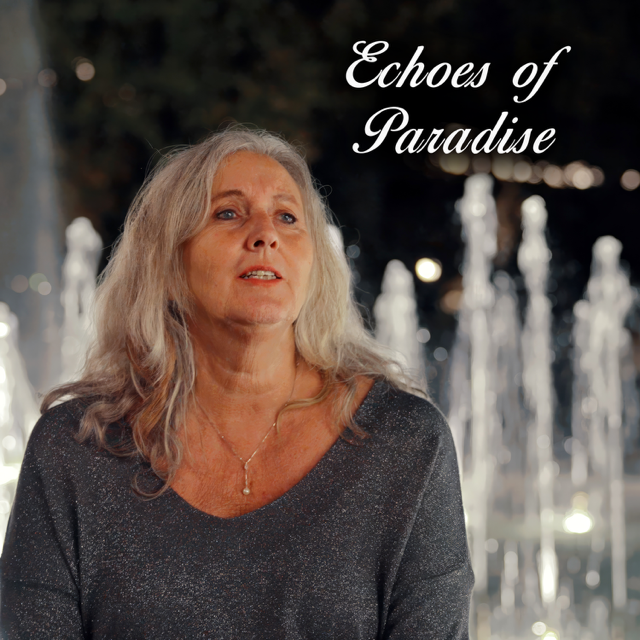
Ultimately, “Echoes of Paradise” is compelling because Elisabeth Grey has a way of making a philosophical song feel deeply human. Its orchestration may be grand, its electronics may be darkly hypnotic, and its strings may finally ascend to the truly epic, but the emotional core is astonishingly simple: life is passing, experience alters us, but there is beauty still in choosing to fully participate in the time we have. The message imparts the recording its eternal warmth. On an atmospheric level, the song makes for a remarkably immersive listen, with the piano arpeggios and orchestral textures painting a complete escape, but it gains even more meaning when one contemplates the perspective behind the performance. Grey is not just seeing life through the lens of what has been lost. She is interested in what experience allows. There’s that understanding in her voice with a natural ease that makes the track intimate even when the arrangement becomes enormous. By the time the strings hit their most dramatic highs, “Echoes of Paradise” has shifted from being a delicate reflection to something like an emotional horizon—vast, mysterious, and quietly hopeful. It’s a song about memory, but not about being stuck in nostalgia. About time, but not about giving in to regret. It’s about aging, but not letting age limit imagination. This is a richly rewarding experience for connoisseurs of cinematic trip-hop textures, orchestral easy listening, intelligent songwriting, and music that has room for the listener to think. In the end, Elisabeth Grey offers you more than simple escapism. She provides perspective, a reminder that dreams can wait, creativity can find its way back, and wonder can survive every season of life. What makes “Echoes of Paradise” most powerful is not its demands for attention, but its gentle suggestion that maybe paradise isn’t a place we finally get to. Perhaps in those moments we are open enough to keep discovering what life still has to offer.
For more information, follow ELISABETH GREY
WEBSITE – FACEBOOK – SPOTIFY – YOUTUBE – INSTAGRAM