
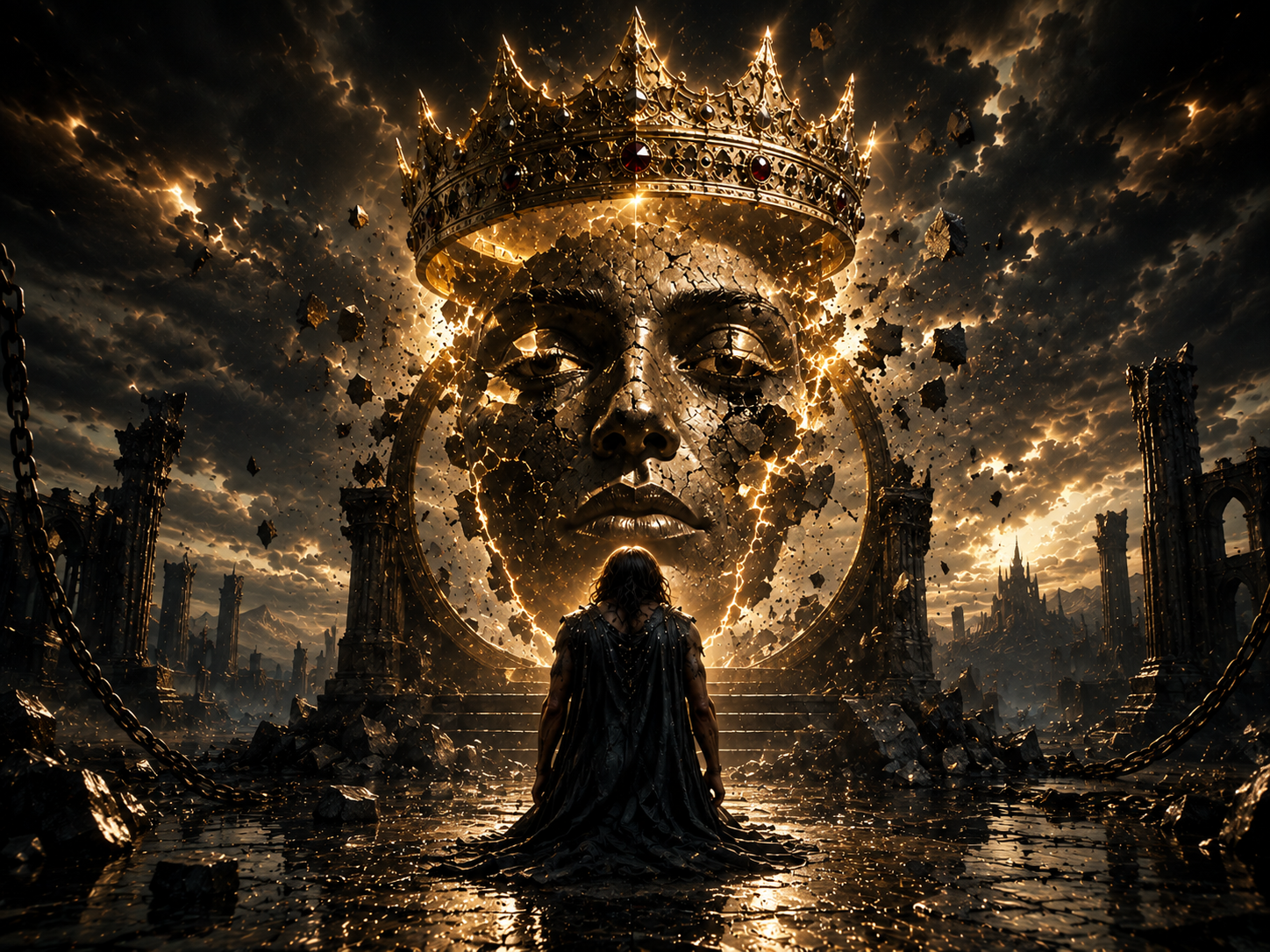
“The Crown” doesn’t so much begin as blow up. From the very first seconds, The Lazz unleashes a furious, high-octane guitar soundscape that immediately conjures a world of scale, tension, and barely contained power. The guitars come in with that kind of weight that comes with melodic metal, but the track quickly shows that there is much more going on under its imposing exterior. Layered female ad-libs add another dimension before the arrangement opens up into a striking male-and-female vocal interplay, turning what could have been a straightforward metal assault into something decidedly more theatrical and psychologically charged. The result is cinematic, in the truest sense: vast on the surface, but powered by an internal struggle that gives all that sonic muscle a purpose. There are instances where the track sounds like it could soundtrack a futuristic battlefield, but the real confrontation seems to be happening inside the protagonist’s head. It’s easy to see why a release like this could draw the scale of films like Blade Runner 2049 or Dune. The guitars have that widescreen quality, with syncopated riffs providing a muscular rhythmic foundation, drawing from groove metal, metalcore, djent, thrash, and power metal. The Lazz does not let those influences fight for airtime but folds them into a coherent vocabulary. The heavy riffs provide the physicality, the melodic elements provide emotional levity, and the vocal arrangement gives the song a human element. So, “The Crown” makes its first impression through sheer intensity, but its lasting appeal is that the intensity is carrying an idea.
This idea is considerably more complicated than the title gives away. Traditionally a crown is a symbol of accomplishment, power, or dominion. Or, the coming of someone who finally has earned the right to rule. But in “The Crown,” that symbol is deliberately destabilized. It can be a symbol of inner strength and self-knowledge hard-won, but it can also become the object through which the ego begins to congratulate itself. Now that’s where it gets really interesting. We often think of transformation as the final stage of a struggle: you face your weaknesses, gain insight into yourself, break old patterns, and come out the other side stronger. But then what happens? What happens when the one who has found their strength starts to construct an identity around being “the transformed one”? But what if self-awareness is just another act? The uncomfortable possibility is the song’s main psychological tension, according to The Lazz. The crown may be a symbol of dominion over oneself, but it can also be just another mask. It is a smart extension of the project’s Jungian concerns, specifically its interest in the relationship between shadow, persona, and the ego. Integration is the only real growth. The ego is very good at taking even real growth and converting it to another form of superiority or self-protection. “The Crown” understands that enlightenment can become a trap in itself if you become too attached to the image of having achieved it. That gives the song an intellectual edge not often found in metal. It’s not just aggression for aggression’s sake. There’s weight to it. The pounding riffs become an audible representation of an inner struggle: the desire to become stronger colliding with the danger of becoming intoxicated by that strength.
That psychological tension is supported musically by the architecture of the arrangement. The guitars are the obvious powerhouse, but it’s not just volume or technical complexity that makes them so important. The syncopated riffing gives the track a feeling of instability and forward momentum, while the groove-metal and djent elements create a rhythmic pulse that feels almost mechanical at times. Thrash adds resolve, but power-metal and melodic-metal influences prevent the composition from being a purely percussive exercise. There’s melody to the heaviness, and that balance is key to the cinematic nature of the track. The vocal design also adds another dimension of contrast. The male and female voices are not just different timbres, but they help to create the sense of opposing forces sharing the same psychological landscape. The guitars are given an atmospheric, almost spectral quality by the layered female ad-libs, balanced out by the more grounded male vocals. With them, the song feels bigger than just one perspective. It is as if the track is making different parts of the self argue with each other. That makes the eventual intensity more meaningful because the listener can sense an emotional conversation taking place beneath the metal framework. The arrangement is dense, but not without purpose. The major pieces all contribute to that sense of something being challenged, fought, or changed. Even when guitars are the main thing, there’s an awareness of space and contrast. That’s part of the appeal of The Lazz, though: the heaviness is dramatic in its structure, not just in its volume.
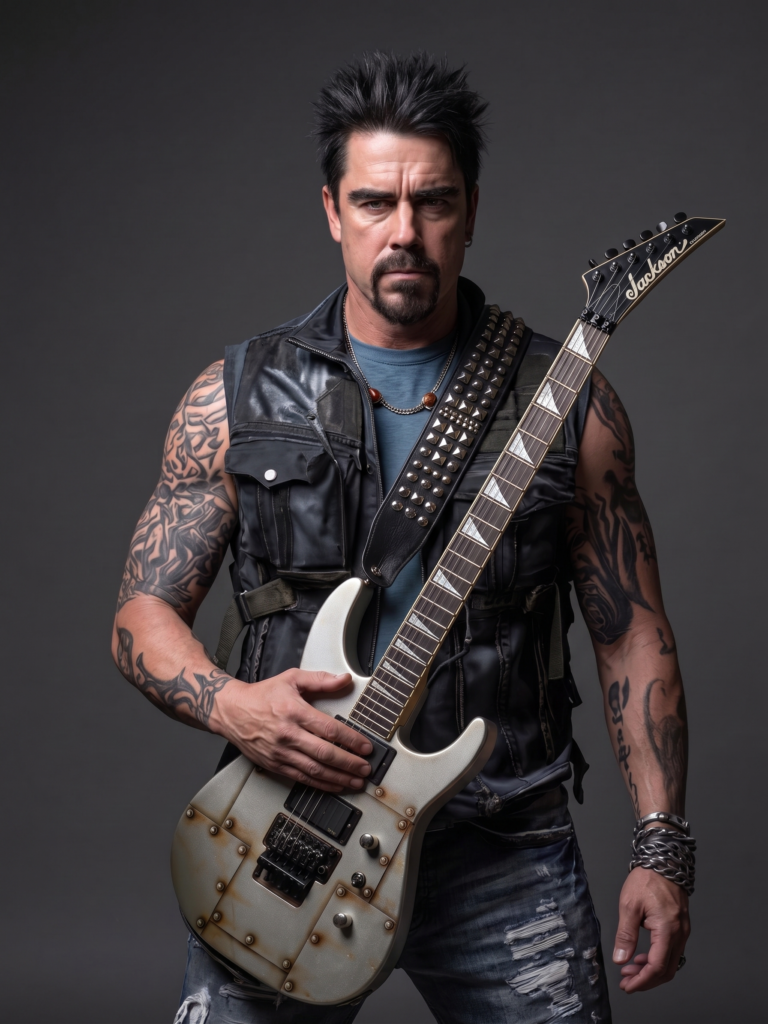
The track also becomes more interesting when seen in the wider creative background of Ben “The Lazz” Lazzaro. The Lazz, which Lazzaro sees as something beyond a conventional band project, is bolstered by over 40 years of musical experience as a composer and guitarist. His background in 3D digital art and video game production naturally feeds the visual and conceptual aspirations of the project, and “The Crown” feels like music designed with a whole fictional universe in mind. But high-concept projects have a danger: the concept becomes so important that the song itself sometimes gets buried under the mythology. “The Crown” sidesteps that issue because it works well even when taken out of the larger narrative context. The power of the guitars, the drama of the vocal interplay, and the emotional tension that runs through the arrangement—these can be felt even by one who knows nothing of Act IV, the ongoing saga, or the psychological context. Just knowing the story adds a layer.” Lazzaro’s so-called “Hybrid-Human” approach is also interesting because the generative technology that goes into the vocals, drums, effects, and sonic production doesn’t become a gimmick. It is an additional tool in his creative process. Lazzaro is the author of the writing, composition, arrangement, mastering, and original guitar and bass performances. That’s the difference. The technology is not presented as a replacement for artistic vision but rather as one ingredient in a much larger human-directed scheme. On “The Crown,” the result is music that can sound futuristic without losing the physical immediacy that makes heavy metal so compelling. It walks a cool line between organic performance, digital experimentation, cinematic world-building, and classic metal craftsmanship.
“The Crown” ultimately works because it understands that the most dangerous enemy after transformation may not be the darkness you have left behind, but the new identity forged from having left it behind. That is a good idea, and The Lazz provides an appropriately menacing soundtrack. The song is fierce without being empty, conceptual without being inaccessible, and cinematic without sacrificing the visceral pleasures of heavy music. The blend of groove metal, melodic metalcore, djent, thrash, and power-metal influences creates a sound that can fill huge imaginary spaces, while the subject matter continues to pull everything inward to the individual psyche. The crown is both a prize and a warning, a symbol of strength, and a questioning of whether strength has become yet another form of ego. The track’s edge comes from that contradiction. By the later stages of the arrangement, the listener feels the real battle was never just about defeating weakness; it was about recognizing what the ego might do with the victory afterward. The accompanying cinematic music video extends that idea into the larger narrative world of The Lazz, connecting previous releases and future chapters, while allowing “The Crown” to stand confidently on its own. This may be the track’s greatest accomplishment. It’s got enough sonic punch to satisfy those who come for crushing riffs and dramatic vocals, while also giving more conceptually inclined listeners something weighty to dig through beneath the distortion. The Lazz have created a metal song that poses an uncomfortable question without pretending to offer an easy answer: when you finally win the crown, do you wear it as a symbol of inner sovereignty, or does it become another mask for the ego? In a genre that thrives on intensity, that question puts a conscience into the noise.
For more information, follow THE LAZZ
WEBSITE – FACEBOOK – SPOTIFY – YOUTUBE – SOUNDCLOUD