
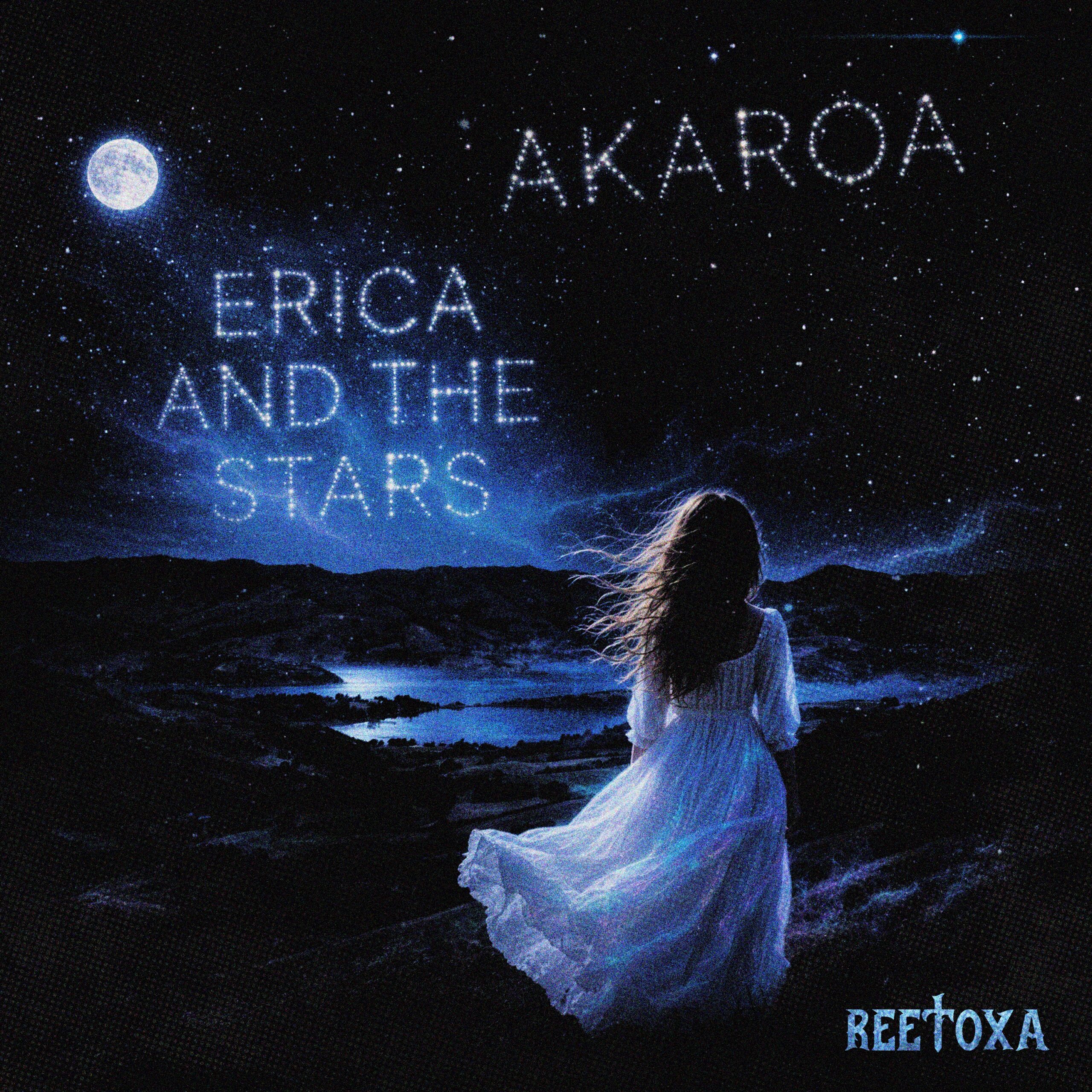
Reetoxa’s Double A Side 2 (Akaroa / Erica And The Stars) is the kind of release that becomes more intriguing the longer you spend with it. Rather than presenting two songs that simply happen to share the same release, the EP brings together two very different musical experiences connected by something much deeper: the act of turning intensely personal moments into art that can survive beyond those moments. “Akaroa” and “Erica And The Stars” approach that process from opposite directions. The former is intimate, mysterious, and dreamlike, while the latter expands into an orchestral landscape filled with cinematic scale and emotional sweep. Yet neither song feels disconnected from the person who created it. Jason Mckee’s songwriting, rooted in lived experience, gives both tracks a sense of history that production alone cannot manufacture. “Akaroa” originated from an intense dream and remained unfinished for years before finding its way back to Mckee during a visit to the New Zealand town of the same name. There is something almost uncanny about that journey. A song that had existed as a fragment of memory suddenly encountered the physical place that shared its name, allowing the unfinished idea to become complete. “Erica And The Stars,” meanwhile, emerged from a far more difficult period, when songwriting became a means of holding onto creativity while life itself felt overwhelming. These different origins give the EP an emotional architecture that is especially rewarding to appreciate. One song feels like a distant dream; the other, an escape route from darkness. Together, they demonstrate Reetoxa’s ability to find musical meaning in experiences that might otherwise remain difficult to articulate.
“Akaroa” immediately establishes its atmosphere through a soothing electric guitar riff that seems to arrive without urgency, inviting the listener into its world rather than demanding attention through sheer volume. There is an appealing calmness in that entrance, but it is not emptiness; beneath the gentle surface lies a steady rock foundation supplied by drums and bass. The groove remains straight and controlled, giving the song enough structure to keep its dreamlike qualities from becoming vague or directionless. That balance is one of the track’s most effective characteristics. Reetoxa allows the music to breathe while maintaining a clear pulse, creating the impression of movement through a landscape whose details are constantly shifting. The production also handles the rises and falls with considerable care. Rather than throwing every element forward at once, the arrangement understands the importance of space, letting individual sounds occupy their own emotional territory. That makes the guitar especially significant. It is not simply functioning as rhythmic support; it becomes one of the song’s principal storytellers. As “Akaroa” develops, the instrument seems to carry some of the mystery that surrounds the song’s origin, and when the guitar solo arrives toward the end, it feels less like a conventional rock flourish than a release of everything that has been quietly gathering underneath. The solo floats above the established groove, giving the closing section an almost weightless quality. It is one of those moments where technique serves atmosphere rather than interrupting it. The result is a track that can be appreciated as a rock song while still retaining an elusive emotional character, perfectly suited to a piece born from a dream and completed years later in the very place that helped inspire it.
The story behind “Akaroa” makes that musical atmosphere even more compelling because the song seems to exist somewhere between memory and physical reality. Dreams rarely obey the rules of ordinary storytelling. They can leave behind fragments—a place, a face, a sensation, a sound—that remain vivid even after the details disappear. Mckee’s decision to return to this unfinished composition years later lends the track the feeling of an old message finally being deciphered. The New Zealand setting adds another layer, transforming what might have remained an abstract title into a real geographical destination. That connection between inner landscape and outer landscape is reflected in the music. The song never feels desperate to explain itself, and that restraint works in its favor. Instead of forcing every emotional detail into the foreground, Reetoxa allows listeners to experience the atmosphere and construct their relationship with it. The soothing guitar, steady rhythm section, controlled sonic movement, and expansive solo create a space where mystery can remain mystery. The concept carries an undercurrent of grief and spirituality, but it does not present those qualities as rigid declarations. They hover around the song, much as memories hover around a person long after the original event has passed. That makes “Akaroa” especially effective as an opening statement for the EP. It is personal without being closed-off and reflective without becoming static. The song demonstrates that a composition does not always need a straightforward narrative to communicate something meaningful. Sometimes the emotional truth lies in the feeling of recognition itself—the strange sensation of encountering something you thought was lost and realizing it has been waiting for you.
If “Akaroa” looks inward, “Erica And The Stars” opens the doors and lets the sky pour in. The second track immediately broadens Reetoxa’s sonic palette through its combination of pop-rock elements and orchestral writing, with the Budapest Orchestra providing a magnificent layer of depth. The strings provide the song a sense of scale that would be difficult to achieve through a conventional rock arrangement alone. They do not simply decorate the composition; they help define its emotional world, giving the track a sweeping, spacey quality that makes the title feel completely appropriate. There is something cinematic about the way the orchestra interacts with the rock foundation, as though the song is constantly moving between a personal interior experience and a much larger imagined landscape. That quality becomes especially meaningful when considering the circumstances in which McKee wrote it. During an extremely difficult period, the act of imagining this orchestral music became a way of maintaining a creative connection with himself. Hearing the Budapest Orchestra ultimately bring that imagined arrangement into physical reality provides the recording with the recording an additional emotional dimension. The music sounds like an idea that refused to disappear. Jessica McPherson-Riley’s backing vocals add another layer of human warmth to the production, complementing rather than overwhelming McKee’s lead. The resulting sound is expansive but still emotionally grounded. The strings can rise dramatically, yet there remains a pop-rock accessibility beneath the orchestral ambition. This is where Reetoxa demonstrates that cinematic music does not necessarily have to sacrifice immediacy. “Erica And The Stars” can feel enormous while retaining the directness of a song written from a deeply personal place.
The strength of the track also comes from the remarkable group of musicians who helped realize Mckee’s vision. Terry Hart’s piano provides an important melodic and harmonic foundation, while James Ryan of Men At Work contributes guitar, Kit Riley supplies bass, and Peter Martin of Jet handles drums. Their combined experience provides the arrangement a confident instrumental backbone, allowing the orchestra to expand the composition without causing the rhythm section to disappear beneath it. Jessica McPherson-Riley’s backing vocals further enhance the sense of scale, adding another voice to a song already reaching toward something larger than itself. Mckee’s role is equally significant because he remains at the center as vocalist, songwriter, and arranger, meaning the elaborate production never loses its connection to the original creative impulse. That is particularly important for a song whose orchestral dimension existed first in the songwriter’s imagination. There is a satisfying sense of completion in hearing an once internal arrangement become something tangible and shared. In that sense, “Erica And The Stars” is a testament to the persistence of creative ideas. The finished recording provides physical form to something that could easily have remained an unrealized vision. The cinematic quality therefore feels earned. It is not simply there to make the track sound grander. It reflects the scale of what McKee imagined while writing and the determination required to bring that vision into the studio. The orchestra, piano, guitars, bass, drums, and layered vocals all become pieces of the same larger picture, creating an arrangement that feels simultaneously grounded and celestial.
The inclusion of karaoke versions of both songs may initially seem like a straightforward bonus, but they add an interesting dimension to Double A Side 2. By removing the finished vocal performances, these versions provide listeners a clearer opportunity to appreciate the architecture underneath the songs. In “Akaroa,” that means hearing the relationship between the steady rhythm section, the guitar work, and the carefully controlled shifts in intensity with fewer distractions. The guitar solo and underlying arrangement can be examined more closely, revealing how much of the track’s identity comes from the instrumental construction itself. With “Erica And The Stars,” the karaoke version provides an especially revealing perspective because the production is so dependent on the interaction between rock instrumentation and orchestral textures. The listener can focus on the strings, piano, rhythm section, guitar, and arrangement and hear how those components create the cinematic environment before the lead vocal enters. In that sense, the karaoke versions function almost like architectural drawings of the finished songs. They show the framework supporting the emotional narrative. They also underline that these compositions do not rely solely on vocal melodies; the instrumental writing receives serious attention throughout. For listeners interested in songwriting, arrangement, or musicianship, that added perspective is valuable. More broadly, it reinforces the impression that Reetoxa approaches music as a complete creative process rather than simply a vehicle for delivering lyrics. The songs can work as finished performances, but their underlying structures are strong enough to remain engaging when the primary vocal layer is removed.

What ultimately makes Double A Side 2 (Akaroa / Erica And The Stars) so effective is how these two songs complement each other while sounding nothing alike. “Akaroa” finds beauty in intimacy, mystery, memory, and the understated power of a rock arrangement that knows when to hold back. “Erica And The Stars” takes that personal impulse and launches it into a much wider sonic universe, using the Budapest Orchestra and an accomplished ensemble of musicians to give an imagined arrangement monumental life. One song feels like rediscovering a forgotten dream; the other feels like building a constellation from the pieces left behind by a difficult experience. Both, however, are ultimately about persistence. Following Reetoxa’s earlier album, Soliloquy, this release continues Jason Mckee’s habit of turning real experiences into music without sanding away their complexity. There is no need for either track to offer a neat explanation of everything that inspired it. Their emotional authenticity is enough. The songs feel lived-in because they emerged from circumstances that mattered, and that history remains audible even when the music becomes polished and expansive. “Akaroa” leaves the listener with the sensation of standing somewhere between a dream and a real place, while “Erica And The Stars” reaches beyond the immediate world and turns struggle into something vast and luminous. Together, they make Double A Side 2 feel less like a conventional two-track release and more like a small but carefully drawn emotional landscape. Reetoxa proves that difficult experiences do not have to remain defined by the pain that produced them. Occasionally they can become guitar riffs, orchestral swells, melodies, memories, and moments of beauty that continue traveling long after the original chapter has closed. That is the lasting appeal of this EP: it demonstrates how remarkably beautiful the music can become when an artist keeps creating anyway.
For more information, follow REETOXA
WEBSITE – FACEBOOK – TWITTER – SPOTIFY – YOUTUBE