
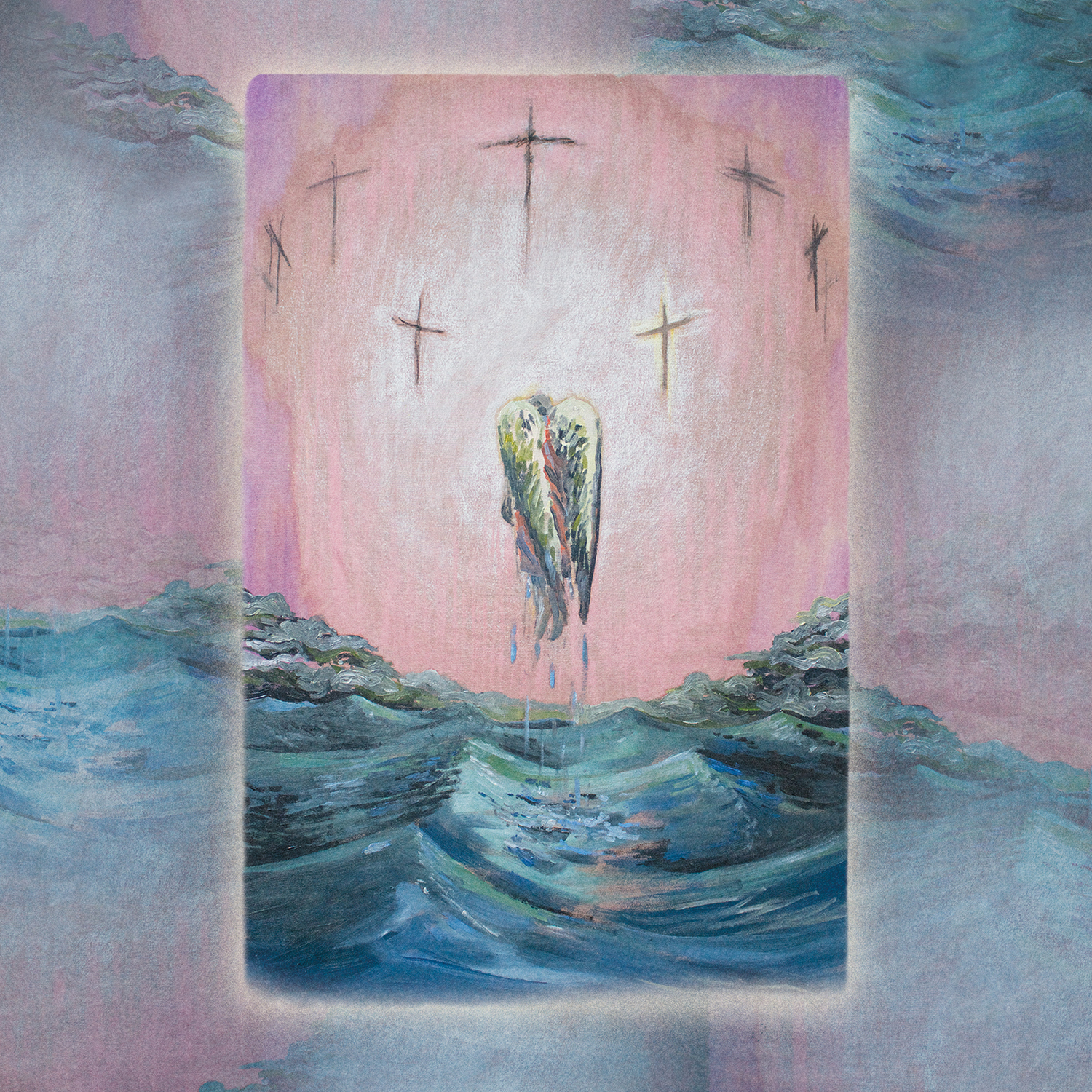
Alexander Nantschev’s Half A Century arrives as the concluding chapter of a trilogy, but it refuses to behave like a conventional finale. Rather than tying every loose thread together, the album seems more interested in showing how many threads can remain tangled inside one person after fifty years of living, listening, performing, loving, leaving, returning, and creating. That distinction is crucial to understanding the record. Nantschev does not approach half a century as a milestone demanding a grand declaration about what life means at fifty. Instead, he presents an album that feels like a room where different versions of himself finally occupy the same space. Classical music, violin, progressive rock, psychedelia, electronics, songwriting, improvisation, theater, dance, and studio experimentation all appear as parts of the same creative vocabulary. The album follows Selves and Your Star Smells Like Mine, completing a trilogy that apparently revealed itself through the process of making rather than through an elaborate master plan. That sense of discovery is audible throughout Half A Century. It does not feel engineered around a predetermined concept so much as assembled from decades of experiences that gradually discovered they belonged together. The result is an ambitious, eccentric, deeply personal record that treats time not as a straight line but as a strange landscape where earlier selves, old sounds, recent ideas, memories, absurdities, and unfinished questions can all meet. Fifty years may sound enormous when written down, but Nantschev makes the number feel surprisingly fluid. His music suggests that a lifetime is not necessarily a story with a clean beginning, middle, and ending. It is a collection of rooms, some familiar, some forgotten, and some that only become visible when the door finally opens.
One of the album’s most compelling qualities is its refusal to tidy Nantschev’s influences into a convenient genre. Distorted guitars can exist beside violin and synthesizers, while unusual rhythmic structures and spontaneous passages interrupt sections that might otherwise sound carefully composed. There is a persistent tug between discipline and abandon, precision and instinct, and written music and the unpredictable energy of improvisation. That tension is not a weakness; it is the musical personality of Half A Century. Nantschev’s classical background gives him an acute awareness of structure, phrasing, texture, and instrumental detail, but he does not allow that training to become a set of walls around the music. Instead, the psychedelic and progressive dimensions of the album continually pull the compositions somewhere less predictable. A violin can become something abrasive, atmospheric, or almost unrecognizable. Electronics can expand the acoustic world rather than simply decorating it. Guitars can bring muscularity without forcing the record into straightforward rock conventions. The arrangements appear comfortable with contradiction, and that is especially appropriate for an album concerned with accumulated experience. After five decades, influence rarely arrives in neat categories. Childhood listening does not politely disappear when adulthood begins; old musical obsessions can suddenly resurface inside a new composition, while something heard yesterday can unexpectedly transform something learned decades ago. Nantschev embraces that reality. Rather than asking his influences to behave, he lets them collide, converse, interrupt one another, and occasionally make a little noise. There is a sense of creative mischief in that approach, but also considerable seriousness. The album understands that experimentation has value precisely because it can disrupt the expectations created by familiarity.
The violin provides one of the album’s most important connective threads. Nantschev’s long relationship with classical repertoire remains embedded in the way he handles sound. There is an instrumental confidence here that comes from years of demanding musical practice, but Half A Century is careful not to turn that expertise into empty virtuosity. The violin can be expressive, strange, beautiful, or abrasive depending on what the composition requires. It occupies a world alongside synthesizers, guitars, theremin, strings, glockenspiel, programming, Hammond organ, and the unusual color of kaval, creating a palette that can shift dramatically from one moment to another. That breadth becomes particularly compelling because Nantschev is also the songwriter and vocalist at the center of the project. The personal voice and the highly trained instrumentalist do not compete for authority. They coexist. That coexistence reflects one of the album’s deeper ideas: the different parts of a creative life do not necessarily need to be reconciled before they can become useful. His classical identity does not have to surrender to his rock or electronic interests, nor does the songwriter have to imitate the classical musician. Instead, the album allows each side to remain visible. The result can feel dense, but it rarely feels anonymous. Even when the arrangements become adventurous, there is an unmistakable sense that these sounds belong to someone who has spent decades moving between musical environments. The credited ensemble reinforces that richness, with multiple vocalists, drummers, bassists, guitarists, and additional instrumental contributors expanding the album beyond the boundaries of a solitary studio statement. Yet Nantschev’s presence remains the organizing force, holding together a record whose many personalities might otherwise wander completely apart.
If there is an emotional center to Half A Century, it comes from the album’s treatment of the self as something plural rather than fixed. That idea connects naturally with Selves, but here it feels less like a philosophical theory and more like an observation drawn from experience. People often talk about growing older as though one continuous individual simply moves through time, becoming wiser, calmer, or more complete. Nantschev’s perspective is considerably messier and, consequently, more compelling. Earlier versions of a person do not necessarily disappear. They remain embedded in memories, habits, songs, relationships, embarrassing moments, ambitions, fears, and discoveries. Some earlier selves may have been less mature, but they may also have possessed qualities that later life gradually buried. Others may have known something that the present self has forgotten. Music becomes a particularly powerful place for those versions to reappear because recording allows moments that should have vanished to remain audible. A melody written years ago can suddenly discover a new context. A phrase associated with one relationship can acquire an entirely different meaning decades later. A sound created in one emotional state can be heard in another and become something new. That is why the album’s relationship with chronology feels deliberately loose. Older and newer ideas coexist without requiring the listener to identify precisely when each one began. Once they enter the same recording, they become part of the present. There is something deeply moving about that process because it suggests that time does not simply take things away. Occasionally it changes their meaning. Half A Century is fascinated by that transformation, and its songs feel less like museum pieces retrieved from the past than living objects that have continued to evolve.
The album’s cosmic imagery adds another dimension to this fascination with time and existence. Nantschev invokes ideas that range from Stravinsky traveling through space aboard Voyager to Nietzsche sending a small ship toward an endless ocean, while other moments retreat from cosmic scale into something as simple as two people lying in the grass and listening to each other breathe. Those contrasts are essential to the album’s charm. Half a century can contemplate the enormous while remaining fascinated by the ridiculous and the ordinary. A universe without an apparent edge can sit beside an intimate human moment without either one canceling the other. The psychedelic elements make that philosophical restlessness feel natural, while the songwriting repeatedly returns the record to human scale. Even the album’s stranger images and characters contribute to this atmosphere. There are psychedelic flowers, Balkan ghosts, spring air, broken promises, renewed perception, old identities, and the mysterious Bitchwall, whose exact function seems intentionally better left unexplained. Such details prevent the record from becoming solemn simply because it is dealing with fifty years of life. Nantschev understands that seriousness and nonsense can occupy the same emotional territory. A profound thought does not become less meaningful because something absurd follows it. In fact, the absurdity may make the serious moment feel more truthful because real life rarely arranges itself according to the rules of a perfectly coherent narrative. Memory jumps. Conversations become jokes. Tragedy appears beside comedy. A beautiful afternoon can coexist with an old wound. Half A Century captures that unevenness rather than correcting it, and the result is an album that feels alive rather than ceremonially retrospective.
That willingness to move between extremes is particularly evident in the relationship between composition and improvisation. Nantschev clearly understands the value of carefully constructed musical architecture, yet he also leaves room for accidents, unexpected textures, unusual rhythmic shifts, and moments that seem to emerge through instinct rather than calculation. This makes the record feel exploratory even when its individual components are technically sophisticated. The presence of drums from musicians including Chuck Sabo, Matt Johnson, Michael Lind, and Alex Dostal, alongside multiple bassists and guitarists, gives the music an expansive rhythmic and instrumental vocabulary. Additional colors from Hammond organ, kaval, theremin, glockenspiel, strings, synthesizers, and programming widen the possibilities even further. Such a large palette inevitably creates a risk: an album containing so many musical languages can occasionally feel more interested in possibility than immediacy. The listener has to move through changing textures and approaches, and not every transition will necessarily land with the same directness. Yet that tension is part of the record’s purpose. Nantschev is not attempting to demonstrate that classical music, rock, electronics, improvisation, and songwriting can theoretically coexist. He is documenting the fact that, within his own musical life, they already do. The album therefore becomes a portrait of accumulated experience rather than an argument for stylistic fusion. Its breadth is not presented as a novelty. It is simply the vocabulary available to the artist after decades spent refusing to remain in one room. Yoad Nevo’s mixing and Joe LaPorta’s mastering at Sterling Sound provide the finished work with professional definition, helping the many layers retain clarity even when the compositions become densely populated. That technical finish gives the experimentation space to breathe without sanding away its eccentricity.
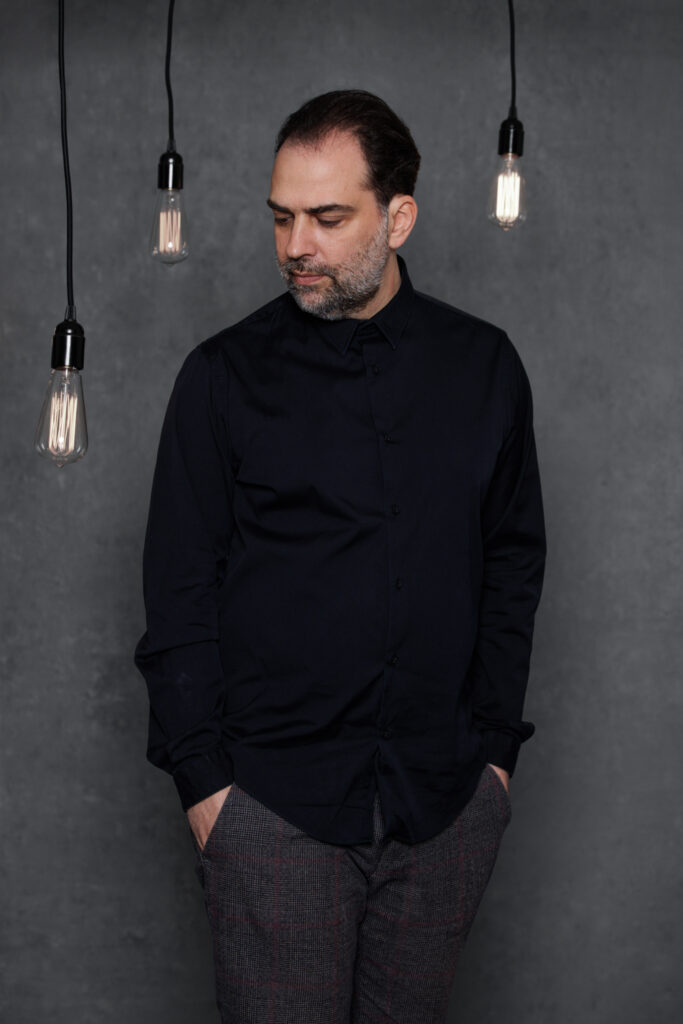
The songwriting keeps Half A Century from becoming merely an exhibition of musical range. Beneath the unusual arrangements and conceptual imagery are songs concerned with memory, relationships, perception, mortality, absurdity, beauty, and the strange persistence of human connection. Nantschev’s voice is especially important because it provides an emotional center amid all the sonic movement. The additional vocalists—Elisa Zoot, Cataleya Fay, Kerstin Pohle, Michaela Kezele, Mariela Spacek, and David Bramwell—expand that human dimension, allowing the album to shift between intimacy and theatricality. Their presence contributes to the feeling that the album is not simply one person looking backward but an entire constellation of voices surrounding a life in progress. That distinction matters because the album does not sound defeated by the passage of time. There is reflection here, certainly, but also curiosity. The conclusion of a trilogy becomes an opening rather than a tombstone. Even the title, Half A Century, carries that double meaning. It marks an enormous span of time while refusing to pretend that such a span can be summarized. Fifty years can contain radically different identities, musical languages, friendships, departures, discoveries, disappointments, and beginnings. Trying to compress all of that into one definitive statement would probably betray the experience itself. Instead, Nantschev offers sound as evidence: this happened, this mattered, this stayed, this changed, and this is what it sounds like now. The album consequently feels less like an autobiography than an evolving archive, one where emotional artifacts have been allowed to become songs rather than merely memories.
As the final installment of the trilogy begun with Selves and continued through Your Star Smells Like Mine, Half A Century works not because it provides a neat conclusion, but because it leaves the door deliberately open. There is an ending here, but it is the kind of ending that creates space rather than closes off every possibility. Nantschev does not claim to have solved the contradictions accumulated across five decades. He seems more interested in accepting that they exist and allowing them to become creative material. That makes the album’s final emotional impression surprisingly forward-looking. The past remains present, but it is not treated as a destination. Old selves remain inside the current one. Earlier ideas continue to generate new meanings. Sounds that once belonged to separate rooms now occupy the same recording. Classical precision can sit beside psychedelic disorder; tenderness can follow absurdity; a cosmic meditation can give way to an ordinary human breath. Nothing has to win that argument. Half A Century understands that coherence does not always mean making everything sound alike. Sometimes coherence means allowing contradictions to remain recognizable while giving them enough space to coexist. The little ship continues moving, Voyager remains somewhere beyond the familiar, and the universe remains vast enough to make any fifty-year milestone seem both enormous and strangely small. Nantschev responds to that scale not with a final declaration, but with curiosity. The trilogy may be complete, yet the music suggests that completion is not the same thing as arrival. Half a century closes one creative circle while leaving another beginning just beyond its edge. It is a record about accumulated time that ultimately refuses to be trapped by time, and that may be its most fitting achievement: after half a century of listening, playing, experimenting, remembering, and changing, Alexander Nantschev still sounds less interested in looking back than in discovering what happens next.
For more information, follow Alexander Nantschev
WEBSITE – SPOTIFY – SOUNDCLOUD – FACEBOOK – BANDCAMP