
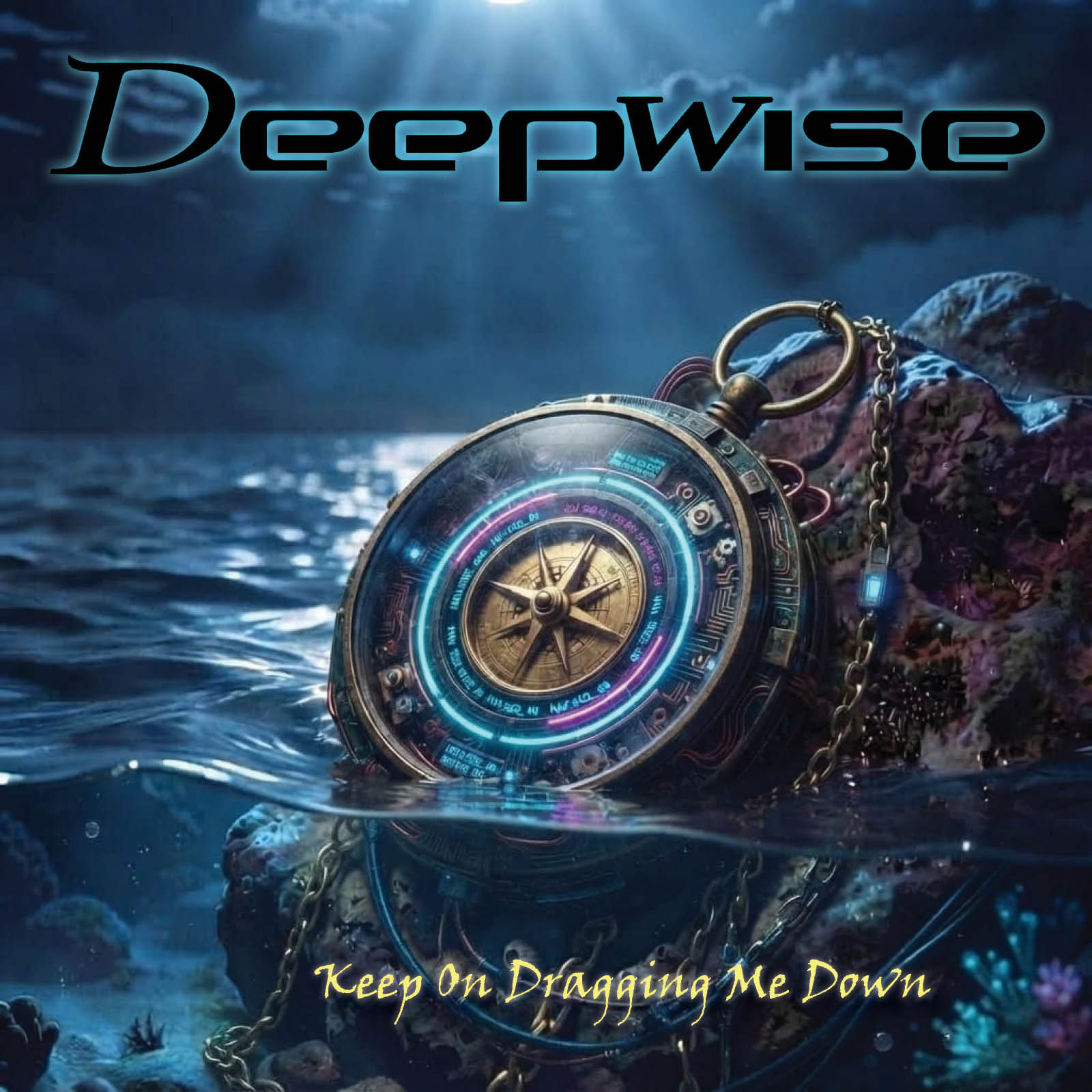
Some songs are born from heartbreak, others from ambition, and a few emerge from the uncomfortable realization that not everyone wants to see you succeed. Deepwise’s “Keep On Dragging Me Down” belongs to that last category, transforming the exhaustion of constantly trying to lift others while being pulled backward yourself into a sharp, atmospheric piece of hip-hop that understands the complicated psychology of betrayal. The song takes its inspiration from the familiar “crabs-in-a-bucket” mentality, the idea that when one person attempts to climb out, others may instinctively—or deliberately—drag them back down. Yet Deepwise does not use the concept as a convenient excuse to blame others. Instead, he filters it through lived experience, examining what happens when generosity becomes draining and loyalty begins to feel like an obligation without reciprocity. Musically, the track immediately establishes a meditative frequency before expanding into a dimensional hybrid of trip-hop, hip-hop, chill phonk, and cloud-rap. There is a hazy quality to the production, but beneath the smoke and spaciousness sits a clear sense of purpose. Deepwise’s delivery cuts through the mist with intelligent, high-energy prose, creating an intriguing contrast between the laid-back sonic environment and the urgency of his words. That tension provides “Keep On Dragging Me Down” its identity: the music sounds reflective, but the artist is actively wrestling with something real. Rather than wallowing in resentment, the track becomes an argument for recognizing when helping others crosses the line into sacrificing yourself and for understanding that sometimes the healthiest form of progress is simply refusing to be pulled back into the same cycle.
Deepwise’s lyricism is where the song truly develops its personality. His writing has the looseness and observational wit of a comfortable artist allowing serious ideas and humor to occupy the same space, and that makes his storytelling feel considerably more human. There is plenty of metaphor throughout the track, but the metaphors never feel like decorative intellectualism; they are used to sharpen the emotional point. His words convey the frustration of being misunderstood, criticized, or resisted by people who may have benefited from his willingness to help, while also recognizing the absurdity that can accompany such situations. The lyric about kicking “so much ass” that leaves his toes bruised before he puts his feet up is a particularly revealing example of that balance. It is amusing, boastful, and self-aware at the same time, allowing Deepwise to laugh at the absurdity of conflict rather than becoming consumed by it. That humor matters because the subject could easily have produced a track that sounded bitter throughout. Instead, his personality continues to break through the frustration. There is a sense that he has already processed much of the experience and is now able to examine it with enough distance to identify the pain and the comedy in it. His delivery also carries echoes of golden-era hip-hop, where the voice itself could function almost like another percussion instrument, pushing syllables forward with purpose while giving every phrase room to land. Influences such as 2Pac, The Notorious B.I.G., OutKast, Logic, Tyler, the Creator, and MF DOOM can help contextualize Deepwise’s approach, while the connection to Buck 65 is particularly useful in understanding the track’s willingness to combine unconventional phrasing, personality, and storytelling. Still, “Keep On Dragging Me Down” sounds like Deepwise rather than an imitation of any of those artists.
The production deserves equal attention because it creates an unexpectedly effective setting for such direct lyricism. Deepwise’s longstanding interest in chill and cloud phonk, shaped in part by listening to artists and tastemakers such as Ryan Celsius, Soudiere, DJ Yung Vamp, and DJ Smokey, provides a useful foundation, but the finished track moves beyond straightforward genre recreation. The opening meditative frequency establishes a feeling of suspension, as though the listener is entering the artist’s headspace before the beat fully reveals itself. From there, the arrangement develops into a fluid meeting point between trip-hop, hip-hop, and atmospheric phonk, with jazz-inflected touches adding warmth and unpredictability. Deepwise’s own instrumental contributions on piano and guitar are particularly important to that character because they prevent the production from feeling like a purely digital exercise. There is a tactile quality beneath the electronic haze, a sense that the track has been assembled from both human musicianship and carefully shaped studio texture. Deepwise handled the songwriting, lyrics, instrumental, production, and piano and guitar performances himself, while Well Krafted Music recorded the demos. Kyle Oueis mixed the song at Hideout Studio in Las Vegas, with two-time Platinum engineer Nate Middleman handling mastering. Those details matter not simply as credits but because the record’s final character reflects an unusually personal degree of creative control. The production is not trying to overwhelm the listener with technical fireworks. Instead, it creates enough dimensional space for the lyric to dominate while giving the instrumental world its own emotional weight. The haze becomes symbolic: beneath all the blurred edges and atmospheric layers, Deepwise is trying to see clearly.
What makes “Keep On Dragging Me Down” more than a complaint song is the way it approaches boundaries. The central frustration is not merely that other people are difficult; it is the realization that continually trying to save, support, encourage, or carry everyone can eventually become its own form of self-neglect. Deepwise captures the quiet exhaustion that comes with lifting others while feeling yourself being dragged under, but he does not allow that exhaustion to dictate the song’s final emotional destination. There is a complicated relief in stepping back. Setting boundaries can feel harsh when you have spent so long being available, particularly when the people you distance yourself from are part of your community or social circle. Yet the track understands that protecting your peace is not necessarily an act of hostility. Occasionally it is simply an acknowledgment that growth requires space. This idea lends the song a wider relevance because nearly anyone who has experienced an uneven friendship, difficult creative environment, competitive community, or draining relationship can recognize the underlying tension. Ultimately, the song is about choosing what deserves access to your energy. Deepwise’s perspective is especially compelling because he does not pretend that reaching this conclusion is easy. The frustration remains audible, but so does the perspective that comes from surviving it. Instead of turning betrayal into an excuse for permanent suspicion, he turns it into a lesson about discernment. The people who pull you down do not necessarily have the final word; their influence ends when you stop allowing their resistance to determine your direction.

By the final impression it leaves behind, “Keep On Dragging Me Down” feels less like a diss aimed at specific people and more like a personal declaration of independence from patterns that no longer serve the artist. That distinction gives the track its staying power. Deepwise is not simply describing the experience of being held back; he is documenting the psychological shift that occurs when someone realizes they are allowed to stop carrying everybody else. The hazy cloud-phonk and trip-hop atmosphere gives that realization a dreamlike backdrop, while the assertive prose keeps it grounded in reality. There is a fascinating duality between the relaxed production and the force of the writing: one invites you to settle in, while the other taps you on the shoulder with observations that demand attention. His genre-fluid identity—rooted in old-school hip-hop but informed by jazz, funk, electronic psychedelia, cloud rap, and modern experimental production—makes the track difficult to place in a single box, and that is precisely part of its appeal. “Keep On Dragging Me Down” sounds like an artist who has stopped worrying about whether his perspective will fit neatly into someone else’s expectations. Instead, he chooses authenticity, humor, self-awareness, and forward movement. The deepest message is not that everyone who resists you is an enemy, but that you cannot build a freer life while continually surrendering your energy to whatever keeps you stuck. In the end, Deepwise turns a painful experience into something unexpectedly liberating: a hazy, intelligent, rhythmically compelling reminder that sometimes moving forward begins with putting your feet up, laughing at the clowns, and finally deciding that you do not have to carry them with you.
For more information, follow DEEPWISE
WEBSITE – FACEBOOK – SPOTIFY – SOUNDCLOUD – YOUTUBE