
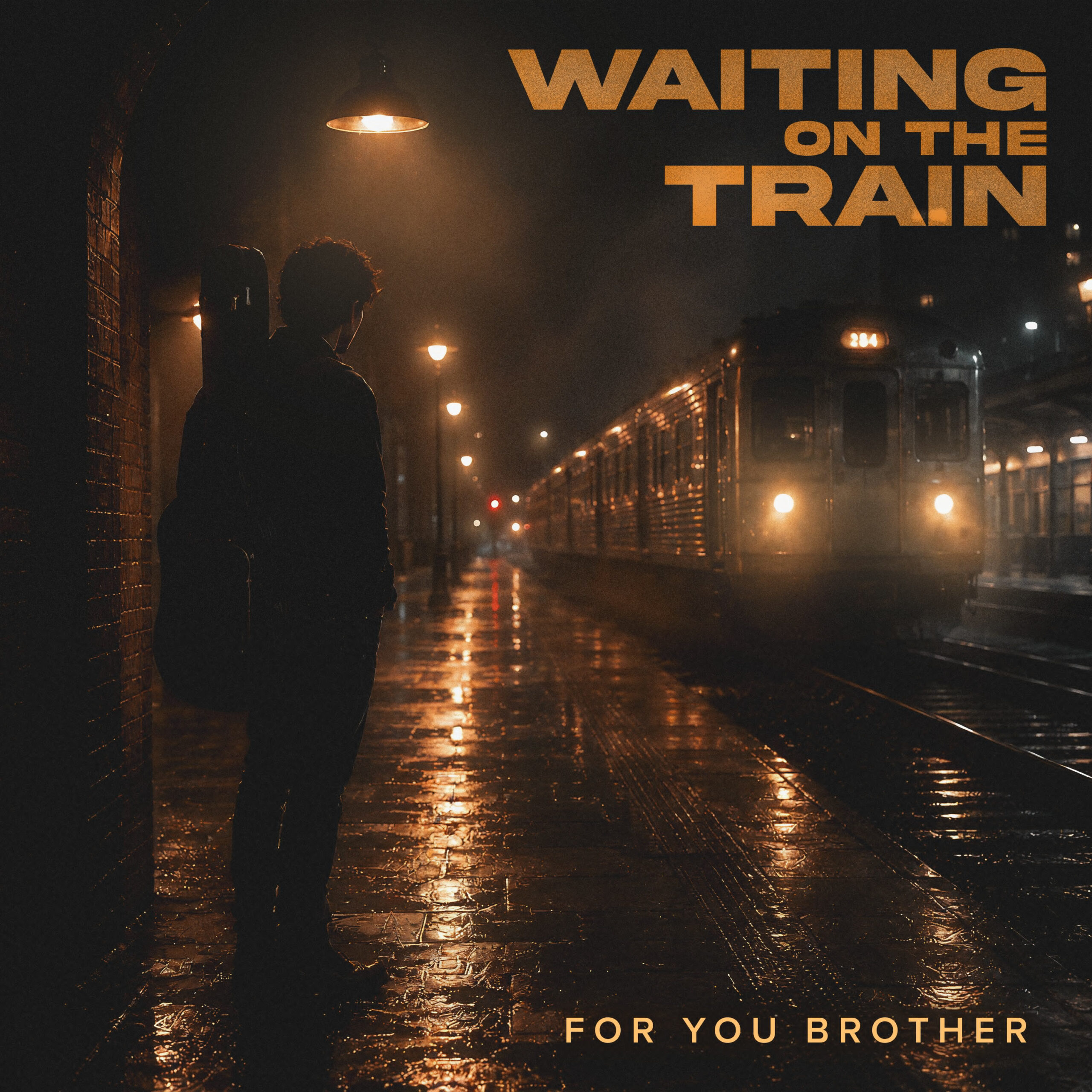
There is something inherently cinematic about standing on a train platform and waiting for something you cannot control. You know you are going somewhere, or at least hope you are, but the timetable belongs to somebody else. FOR YOU BROTHER, turn that deceptively simple image into the emotional center of “Waiting on The Train,” a song about uncertainty, patience, disappointment, perseverance, and the stubborn hope that refuses to disappear. Rather than treating waiting as wasted time, the track finds meaning in the space between where a person has been and where they are going. The opening immediately establishes that sense of suspension, with a meditative astral frequency gradually expanding into a dimensional guitar soundscape. Cosmic organ tones drift through the arrangement while affirmative vocal ad-libs begin to illuminate the darkness, creating the feeling of dawn arriving before the destination itself is visible. When the lyric emerges—”Sun’s coming up on a brand new day, dust on my boots, but I’m on my way”—the metaphor becomes personal. These are not the words of someone who has escaped every difficulty; they belong to someone who has walked through valleys and rain and still has enough faith to smile while waiting. That distinction provides the song its emotional credibility. It does not promise that life will always move according to our preferred schedule. Instead, it acknowledges the frustration of being ready for change while having no control over when that change will arrive.
What makes “Waiting on the Train” especially effective is the way its Christian foundation operates alongside a broader human experience. Faith is unmistakably central, with God understood as the presence behind the uncertainty and divine timing providing an answer when ordinary logic cannot. Yet the song never needs to become overly complicated to communicate that belief. The train remains a remarkably accessible symbol because almost everyone understands what it means to wait for something that feels overdue. It can represent a new job, a relationship, recovery from heartbreak, a creative breakthrough, a personal transformation, or simply the hope that tomorrow will feel different from today. FOR YOU BROTHER, understand that the most difficult part of such moments is often not knowing whether the journey will continue but not knowing when the next opportunity to move will appear. “Waiting on the Train” meets that uncertainty with reassurance rather than panic. The song suggests that being temporarily stationary does not necessarily mean being permanently stuck. There can be progress happening beneath the surface, even when there is no obvious evidence of it. That idea lends the track a reflective philosophical quality without separating it from everyday life. Its message is essentially one of readiness: stay open, keep believing, and keep moving internally, even when circumstances have temporarily prevented you from moving outward. The platform becomes a place where disappointment and hope can exist simultaneously, and that emotional contradiction is precisely what makes the song relatable.
Musically, FOR YOU BROTHER gives that message a sturdy foundation in rock while allowing the keyboards and organ to supply an almost spiritual glow. John Davis’ work as a multi-instrumentalist, songwriter, and producer combines naturally with Jean Carllos’ keyboard and organ contributions, creating an arrangement that feels substantial without becoming overcrowded. The guitars provide the track with forward momentum, while the keyboard textures soften the harder edges and introduce an atmosphere of contemplation. That balance matters because “Waiting on the Train” is ultimately both a rock song and a song of reflection. It needs enough muscle to communicate perseverance, but it also needs enough breathing room for its central idea to sink in. The production largely understands that distinction. Rather than burying the message beneath layers of unnecessary sonic decoration, the instruments seem to work in service of the narrative. Guitar interludes add movement and anticipation, while the organ gives certain passages an expansive, almost devotional character. The vocalizations are another major strength, particularly because they carry the kind of immediate melodic appeal that invites participation. There is something almost communal about the way the song builds toward its emotional peaks; one can easily imagine a crowd singing along to its affirmative phrases. That stadium-ready quality does not undermine the intimacy of the subject. If anything, it reinforces the notion that although waiting can feel intensely personal, the experience itself is shared by countless people.
The cinematic character of “Waiting on the Train” also makes it easy to imagine the song functioning beyond the confines of a conventional listening experience. Its combination of emotional guitar, spacious keyboards, uplifting vocal lines, and steadily developing atmosphere gives it the kind of visual elasticity that could work particularly well in film or television. A character standing alone on a platform at sunrise, someone leaving behind an old chapter, a family trying to hold onto hope during a difficult season, or an individual preparing to take a decisive step could all find an emotional counterpart in this music. Its spirit recalls the kind of inspirational storytelling associated with works such as The Pursuit of Happyness, Rocky, This Is Us, and Friday Night Lights, where personal struggle is often defined not by a single dramatic victory but by the decision to keep going. The track’s cinematic quality comes partly from its ability to create pictures without spelling everything out. The dusty boots, the rain, the rising sun, the unseen train, and the waiting passenger form a sequence of images that feels almost like a film scene unfolding in the listener’s imagination. Even the guitar interludes contribute to that effect, functioning less like technical showcases than emotional transitions. There is a sense of movement throughout the song even though its central character remains physically stationary. That paradox is one of its most compelling artistic qualities: musically, the journey is already happening while lyrically, the traveler is still waiting for permission to depart.
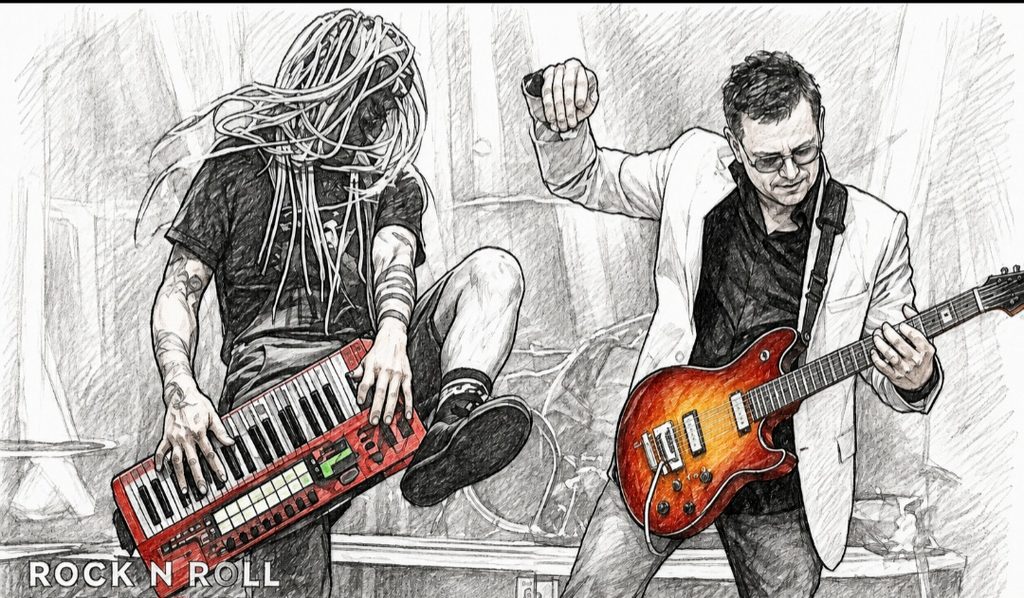
Ultimately, “Waiting on the Train” succeeds because it transforms an ordinary delay into a meditation on faith, timing, and perseverance. Brother, don’t pretend uncertainty is easy, and don’t expect simplistic reassurance that every unanswered question will disappear immediately. Instead, they make room for the uncomfortable reality of the in-between. Occasionally the train has not arrived because the timing is not yet right. Sometimes the only thing a person can do is remain ready. And sometimes faith means believing in movement before there is any visible sign that it is coming. That perspective gives the song an emotional reach that extends well beyond its Christian roots while remaining honest about the belief system from which it emerges. The collaboration between John Davis and Jean Carllos is particularly important to that sense of depth, with Davis’ broad musical background and Carllos’ expressive keyboard and organ work creating a sound that feels simultaneously grounded and expansive. By the closing passages, the train has become more than a vehicle: it represents possibility itself, the next chapter that cannot yet be seen but is still worth believing in. “Waiting on the Train” therefore leaves listeners with a simple but resonant thought. Being on the platform does not mean the journey has ended. Sometimes the journey is the waiting, the preparation, the faith, and the refusal to give up before the right moment arrives. FOR YOU BROTHER, turn that idea into an uplifting rock statement with enough melodic warmth, cinematic scope, and emotional honesty to make the wait feel meaningful.
Connect with FOR YOU BROTHER
WEBSITE
FACEBOOK
SPOTIFY
SOUNDCLOUD
YOUTUBE