
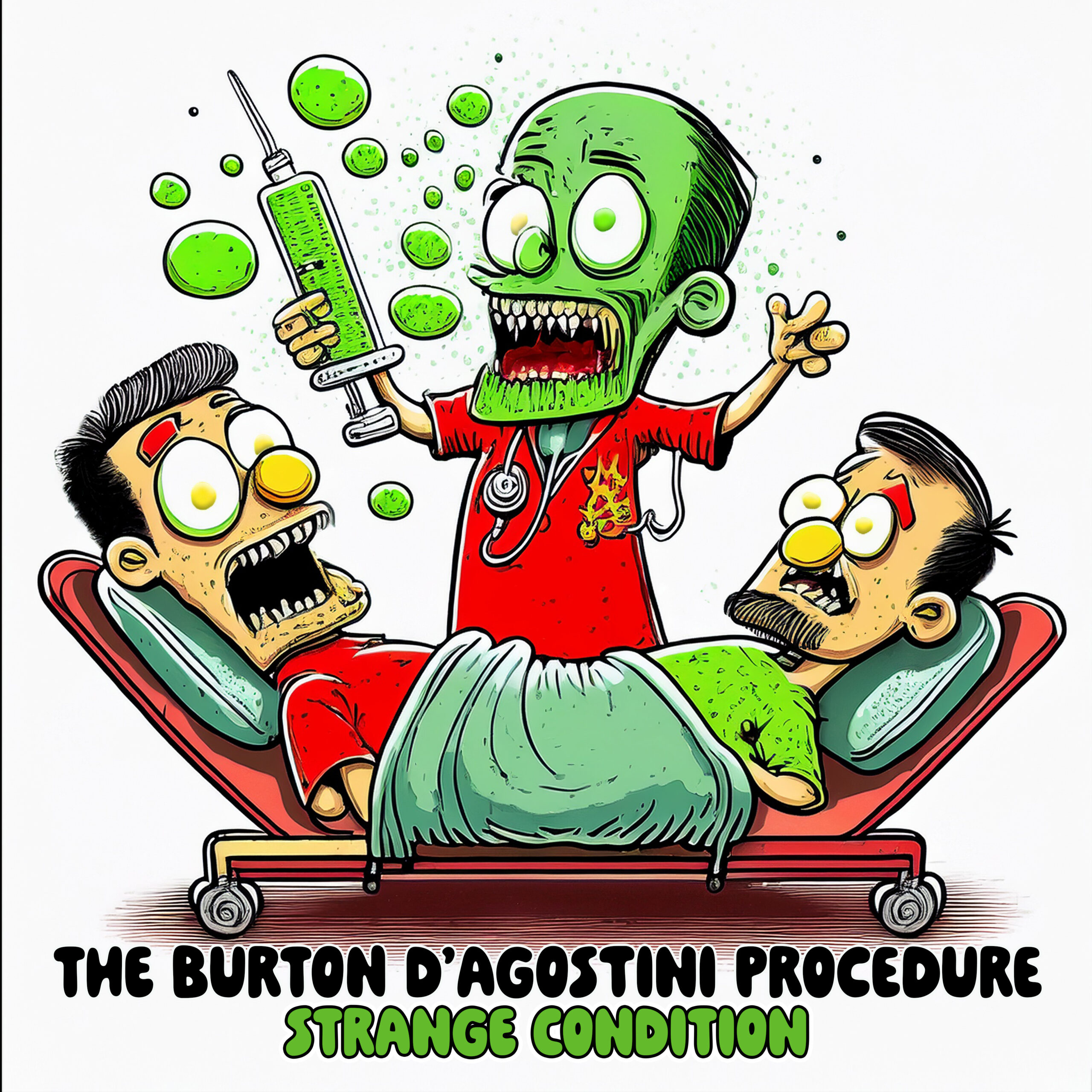
There is something immediately unsettling about waking up to a body that no longer seems to obey the rules of reality, and The Burton D’Agostini Procedure turns that peculiar premise into the starting point for an absorbing musical experience on “Strange Condition.” Rather than easing listeners into familiar alternative-rock territory, the duo establishes its atmosphere through cosmic frequencies, astral details, and psychedelic textures that make the track feel as though it has drifted in from an unfamiliar dimension. Bold drums cut through the haze, while gated effects and celestial synthesizers create an expansive backdrop that feels simultaneously dreamlike and ominous. The opening mood is not simply atmospheric for atmosphere’s sake; it prepares the listener for a narrative in which ordinary explanations quickly become inadequate. When the narrator declares, “I woke up with a fever and a pounding in my brain,” the song initially appears to describe a recognizable medical complaint. But the details soon become stranger, particularly when a doctor observes that the narrator’s feet are heavy even though they cannot touch the ground. That contradiction introduces the track’s central fascination: the unsettling space between physical reality and an experience that refuses to make logical sense. The Burton D’Agostini Procedure, the creative partnership of Jeff Burton and John D’Agostini, leans into this ambiguity with a sound that grows more dramatic as the narrative unfolds. An industrial bass performance lends the arrangement a darker, more physical edge, while the synth layers seem to hover above it like signals from an unreachable place. There is a striking tension between the song’s vivid musical construction and the inexplicable condition at its center. “Strange Condition” invites curiosity without promising certainty, making the act of listening feel like entering a strange dream whose meaning remains just beyond reach. It is an intriguing introduction to a track that understands how effectively music can unsettle the senses without sacrificing its melodic appeal.
The song’s medical narrative provides a compelling thread through its increasingly surreal soundscape. The narrator seeks help, encounters specialists, and finds a growing number of people gathering around an illness that apparently defies conventional understanding. The lyric about specialists whispering in quiet recognition is especially evocative, suggesting that the situation has become serious enough to attract collective attention, yet nobody appears capable of offering a satisfying explanation. In another song, a visit to the doctor might supply a familiar narrative structure: symptoms appear, a diagnosis follows, and the mystery moves towards resolution. Here, the process becomes part of the mystery itself. The more people investigate the condition, the stranger the circumstances seem to become. That reversal gives “Strange Condition” its darkly theatrical quality. The medical setting, normally associated with reassurance and the restoration of order, becomes a place of uncertainty, observation, and quiet alarm. It is particularly compelling to imagine the story unfolding inside a psychological thriller, with each new detail making the audience question whether the narrator is experiencing an impossible physical event, a feverish hallucination, or a symbolic crisis that cannot be diagnosed through ordinary means. The track’s musical arrangement reinforces that uncertainty rather than spelling out a definitive interpretation. Its psychedelic textures suggest altered perception, while the heavy drums and industrial bass introduce a sense of urgency beneath the celestial layers. This contrast gives the song a compelling emotional tension: the production feels expansive, but the narrative is intensely personal; the sounds may be otherworldly, yet the narrator’s distress is recognizable. The idea of an unexplained illness can also be understood metaphorically, as a representation of an experience that changes someone’s relationship with reality and leaves familiar systems of understanding unable to provide comfort. The duo wisely leave space for these readings, rather than forcing the listener toward a single conclusion. “Strange Condition” becomes more than a musical oddity because its central image can operate on several levels at once, blending physical discomfort, psychological unease, and surreal storytelling into a unified atmosphere. That willingness to let the strange remain strange is one of the track’s strongest qualities.
Sonically, The Burton D’Agostini Procedure demonstrates a clear commitment to building an immersive environment rather than simply placing a conventional song beneath a collection of effects. The cosmic frequencies and celestial synthesizers establish a sense of distance, while the psychedelic gated textures create a more fragmented, unstable feeling around the edges. The drums provide a firm rhythmic backbone, preventing the arrangement from dissolving entirely into abstraction, while the industrial bass adds weight to a track that might otherwise float away into its atmosphere. These elements work together to create a distinctive balance between the dreamlike and the forceful. There is a cinematic quality to the construction, but the music does not need to imitate a film score to make its point. Instead, it creates the impression of a scene unfolding around the listener, with each sonic layer contributing to an event that is both mysterious and consequential. The contrast between the heavy rhythm and the lighter, more celestial textures is particularly effective because it mirrors the song’s narrative conflict. Something is happening to the narrator that feels physically undeniable, yet its cause remains intangible and difficult to grasp. The music embodies that contradiction, anchoring the listener in a pulse while surrounding them with sounds that seem to resist stable interpretation. This is where the duo’s long-standing partnership becomes especially relevant. Jeff Burton and John D’Agostini have been making music together since they were 19, and the confidence of a creative relationship developed over many years provides room for unusual ideas to take shape. Rather than smoothing out the track’s oddities, the arrangement allows them to become defining features. The result is an experience that rewards attentive listening, especially through headphones, where the stereo details and layered textures have more room to reveal their dimensionality. Small shifts in atmosphere can feel like movement through different psychological spaces, making the listening experience more intimate even as the production suggests something vast and cosmic. For listeners drawn to psychedelic rock, dark-wave atmospheres, dream pop, and experimental alternative music, “Strange Condition” offers a meeting point between melodic accessibility and an appetite for the unexpected.
The track’s cinematic potential is difficult to ignore, particularly because its mood sits comfortably within the tradition of stories that blur the boundaries between reality, perception, and nightmare. Its dark psychedelic edge could complement a series such as Nine Perfect Strangers, where unease can emerge gradually beneath seemingly controlled surroundings. It also brings to mind the disorienting psychological territory of films such as Jacob’s Ladder, Shutter Island, The Cell, and The Cabinet of Dr. Caligari, along with the unsettling visual world of Suspiria. These comparisons are not simply a matter of matching a dark song with dark imagery. What connects “Strange Condition” to these works is the sense that the familiar world has become unreliable, that an apparently ordinary situation might conceal something impossible to explain. The track’s strange medical emergency provides an ideal narrative entry point for that kind of storytelling, while its atmospheric production could support scenes built around hallucination, revelation, or the gradual collapse of certainty. On television, its sound would be equally imaginable within the uncanny landscapes of Twin Peaks, the paranormal investigations of The X-Files, the psychological unease of Severance, or the unsettling worlds of American Horror Story and Black Mirror. Such possibilities speak to the track’s ability to create an evocative mood without relying on a single fixed visual image. It suggests suspense, but not necessarily a conventional chase; it conveys dread, but its celestial textures retain a sense of wonder. That balance provides it a broader emotional range than a straightforward horror cue. The song could accompany a scene in which something frightening is discovered, but it could just as easily underscore a moment of inward transformation, when a character realizes that their understanding of themselves or the world around them has changed. Its atmosphere feels particularly suited to the spooky season, and the stated October 10 release date, associated with the Libra new moon in the pitch, adds a fittingly celestial detail to the track’s wider presentation. Still, its appeal is not confined to a seasonal playlist. The combination of psychedelic color, industrial weight, and narrative mystery gives “Strange Condition” the potential to remain compelling long after Halloween has passed.
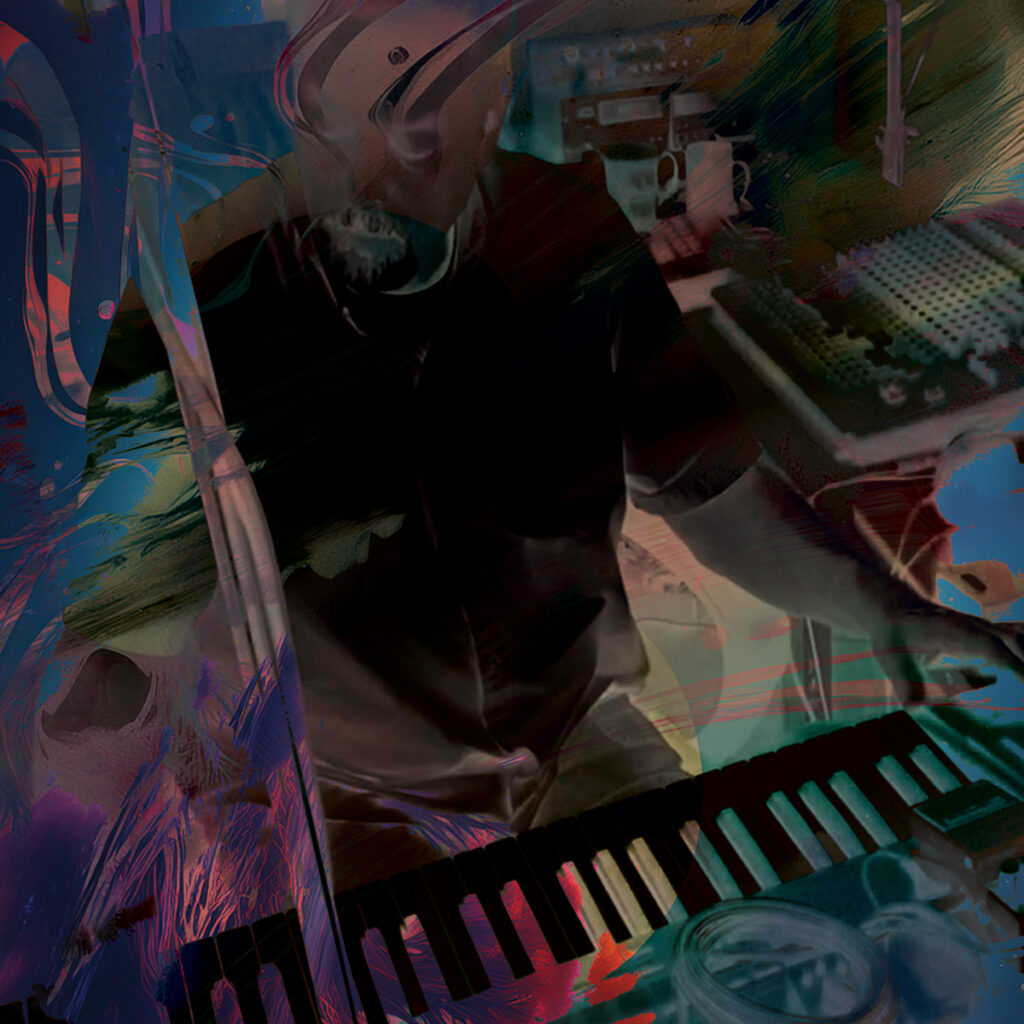
Ultimately, “Strange Condition” succeeds because The Burton D’Agostini Procedure understands that mystery is often more powerful when it is allowed to breathe. The track can leave its impossible medical episode unresolved and its psychedelic imagery unexplained. Its appeal lies in the experience of moving through an atmosphere where familiar things have become unfamiliar and every new detail seems to deepen the uncertainty. The duo’s combination of cosmic synths, bold percussion, industrial bass, and gated psychedelic textures provides the song with a distinctive identity, balancing melodic appeal with a darker, more experimental sensibility. Its narrative adds another layer, transforming a seemingly straightforward visit to the doctor into a surreal encounter with the limits of logic and diagnosis. There is also an intriguing emotional dimension beneath the strangeness: the desire to understand what is happening, the unease of being observed, and the possibility that some experiences cannot be neatly explained by the systems we normally trust. Those ideas allow the song to work as both a compelling piece of atmospheric music and a miniature psychological drama. For listeners who appreciate alternative music with a cinematic imagination, “Strange Condition” offers a satisfying alternative to songs that reveal everything on the first listen. It rewards immersion, and its layered construction makes headphones an especially worthwhile way to experience the details and spatial movement of the production. Jeff Burton and John D’Agostini’s longstanding musical partnership gives the track the confidence to follow an unusual premise without sanding away its edges, resulting in a piece that feels considered, adventurous, and genuinely distinctive. It is haunting without becoming one-dimensional, forceful without losing its dreamlike quality, and strange without abandoning the listener completely. “Strange Condition” ultimately leaves us with the sensation of waking from a vivid dream just before discovering what it means. The fever may have a name, the experts may come together, and the music may take us deeper into the unknown, but the mystery is still deliciously unsolved. That lingering uncertainty is not a flaw in the experience; it is the very thing that makes the song worth returning to.
For more information, follow The Burton D’Agostini Procedure
WEBSITE – SPOTIFY