
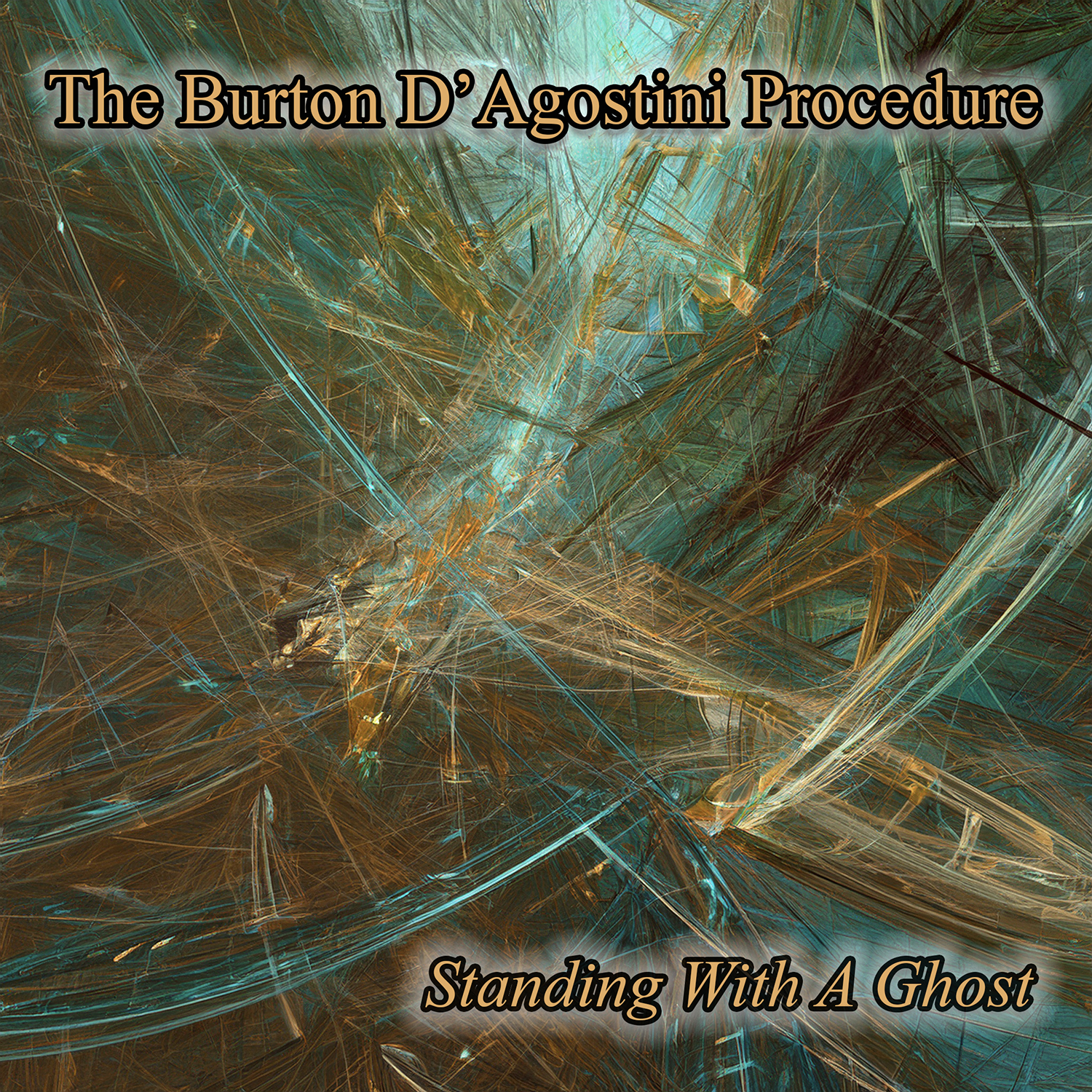
Some albums invite listeners into a familiar musical landscape, while others make that landscape feel subtly unfamiliar, as though something has shifted in the shadows between one note and the next. Standing With A Ghost, the latest release from The Burton D’Agostini Procedure, belongs firmly to the latter category. Blending electronic pop, psychedelic rock, alternative songwriting, and vintage-inspired textures, the album creates a distinctive world where warmth and unease exist side by side. Its eight tracks move through contrasting emotional spaces, from the hypnotic rhythmic pull of “Float Over Here” to the intimate vulnerability of “It Ain’t Love” and the unsettling final moments of “There’s Something You Should Know.” Rather than following a rigid sonic formula, the American duo allows each composition to establish its identity while remaining connected to the album’s broader atmosphere. The result is a record that feels thoughtfully constructed, sonically adventurous, and quietly compelling. Its personality emerges not through excessive dramatics but through the careful interplay of melody, rhythm, texture, and mood. There is a strong vintage sensibility running through the music, yet the production avoids becoming a simple exercise in nostalgia. Instead, The Burton D’Agostini Procedure uses familiar influences as starting points for something more personal, creating an album that feels suspended between musical history and an imaginative, uncertain future.
At the heart of this creative partnership are Jeff Burton and John D’Agostini, whose musical relationship stretches back to their college years, when they first formed a band together. That history lends Standing With A Ghost a sense of cohesion that becomes increasingly apparent as the album unfolds. Burton takes responsibility for the vocals and lyrics, while both musicians contribute to the production, with Burton handling the mixing and D’Agostini overseeing the engineering. Their overlapping creative roles allow the songwriting and studio craftsmanship to work in close conversation, producing arrangements that feel considered without becoming overly polished or predictable. The duo demonstrates a clear understanding of how electronic elements can support a song rather than simply decorate it. Synthesizers expand the surrounding atmosphere, guitars introduce organic warmth or unsettling dissonance, and the rhythmic foundations provide movement without overwhelming the melodic material. There is an evident appreciation for the psychedelic music of the 1960s and 1970s, alongside alternative influences that emerged in later decades, but these references never completely define the album. Instead, they inform a sound that balances accessible songwriting with more exploratory production choices. The stereo dimension is particularly important, as individual textures often seem to occupy separate spaces within the mix, creating depth and encouraging listeners to pay attention to the details. Headphones are an especially rewarding way to experience this carefully layered approach, allowing subtle instrumental interactions to emerge from the broader soundscape.
“Float Over Here” establishes the album’s character with an opening that feels almost ceremonial. Its drum-driven rhythm sets a steady pulse, creating an immediate sense of movement before the surrounding instrumentation begins to reveal its more unusual qualities. Textured percussion provides the foundation for cerebral guitar riffs, while a psychedelic Americana twang lends the track an earthy, organic character. This combination is one of its most appealing features: the music feels rooted in recognizable rock traditions, yet the atmosphere remains elusive enough to resist easy categorization. Burton’s hypnotic vocal delivery deepens that ambiguity. Rather than demanding attention through theatrical intensity, the voice seems to hover just beyond the listener’s reach, becoming another instrument within the arrangement. “Strange Condition,” meanwhile, moves into considerably darker territory. Cosmic frequencies and astral details establish an otherworldly environment before gated psychedelic textures, bold drums, industrial-leaning bass, and celestial synths build the tension. Its surreal medical-nightmare narrative, centered on a mysterious illness that nobody seems able to explain, adds an unsettling human dimension to the futuristic production. The track suggests the confusion of being trapped in an experience that defies rational understanding, and its instrumental details intensify that feeling without overwhelming the composition. Placing these two songs together is a smart opening statement: one draws the listener in through rhythmic hypnosis and earthy guitar work, while the other pushes outward into a more disorienting electronic landscape. Both demonstrate the duo’s ability to change the emotional temperature without abandoning the album’s underlying identity.
One of the most absorbing moments arrives with “It Ain’t Love,” which steps away from the more forceful rhythms and cosmic textures to explore a quieter, more intimate sound. A beautiful sequence of guitar chords rings out with an almost suspended quality, allowing each note to linger in the air before the next phrase takes its place. When the vocal enters, it brings a hushed, after-midnight closeness that immediately changes the listener’s relationship with the music. There is no need for the arrangement to become grand or emotionally explicit; its restraint is precisely what gives the song its power. The spaces between the instruments matter as much as the notes themselves, creating room for the feeling to gather naturally. The result is a composition that feels private without becoming insular, as though the listener has stumbled upon a moment of unguarded reflection. “A Million Miles” expands the emotional and sonic scale again, introducing futuristic touches and a sweeping chord progression that gives the music a sense of distance and grandeur. Its darker, cinematic edge prevents the classic-rock dimensions from becoming merely nostalgic, while the spacious arrangement suggests movement toward an uncertain horizon. Where “It Ain’t Love” draws everything inward, “A Million Miles” opens the doors and lets the atmosphere stretch into the distance. This contrast is central to the album’s appeal. The duo understands that emotional impact does not always require greater volume or heavier instrumentation; sometimes a song needs to become smaller, while at other times it benefits from a wider frame.
“Circle the Sun” offers another welcome shift, settling into a relaxed groove that carries the warmth of 1970s music without sounding trapped in a particular era. The bass is especially effective here, supplying a deep, rolling foundation that gives the track its unhurried momentum. Keyboards add a nostalgic glow, complementing the rhythmic ease while preserving the duo’s interest in layered electronic color. Rather than making the song feel like a detour, this relaxed approach broadens the album’s emotional vocabulary. It provides a stretch of open road after the more intense atmosphere of the preceding tracks, allowing the listener to settle into the groove and appreciate the subtleties of the arrangement. “We All Shine” brings a brighter energy, layering lively melodies and instrumental details into a composition that feels more outward-looking and imaginative. Its appeal grows through the smaller touches woven into the production, with different textures giving the song character beyond its immediate melodic accessibility. The track offers a useful counterpoint to the album’s shadowier moments, demonstrating that The Burton D’Agostini Procedure can create a sense of openness without losing its taste for unusual sonic detail. Then comes “What’s a Joke,” a composition that seems to drift into a private space of its own. Its mystical atmosphere encourages a more meditative style of listening, making it particularly suited to a quiet environment where the surrounding world can fall away. The track occupies an intriguing territory between waking thought and dreaming, its appeal resting less on obvious dramatic developments than on the feeling it sustains. Together, these three songs reveal how effectively the duo manages changes in pace and emotional color, keeping the album varied without making it feel fragmented.
The closing track, “There’s Something You Should Know,” disrupts that meditative calm with an abrupt and unsettling energy. Sharp, metallic guitar chords introduce a sense of instability, immediately suggesting that the album will not conclude with a gentle resolution. Burton’s vocals arrive with a chant-like, almost ceremonial quality, reinforcing the track’s tension and giving the performance an unusual gravity. The combination of abrasive guitar tones and ritualistic vocal phrasing creates a striking contrast with the warmth of “Circle the Sun” and the stillness of “What’s a Joke.” Rather than smoothing over the album’s darker edges, the closer brings them into sharper focus. Its impact comes from the way the arrangement makes familiar musical elements feel slightly threatening, transforming guitar and voice into vehicles for unease. There is a theatrical quality to the performance, but it never becomes excessive; the tension is sustained through the relationship between the sounds and the atmosphere they create. As a final statement, the track is effective precisely because it refuses to settle everything neatly. The listener is left with a lingering sense that something remains unresolved, an impression that suits the title Standing With A Ghost. The image suggests standing beside an absence that nevertheless feels present, and the closing song captures that paradox through its unstable textures and haunting delivery. It is a memorable ending because it does not simply summarize what came before. Instead, it reframes the album’s earlier warmth, spaciousness, and psychedelic color through a darker lens, encouraging the listener to reconsider the journey as a whole.

Ultimately, Standing With A Ghost succeeds because it treats atmosphere as an essential part of songwriting rather than a decorative layer added after the fact. The Burton D’Agostini Procedure understands that a record can be melodic and accessible while still leaving room for uncertainty, experimentation, and emotional ambiguity. “Float Over Here” draws listeners in through its rhythmic insistence and hypnotic guitar work; “Strange Condition” ventures into surreal, industrial-edged territory; “It Ain’t Love” finds considerable strength in intimacy and restraint; and “A Million Miles” stretches toward a darker, cinematic grandeur. Elsewhere, “Circle the Sun” relaxes into a warm, rolling groove, “We All Shine” brings a brighter melodic spirit, and “What’s a Joke” invites listeners into a dreamlike state before “There’s Something You Should Know” closes the album with a sharp, unsettling jolt. These shifts keep the collection from becoming predictable, while the duo’s layered production and shared creative vision provide a consistent thread throughout. The vintage influences are evident, but the album’s strongest qualities come from how those influences are reshaped through electronic textures, thoughtful arrangements, and an instinct for contrast. It is a record that rewards patience, particularly when heard through headphones, where the depth of the mix and the interplay between individual sounds become more apparent. With Standing With A Ghost, The Burton D’Agostini Procedure delivers a richly atmospheric and carefully crafted release that balances nostalgia with curiosity, intimacy with scale, and melody with mystery. It leaves behind the impression of a musical world that continues to exist even after the final note has faded—a place where the past feels close, the present remains uncertain, and the ghost is never quite alone.
For more information, follow The Burton D’Agostini Procedure
WEBSITE – SPOTIFY