
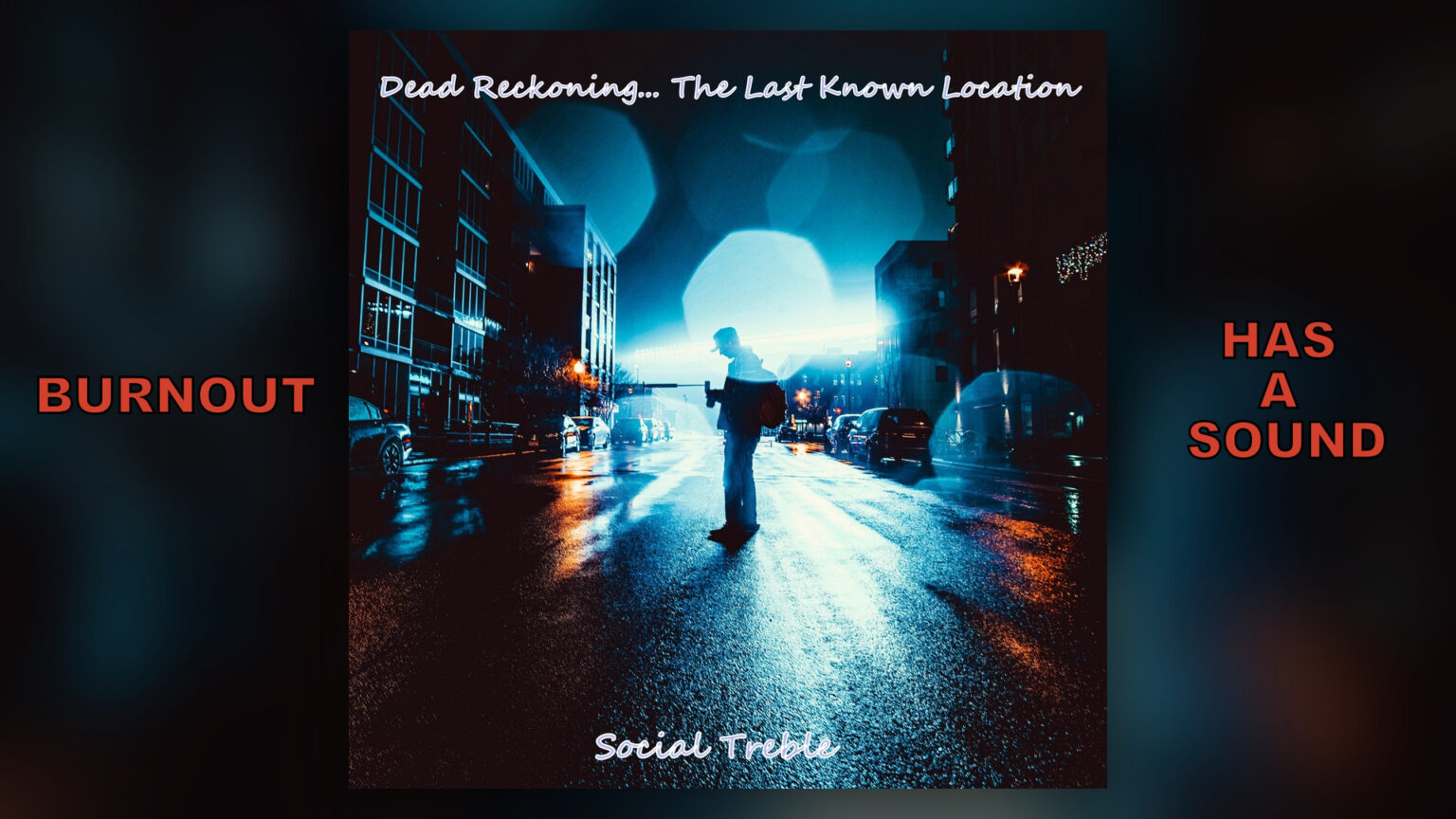
Some albums tell stories through lyrics, while others build entire worlds through sound, allowing the listener to discover the narrative in the spaces between instruments, the tension of a rhythm, or the sudden arrival of a melody that changes everything. Dead Reckoning… The Last Known Location, the ambitious debut album from Social Treble, the creative project of The Analog Ghost, belongs firmly to the latter category. Conceived as a futuristic journey through surveillance, isolation, psychological pressure, and eventual liberation, the album imagines Bengaluru in 2031 as a technological landscape where the relentless measurement of human activity has begun to eclipse the humanity of the people being monitored. Its central figure, software architect AS-1133, inhabits a world capable of quantifying almost everything about him yet seemingly incapable of recognizing his suffering. When his attempt to seek help becomes another ticket number in an indifferent system, the possibility of escape begins to take shape. Social Treble communicates this dystopian narrative without relying on conventional vocal storytelling, instead drawing on progressive rock, metal, industrial textures, electronic experimentation, and cinematic orchestration to establish its emotional contours. The artist describes this genre-expansive approach as “Cyber-Prog,” an apt name for music that connects the technical precision of a futuristic soundscape with the restless imagination of progressive composition. From the meditative opening of “Skyline Motherboard… The Burden of Being Known” to the brighter, spiritually charged conclusion of “Sovereign Hope,” the record unfolds like an original motion-picture soundtrack for a film that exists only in the listener’s imagination. It is a strikingly ambitious introduction, one that treats music not simply as entertainment but as a vehicle for exploring what it means to remain human in a world increasingly determined to turn human experience into data.
The album begins with “Skyline Motherboard… The Burden of Being Known,” a composition that establishes its atmosphere through a rising, meditative frequency and a minimalist piano melody. Guitar arpeggios gradually enter the arrangement, accompanied by spatial audio details that give the music a sense of depth and quiet anticipation. Social Treble identifies this chapter as “The Diagnosis,” and the title feels appropriate: there is a contemplative quality to the opening, but beneath its apparent calm lies the suggestion that something is not quite right. A brooding bass-guitar presence gradually adds warmth and weight, helping the composition develop from an introspective introduction into a more expansive, futuristic tapestry. The changes in pace and harmony towards the finale suggest an ascension, as though the listener is being lifted into a larger environment whose dimensions are not yet fully understood. It is an effective opening because it introduces the album’s spiritual and technological concerns without forcing either into the foreground. “Void In Time,” or “The Undertow,” immediately complicates that serenity. Metallic percussion establishes a syncopated, slightly subversive pulse, while a sustained tanpura drone introduces an unexpected tonal dimension. As soft drums gather momentum and high-octane guitar lines cut through the atmosphere, the track develops the kind of psychedelic intensity that could accompany a mysterious television drama or an elaborate science-fiction sequence. Its structure is particularly engaging: a powerful mid-song climax yields way to a striking reduction in instrumentation, creating a meditative interval before the music begins rebuilding. The eventual acceleration, rolling drums, and siren-like breakdown leave the listener suspended between exhilaration and unease. Together, these opening pieces establish a crucial principle for the album: tranquility and disturbance are not opposing destinations but closely connected states, and the journey between them will shape AS-1133’s unfolding story.
“The Brass Hour,” identified as “The Refuge,” moves into more recognizable alternative-rock territory, drawing on brooding grunge-adjacent textures and a rhythmic foundation that feels muscular without becoming unnecessarily heavy. The drums provide a firm pulse, while astral bell tones introduce an eerie dimension that prevents the arrangement from settling into straightforward rock nostalgia. There is a pleasing collision between the track’s 1990s alternative sensibility and its futuristic setting, as though the music has retrieved fragments of a familiar past and placed them inside an unfamiliar technological landscape. It offers a different kind of refuge: not necessarily a place of safety, but a temporary departure from the album’s more abstract sound worlds. “Faces of Reality,” or “The Unmasking,” raises the intensity considerably. Cosmic bells and a healing-frequency introduction establish an almost ceremonial atmosphere before a ferocious guitar performance transforms the composition into a cinematic adventure. The contrast between the opening delicacy and the force of the subsequent instrumental development gives the track a compelling sense of revelation, as though the protagonist is beginning to recognize the mechanisms shaping his reality. The guitars bring energy and physicality, but they also help articulate the emotional dimensions of the narrative. This is where Social Treble’s soundtrack-like approach becomes particularly effective: the music seems to respond to events that are happening beyond the immediate reach of the listener, inviting the imagination to supply the missing images. “Anxiety Protocol,” known as “The Vigilance,” makes that psychological pressure more explicit. Syncopated rhythms and carefully positioned guitars create a cerebral, unsettled atmosphere, while astral bells contribute a spaciousness that seems to extend beyond the conventional boundaries of a stereo mix. The track is an important narrative turning point because the story of AS-1133 begins to emerge more clearly through the music. Here is a person living inside a system that records his behavior but fails to respond meaningfully to his distress. The title itself suggests a world in which anxiety has become something to monitor, classify, and manage rather than a human experience deserving compassion. In this context, the music’s restless patterns feel purposeful: they communicate the exhaustion of being observed, assessed, and continually expected to function.
After the tension of “Anxiety Protocol,” “Flagged For Review,” or “The Rupture,” it provides a much-needed meditative respite. Healing frequencies and cosmic detailing return, joined by rippling piano phrases and guitar notes that seem to emerge gradually from the surrounding atmosphere. Yet the track is not simply an opportunity to relax. Its calm carries the weight of everything that has preceded it, giving the listener a moment to reflect before the composition begins expanding again. The guitar work eventually grows more epic, shimmering across the arrangement while retaining the peaceful allure that distinguishes the track from the album’s more aggressive passages. Its psychedelic climax demonstrates Social Treble’s understanding of dynamic contrast: a composition can build towards considerable intensity without abandoning the reflective qualities that made its quieter opening effective. “Reading Against the Grain,” or “The Momentum,” then arrives with a much more forceful progressive-rock and metal-adjacent character. Driving guitars push the music forward, orchestral drama expands its scale, and sharply articulated string parts heighten the sense that the narrative has entered a decisive phase. The title suggests an act of resistance, an attempt to examine established structures rather than accept their authority at face value. In the context of AS-1133’s predicament, this becomes a musical expression of questioning the systems that have defined his existence. The contrast with the surrounding compositions is essential. Social Treble understands that a sustained atmosphere of tension eventually loses its impact unless the listener is given moments of release, reflection, or renewed energy. The heavier passage therefore feels earned, arriving after the album has established a rich emotional vocabulary. “The Last Reading,” designated “The Stillness,” takes another intriguing turn. Classic piano and textured drums provide the entrance, gradually opening into a bold, fierce sonic environment. Its title might suggest quiet resignation, yet the composition’s grounding, almost hypnotic quality makes stillness feel more like a state of heightened awareness than a withdrawal from the world. Rather than representing defeat, it can be heard as the moment when the protagonist begins to understand that freedom requires more than simply escaping external control. He must also reconsider the internal habits and expectations that surveillance has helped establish. The music’s combination of force and composure supports that interpretation, making this sequence one of the album’s strongest demonstrations of how instrumental composition can advance a narrative without spelling out every development.
“Crowded Silence,” or “The Exit,” opens with peaceful guitar and textured drums before the rhythm begins to gather pace. A more elaborate guitar performance eventually becomes the focus, bringing a melodic fluency that should appeal to listeners who appreciate Carlos Santana’s expressive approach to lead guitar. There is a sense of physical movement throughout the composition, as though the music itself is trying to discover a route out of an increasingly claustrophobic environment. The title is especially suggestive: silence may appear to offer an escape from constant monitoring, but even silence can feel crowded when a person has spent too long under observation. Social Treble turns that contradiction into an atmospheric strength, allowing moments of relative peace to coexist with the urgency of the instrumental development. “All Lights In Bangalore Couldn’t Find Me,” identified as “The Vanishing,” is the album’s longest track and one of its most compelling conceptual statements. Cerebral percussion, bold metallic textures, and carefully developed spatial motifs combine to create a soundscape that feels both technologically advanced and emotionally charged. The composition builds with considerable dramatic purpose, drawing the listener deeper into its world through successive changes in intensity and texture. Within the narrative, the title represents a decisive movement towards escape: the lights of a city built around technology and visibility can no longer locate the person who has slipped beyond their reach. The notion of vanishing becomes more than a physical act. It suggests reclaiming the right to exist outside the systems that have attempted to define and measure every aspect of one’s identity. The music captures that liberation through its expanding energy, creating a feeling of release that is particularly satisfying after the album’s earlier passages of anxiety and confinement. This part of the journey has an almost hedonistic quality, but it is not mere escapism. Instead, the sense of freedom emerges as a necessary response to a world in which privacy and personal autonomy have become increasingly fragile. By allowing the composition to develop over an extended duration, Social Treble gives the idea space to unfold. The track becomes an immersive experience rather than a brief narrative illustration, and its length feels justified by the scale of the emotional transition it represents.
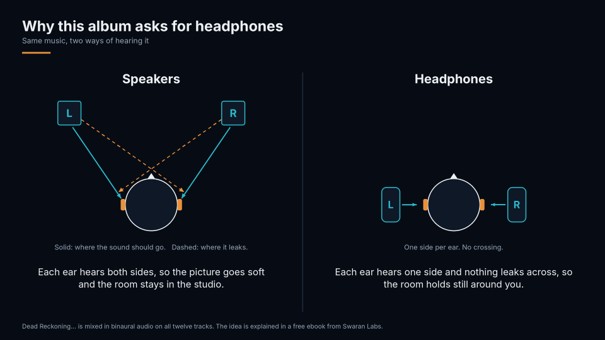
“Aftermath” shifts the mood again, beginning with Spanish guitar and microtonal details that lend the introduction an intriguing sense of instability and cultural color. The arrival of fierce electric guitar changes the composition’s character, bringing renewed power without entirely erasing the delicate qualities of its opening. This juxtaposition captures the uncertainty that follows liberation. Escaping an oppressive environment may create space for a different life, but it does not immediately resolve the psychological consequences of prolonged surveillance or restore everything that was lost along the way. Social Treble avoids presenting freedom as a simple switch from darkness to light. Instead, “Aftermath” suggests a period of adjustment in which new possibilities coexist with unanswered questions. The music’s movement between intimate string work and more forceful guitar passages reinforces that ambiguity, giving the composition an emotional complexity that suits its place near the end of the narrative. The album’s distinctive production approach adds another dimension to this experience. Social Treble explains that every instrument was positioned by hand at a fixed distance and angle relative to the listener’s head, creating a consistent three-dimensional listening environment rather than a soundscape in which instruments continually circle the audience. This is a meaningful distinction. The aim is not to create a collection of spatial tricks but to establish a stable room through which the musical story can unfold. For that reason, headphones are essential to experiencing the intended effect. Through speakers, both ears receive sound from both channels, which can soften the directional cues that help create the impression of space. Headphones preserve the separation between the channels and allow the carefully arranged positions to remain more distinct. It is also worth distinguishing this binaural approach from binaural beats: the album’s concept concerns spatial placement and perception, not a claim that the music will alter brainwaves or produce a guaranteed neurological effect. Listening at a moderate volume through headphones, as recommended, makes it easier to appreciate the relationships between the instruments, the subtle differences in placement, and the way the surrounding acoustic space contributes to the mood. This production philosophy is not merely a technical curiosity. It forms part of the album’s artistic identity, turning the listener’s position in relation to the music into an essential element of the experience.
The closing composition, “Sovereign Hope,” or “The Sovereignty,” brings the album’s central ideas into focus through bold, textured drums and a dimensional guitar performance that feels both grounded and expansive. After the tension, disorientation, and searching introspection of the earlier tracks, there is a noticeable brightness to this final movement. Its emotional direction reflects the concept of spiritual sovereignty: the freedom to belong to oneself, to find peace beyond external control or validation, and to live in alignment with one’s deepest convictions. That idea gives the album a satisfying destination without requiring a simplistic happy ending. AS-1133’s journey has unfolded in a world that treats visibility as a form of power and measurement as a substitute for understanding. The answer offered by “Sovereign Hope” is not a new system of control but the possibility of a life no longer organized around the demand to be constantly observed, classified, or approved. The composition’s energetic character draws this conclusion feel earned, and its sense of uplift brings the record towards a kind of spiritual release. What began as the burden of being known ends with the possibility of knowing oneself. That transformation is the album’s most important achievement. Social Treble has also taken an unusually independent approach to the project, handling the composition, performance, recording, mixing, and mastering. The absence of AI-generated creation, emphasized in the supplied project notes, further reflects the artist’s commitment to a deliberately crafted work shaped by hand in terms of arrangement and spatial details. Social Treble also acknowledges Fareed Eljahli and Morayo Oshodi, two people the artist trained, whose dedication, hard work, and quiet example inspired the care invested in the album. That personal acknowledgement offers a useful reminder that a record concerned with dehumanizing systems has emerged from human collaboration, patience, and attention. Behind its futuristic architecture lies a creative process rooted in deliberate choices and sustained effort.
Ultimately, Dead Reckoning… The Last Known Location is a bold and imaginative debut that succeeds by treating its concept, musical language, and production method as parts of a single artistic vision. Social Treble’s Cyber-Prog approach makes room for progressive rock, metal-adjacent intensity, industrial textures, electronic experimentation, psychedelic atmosphere, and cinematic orchestration without reducing the album to a checklist of influences. Its pacing is one of its greatest strengths. The contemplative opening establishes the world, “Void In Time” introduces unsettling psychological undercurrents, “Anxiety Protocol” sharpens the narrative tension, and “Reading Against the Grain” provides a surge of resistance before the later compositions move towards escape, uncertainty, and hope. The contrast between heavier passages and calmer interludes prevents the album from becoming emotionally monotonous, while the instrumental storytelling encourages listeners to engage their own imagination. This is particularly appealing for fans of film scores and soundtrack-driven music, although the album has a distinctive identity beyond that comparison. Its use of binaural spatial production gives the listener a particular way of inhabiting the sound, while its speculative-fiction narrative raises timely questions about surveillance, workplace productivity, technological power, and the danger of treating people as measurable outputs rather than complicated human beings. The dystopian setting of Bengaluru in 2031 provides a compelling backdrop, but the album’s underlying concerns reach well beyond its imagined future. What happens when a plea for help becomes an administrative entry? What remains of identity when every action is monitored? And how does a person reclaim a sense of self when the systems around them have become more interested in recording their existence than recognizing their needs? Social Treble does not answer these questions through a conventional lyrical narrative. Instead, the music gives them emotional form, moving from unease and confinement towards a hard-won sense of autonomy. The result is an immersive, genre-expansive journey that rewards attentive headphone listening and invites repeated exploration. With Dead Reckoning… The Last Known Location, Social Treble, offers more than a soundtrack to an imagined dystopia; the album becomes a meditation on the value of privacy, the resilience of individuality, and the hope of finding freedom beyond constant observation. Its final message is both simple and powerful: in a world determined to know everything about us, sovereignty begins with the right to belong to ourselves.
SPECIAL THANKS
To Fareed Eljahli, whom I have had the privilege of training: your hard work and dedication have stayed with me far longer than any lesson I have given. Somewhere between teaching and being taught, you showed me what it looks like to give a thing your whole attention, and that example is the reason this album finally received every detail it deserved. A teacher hopes to lift the people he trains, and I never expected one of them to lift me. I told you I would honor your effort, and I am a man of my word. Thank you, Fareed, with all my heart.
To Morayo Oshodi, whom I have also had the privilege of training: your dedication has meant more to me than I have found words to say. Effort offered sincerely is its kind of music, and yours is a steady one that I carried with me through every chapter of this album. It is the reason I stopped waiting for a perfect moment and gave this record every detail and every ounce of care. I made you a promise, and I am a man of my word. Thank you, Morayo, for your hard work, your heart, and the quiet example you have set.
For more information, follow SOCIAL TREBLE
WEBSITE
SPOTIFY
BANDCAMP
YOUTUBE
FACEBOOK