

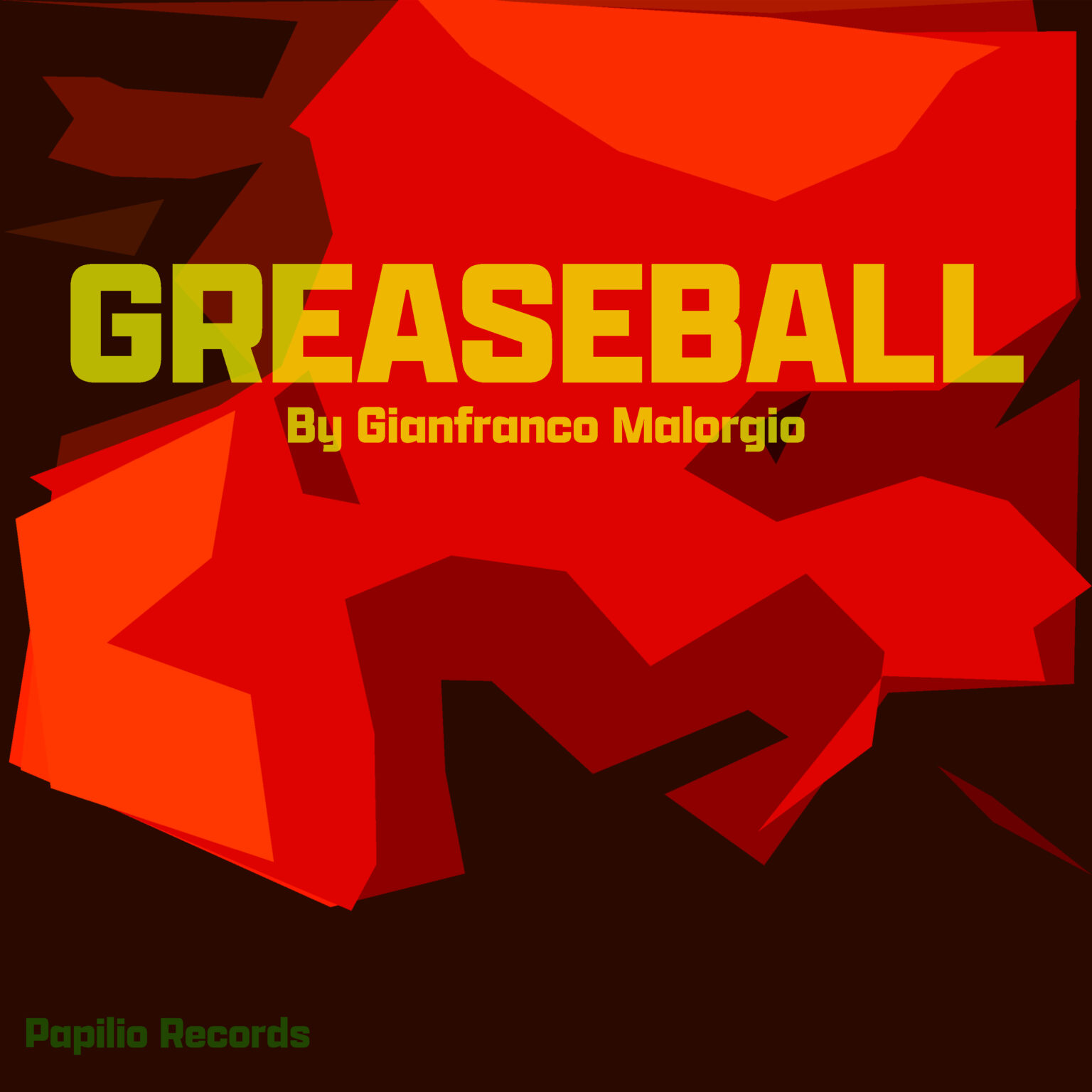
Some instrumental compositions entertain through melody, while others use music to recover histories that deserve to be heard, transforming difficult memories into something emotionally immediate. Gianfranco Malorgio’s “Greaseball” belongs to the latter category, combining brooding electronic textures, dramatic piano, and expressive electric guitar to explore the prejudice, displacement, and longing for belonging experienced by generations of migrants. Having previously featured Malorgio for his cinematic composition “An Immigrant’s Story,” which examines Italian emigration and the search for a new life, we were intrigued to discover where his latest work would take us. The answer is a shadowy, emotionally charged soundscape that feels equally suited to attentive headphone listening and the most pivotal moments of a powerful film. “Greaseball” opens with an immersive synthscape, its cerebral textures establishing an atmosphere that feels strangely warm despite the darkness gathering around it. Rhythmic percussion claps gradually introduce movement, while a dramatic piano performance adds a film-noir sensibility to the unfolding arrangement. Subversive mid-frequency synthesizers deepen the tension, and the entrance of electric guitar provides the composition with the composition a compelling human voice. Nothing feels hurried. Instead, the music develops with patience, allowing each instrumental layer to contribute to a growing sense of emotional weight. The result is an evocative piece that draws listeners into its world before revealing the painful history embedded in its title. Beneath the cinematic production lies a serious reflection on what it means to leave home, encounter hostility in an unfamiliar place, and attempt to build a future while carrying the burdens of the past.
The title “Greaseball” demands attention because it is not an innocuous expression or a playful musical label. Historically used as an ethnic slur against Italian immigrants and their descendants, particularly in the United States, the word carries associations of humiliation, exclusion, and prejudice. Malorgio confronts that uncomfortable history directly, making the title part of the composition’s artistic purpose rather than concealing it behind a more comfortable description. This track completes his trilogy exploring migration, following “WOP,” released in November 2023, and “An Immigrant’s Story,” released in October 2026. Both “WOP” and “Greaseball” draw attention to derogatory labels directed at Italian communities, placing the language of discrimination alongside the broader experiences of people who have been forced to navigate unfamiliar societies. There is something significant about using a historically hostile word as the title of a serious instrumental work: it redirects attention towards the people targeted by that language and the experiences that such labels can obscure. The history of Italian emigration provides an important foundation for the project, with millions leaving their homeland across generations in search of employment, security, and opportunity. Yet Malorgio’s subject reaches beyond one nationality. Migration is frequently shaped by war, economic hardship, political instability, and crises that leave individuals with painfully limited choices. The challenges do not necessarily end when people reach another country. They may encounter suspicion, cultural isolation, and the demand to prove that they deserve a place in their new surroundings. “Greaseball” captures the emotional dimensions of that experience without requiring spoken words. Its dark atmosphere suggests uncertainty, its rising intensity conveys determination, and its persistent tension evokes the struggle to find acceptance. The result is a composition that connects a particular historical memory with a much wider human reality.
Much of the track’s impact comes from the collaboration between Malorgio and guitarist Moreno Viglione. Malorgio handles the composition and synthesizers, while Viglione contributes the electric guitar and takes responsibility for production, mixing, and mastering. Their partnership provides “Greaseball” a distinctive balance between electronic atmosphere and expressive musicianship. The synthesizers establish an environment that can feel disorienting, almost as though the listener is moving through a city at night without knowing whether it offers refuge or further uncertainty. Against this backdrop, Viglione’s guitar becomes the composition’s emotional center. There is a fluidity and intricacy to the performance that should appeal to fans of Santana, particularly in the way the guitar seems to sing rather than merely provide a conventional rock lead. Its phrases emerge from the surrounding textures with a sense of urgency, introducing a more organic and immediate presence into the darker electronic landscape. The contrast is compelling: the synthesizers suggest distance and isolation, while the guitar seems to communicate feelings that the surrounding world cannot adequately express. The piano contributes another dimension, lending the arrangement a dramatic, almost noir-like character that deepens its sense of historical weight. As the composition develops, a cosmic organ introduces a darker, dark-wave energy, shifting the atmosphere toward something more ominous and mysterious. The final bell toll is especially effective, leaving an impression that feels both ceremonial and unsettling. It does not simply mark the end of the track but resonates with the weight of the history being recalled. Malorgio and Viglione use these carefully chosen instrumental voices to tell a musical story in which every change in texture seems to have a purpose.
The cinematic possibilities of “Greaseball” are difficult to ignore. Its brooding piano and layered synthesizers evoke the kind of emotional landscapes associated with films such as The Godfather Part II and Once Upon a Time in America, where migration, family history, ambition, and belonging are bound together by complicated personal and social forces. There is also an affinity with the emotional world of The Immigrant, Brooklyn, and The Pianist, although each of these works approaches its historical circumstances differently. The connection is not that “Greaseball” imitates any particular soundtrack, but that it possesses the same ability to suggest a story through atmosphere, tension, and carefully controlled musical development. Its darker electronic passages could also complement television dramas such as The Sopranos, Penny Dreadful, American Horror Story, or The X-Files, where a sense of unease often grows through sound before the full significance of a scene becomes clear. The opening synthscape, for instance, could accompany an establishing shot of an unfamiliar city, its lights glowing against the night while a newly arrived family confronts the uncertainty of beginning again. The piano might underscore a private moment of reflection, while Viglione’s increasingly expressive guitar could accompany a sequence in which a character confronts the cost of prejudice or the memories of a homeland left behind. The cosmic organ adds a more unsettling quality, suggesting that the obstacles facing the protagonist are not merely practical but psychological and deeply rooted in the surrounding culture. Even without images, the music encourages these associations because its arrangement has a strong sense of pacing. It introduces an environment, develops tension, expands its emotional scale, and eventually leaves the listener with a resonant final gesture. That structure reflects Malorgio’s experience composing for soundtracks, documentaries, and other screen projects. “Greaseball” was conceived with a film adaptation in mind, and its carefully shaped atmosphere makes that intention understandable. It feels like a sequence waiting for the right images, yet it remains compelling as a standalone musical work.
What makes the composition particularly effective is the tension between its dark musical language and the deeper humanity of its subject. The music never needs to become overtly sentimental to communicate suffering. Instead, its emotional impact emerges through contrast: warm textures coexist with brooding harmonies, melodic guitar lines rise against unsettling electronic backgrounds, and moments of beauty appear within an atmosphere that never completely loses its sense of danger. That approach feels appropriate for a subject in which hope and hardship are often inseparable. The decision to tell this story instrumentally also gives listeners room to reflect on their own understanding of migration. Without lyrics dictating a specific interpretation, the music can evoke the loneliness of leaving familiar surroundings, the determination required to establish a new life, or the anger of discovering that prejudice has followed someone across borders. The historical slur at the center of the title remains uncomfortable, as it should, but the composition does not reduce those affected to their suffering. The expressive guitar performance brings individuality and emotional presence to the work, while the synthesizers create a broader environment shaped by uncertainty and change. In this sense, “Greaseball” is not simply a musical portrait of discrimination; it is also a reflection on resilience, cultural memory, and the persistence of identity in circumstances designed to make people feel unwelcome. Its relevance extends beyond Italian-American history to the experiences of migrants around the world, many of whom encounter similar questions about belonging, acceptance, and the right to begin again. Malorgio’s trilogy finds a meaningful conclusion by connecting the specificity of Italian emigration with this universal struggle. The track invites us to consider not only the words used to stigmatize newcomers but also the human stories those words attempt to flatten or dismiss. It is a thoughtful reminder that behind every historical label are individuals with their memories, ambitions, relationships, and hopes for the future.

Ultimately, “Greaseball” is a powerful example of how instrumental music can carry historical and social meaning without sacrificing atmosphere or musical craft. Gianfranco Malorgio and Moreno Viglione have created a composition that balances cinematic drama with emotional subtlety, allowing the synthesizers, piano, percussion, and electric guitar to build a story through sound. The brooding opening establishes an immediate sense of mystery, the piano gives the arrangement its dramatic heart, and Viglione’s guitar provides a fluid, expressive counterpoint to the surrounding electronic textures. The emergence of the cosmic organ intensifies the darker mood, while the final bell toll leaves the listener with a sense of unresolved history. Yet the track’s strongest quality lies beyond its production. As the concluding chapter of a trilogy that began with “WOP” and continued through “An Immigrant’s Story,” it brings together questions of migration, identity, discrimination, and the search for belonging in a way that feels both personal and expansive. The work acknowledges the particular hardships experienced by Italian immigrants while recognizing that displacement and prejudice remain realities for people across nationalities and generations. Its soundtrack-like character makes it particularly compelling to imagine within a film or television drama, but the music does not depend on visual accompaniment to communicate its emotional purpose. It already possesses a vivid internal world, one shaped by uncertainty, memory, resistance, and the hope of finding a place to call home. “Greaseball” asks listeners to confront an uncomfortable piece of history and consider the lasting consequences of reducing people to derogatory labels. More importantly, it restores emotional depth to a subject that can too easily become an abstract historical discussion. Through its haunting production and expressive musicianship, the composition gives displacement a sound and prejudice a human context. Malorgio closes his trilogy with a work that is cinematic without being superficial, sombre without being emotionally narrow, and musically adventurous while remaining firmly connected to its central message. It is a moving, atmospheric piece that lingers long after the final bell has faded, encouraging us to listen more carefully to the histories carried by those who leave home in search of a better life.
For more information, follow Gianfranco Malorgio
WEBSITE – FACEBOOK – SOUNDCLOUD – BANDCAMP – YOUTUBE