
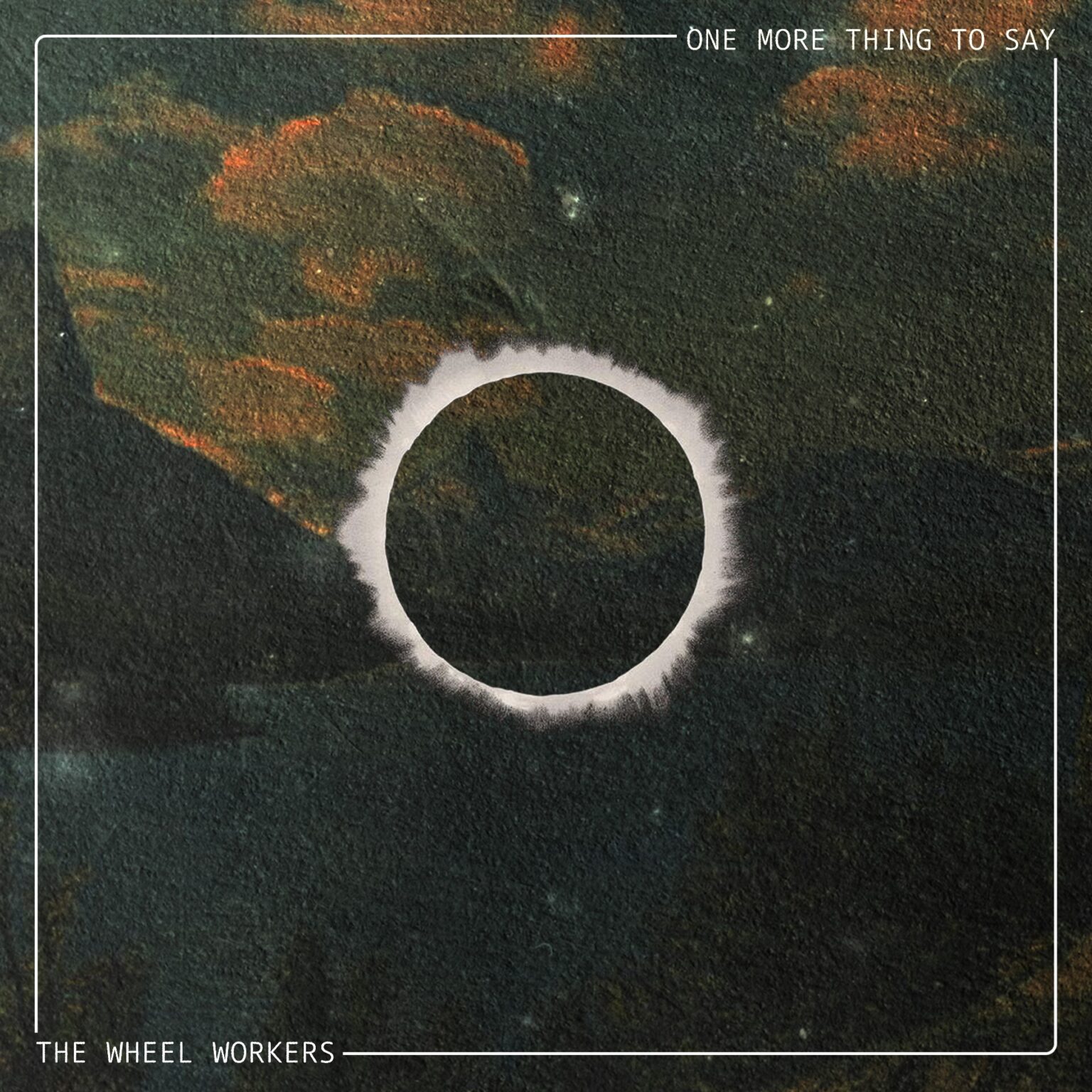
There is something profoundly moving about a record that refuses to remain buried in the past. Songs written in youth carry a particular kind of electricity: the urgency of untested convictions, the restless energy of friendships forged through late nights, and the instinct to turn personal frustrations into something loud enough to shake the walls. But what happens when those songs survive a band’s breakup, two decades of changing circumstances, and the distance between the people who first imagined them and the musicians they eventually become? On One More Thing To Say, Houston/Austin psych-rock collective The Wheel Workers answer that question with sixteen tracks that feel simultaneously rooted in another era and remarkably alive in the present. Begun in 2004 and completed twenty years later, the album is far more than a collection of rescued recordings. It is a conversation between past and present selves, a document of artistic persistence, and a reminder that some creative ideas retain their urgency long after their original moment has passed. Across its expansive arrangements, hypnotic basslines, chiming guitars, grunge-inflected power chords, dreamy vocals, and atmospheric synthesizers, the record moves between progressive alternative rock and the hazier reaches of psychedelia without losing its emotional center. The influences of Pink Floyd, Sonic Youth, and the Pixies are apparent in the tension between atmosphere and abrasion, but The Wheel Workers bring their personality to that combination. There is a restless intelligence to the music, a willingness to let songs breathe before suddenly disrupting their calm with a burst of distortion or a jagged instrumental passage. Most importantly, the album carries the weight of its unusual history without becoming trapped by it. One More Thing To Say sounds like a band returning to something unfinished and discovering that, after all these years, the conversation still deserves to continue.
The story behind the album gives its music an emotional dimension that no production technique could manufacture. The Wheel Workers first took shape around 2000 and 2001, when Steven Higginbotham and fellow musicians Chris Maness, Nathan Maness, Giuseppe Ponti, and Chad Fontenot formed the original quintet. They were young, sharing living spaces, working unglamorous jobs, and spending as much time as possible making music together. Those circumstances can produce a particular kind of creative freedom: there may be little money or certainty about the future, but there is time to experiment, argue over arrangements, chase strange ideas, and make noise simply because the opportunity exists. When the original lineup dissolved in the middle of the decade, the unfinished material that would eventually become One More Thing To Say was left behind. The record became, in effect, the one that got away, an unfinished chapter that remained in Higginbotham’s personal archive while the musicians moved into different stages of their lives. The wheel workers did not disappear permanently. The collective reconvened in 2009 with changing membership, and Higginbotham gradually emerged as its musical director, principal songwriter, producer, and central creative force. Yet the older songs continued to occupy a place in his memory. During the pandemic, a period that encouraged many artists to reconsider their histories and priorities, he returned to the recordings and began reconnecting with former bandmates. Those conversations helped reopen a creative relationship that had been interrupted by time and, in some cases, personal strain. Higginbotham recognized that the songs still possessed something worth preserving. Completing them became an act of both musical curiosity and personal reconciliation. That history lends the album a palpable sense of reflection: these are not simply songs from the past presented as historical curiosities but works whose creators have had twenty additional years to understand the world they were trying to describe.
Musically, One More Thing To Say occupies an exciting space between the hypnotic and the confrontational. The band’s psychedelia owes more to the grungy, alternative-minded experimentation of the 1990s than to the ornamental paisley haze of the late 1960s. Its foundations are often built around repeating bass figures, intricate drum patterns, and guitars treated with digital delay, allowing individual sounds to shimmer and echo into the surrounding space. Then, just when the music appears ready to settle into a meditative groove, ringing power chords or jagged textures interrupt the calm. This contrast gives the arrangements their distinctive character. The atmosphere is inviting, but never entirely safe; beneath the melodic surfaces lies a restless energy that keeps the songs from drifting into mere background ambience. The influence of Sonic Youth can be heard in the willingness to embrace dissonance and unconventional texture, while the Pixies’ gift for balancing melody with sudden bursts of force provides another useful point of comparison. There are also traces of the more expansive, exploratory spirit associated with Pink Floyd, particularly when the band allows instrumental passages to develop gradually instead of rushing towards a conventional climax. Yet the overall sound remains grounded in the collective’s own musical chemistry. Hypnotic basslines provide a sturdy framework, chiming guitars establish atmosphere, and the drums keep the music moving even when the arrangements become sprawling. Synthesizers and vocal harmonies add depth without crowding the mix, helping the songs maintain an emotional focus amid their textural complexity. The production also benefits from a willingness to let the instruments interact rather than forcing every moment into a maximalist wall of sound. The result is an album that can feel dreamy and abrasive within the same passage, balancing thoughtful melodic development with the kind of rough-edged urgency that gives alternative rock its enduring appeal.
The title track, “One More Thing To Say,” provides a particularly effective expression of that tension. Its arrangement feels restless from the outset, with guitars, keyboards, bass, and vocals moving around one another as though each element has something important to add to an ongoing argument. Rather than simply accompanying the vocal, the instruments seem to answer it, creating a conversational quality that reinforces the song’s sense of unresolved business. The rhythm section establishes a persistent foundation, while the guitars add a mixture of brightness and pressure that makes the composition feel as if it is constantly gathering momentum. There is something appropriate about this sound for a song occupying such a central place in an album that took twenty years to complete. The music seems to embody the experience of returning to an unfinished thought, discovering that it still has something to say, and finding the right language to express it. “One Must Speak” offers another standout moment, built around a hypnotic bassline and glistening psychedelic textures that recall the late-1980s and early-1990s Manchester sound associated with the Stone Roses. The track reportedly began as an acoustic composition by former bandmate Chris Maness, but the collective arrangement allows the material to expand into something more immersive and rhythmically compelling. Its transformation illustrates one of the album’s defining strengths: songs can change considerably when different musicians contribute their instincts, yet still retain the original idea’s emotional core. The bass does more than keep time; it becomes a gravitational center around which the guitars and other textures revolve. That interplay provides the track a compelling sense of forward motion, while its psychedelic surfaces invite repeated listening. The song’s title also resonates with the album’s broader concerns, suggesting the necessity of finding a voice even when speaking carries a cost. On a record shaped by unfinished history and political disillusionment, that idea feels particularly fitting.
The album becomes even more affecting when it turns towards its quieter, more contemplative side. “O’er The Sands” unfolds through sparkling guitars and intricate, propulsive drumming, creating an atmosphere that initially feels almost weightless. The arrangement allows the melodic elements to flow naturally, building a meditative environment before the closing section introduces sharper, more fragmented textures. That shift from beauty to disturbance mirrors the song’s subject matter. Originally written in response to the Iraq War, “O’er The Sands” reflects on the disorientation and human consequences of conflict, with lyrics that evoke changing seasons, soldiers, multiplying unknowns, and a world that appears to have lost its bearings. Its political origins give the song historical specificity, but its underlying questions remain relevant well beyond the circumstances that first inspired it. War has a way of turning distant geopolitical decisions into intimate human tragedies, leaving individuals to navigate consequences they had little power to prevent. The song’s musical development captures something of that experience, moving from atmospheric calm towards a more unsettled conclusion without sacrificing its melodic coherence. “Meditation” and “Caves of Ice” also belong to the album’s more inward-looking territory, allowing melody and texture to create emotional space rather than relying entirely on volume or aggression. These compositions demonstrate that The Wheel Workers understand intensity as something broader than loudness. A sustained bass figure, a slowly unfolding guitar phrase, or a subtle change in harmony can create as much emotional pressure as a crashing wall of distortion. The vocals contribute to that sense of intimacy, often working within the instrumentation rather than dominating it. There is a natural flow to these arrangements, as if the music is following the movement of a thought rather than adhering rigidly to a predetermined structure. Their restraint makes the heavier passages more effective when they arrive, while their melodic sensitivity imparts the album a human warmth beneath its more abrasive surfaces.
The political dimension of One More Thing To Say is another reason the album feels like more than an archival exercise. Some of these songs were conceived during the George W. Bush presidency and in the shadow of the Iraq War, when questions about political power, propaganda, military intervention, and democratic accountability shaped public debate. Their original targets may belong to a specific historical period, but the themes of corruption, authoritarianism, alienation, and public disillusionment have not lost their capacity to provoke. The band’s willingness to revisit this material now creates a striking dialogue between the concerns of its younger members and the perspective of musicians who have watched the world change over two additional decades. Rather than presenting political frustration as a dated artifact, the record allows listeners to hear how certain patterns of power and conflict can recur under different circumstances. “O’er The Sands” is particularly effective in this regard because its lyrics focus on the confusion and psychological toll that accompany war, rather than reducing the subject to a slogan. “One Must Speak,” meanwhile, suggests that silence is not always a neutral position when injustice demands a response. These ideas connect naturally with the album’s title, which implies that there are moments when remaining quiet is no longer an option. The music reinforces the message without turning every track into a straightforward protest song. Its shifting textures, restless rhythms, and sudden eruptions of distortion create a broader atmosphere of unease, reflecting a world in which certainty is difficult to maintain. That combination of political purpose and musical experimentation is one of the band’s strongest qualities. The Wheel Workers allow their convictions to inform the songs without abandoning ambiguity, atmosphere, or emotional complexity. The result is an album that encourages reflection as much as agreement, inviting listeners to consider not only what its songs say about the world but also why those concerns continue to demand attention.
The completion of an album after two decades naturally raises questions about authenticity, artistic ownership, and the relationship between preservation and reinvention. Can a record still belong to the people who first imagined it when those people have lived entirely different lives in the intervening years? Does finishing old material preserve its original spirit, or does it inevitably reshape it through the perspective of the present? In the case of One More Thing To Say, the answer seems to be a little of both. Higginbotham has drawn on basic recordings of the original performances, supplementing them with new contributions from drummer Nathan Maness and bassist Giuseppe Ponti. At times, he has recorded new lead vocals; elsewhere, he adds backing harmonies alongside his younger self, creating an unusual dialogue between past and present. Additional musicians from the collective’s later years also contributed, including Dan Workman and Craig Wilkins on synthesizers, with Erin Rodgers and Alli Villines providing harmonies. Higginbotham produced the album with recording engineers Steven and Josh Applebee at Wire Road Studios in Houston and his home studio, The Attic, while Grammy-winning mix engineer Steve Christensen brought his experience to the final mix. This combination of original performances, contemporary contributions, and careful production gives the record a distinctive identity. It does not pretend that twenty years have passed without consequence, nor does it attempt to disguise the distance between the original sessions and their eventual completion. Instead, the album makes that distance part of its meaning. The additional instrumentation helps the songs reach their intended forms, while the retained performances preserve traces of the circumstances in which they began. There is an appealing honesty to that process. Rather than treating the past as something that must remain untouched, the Wheel Workers recognize that old work can continue to develop as its creators do. The result is not simply a restoration but a collaboration across time, one in which memory becomes an active ingredient in the creative process.
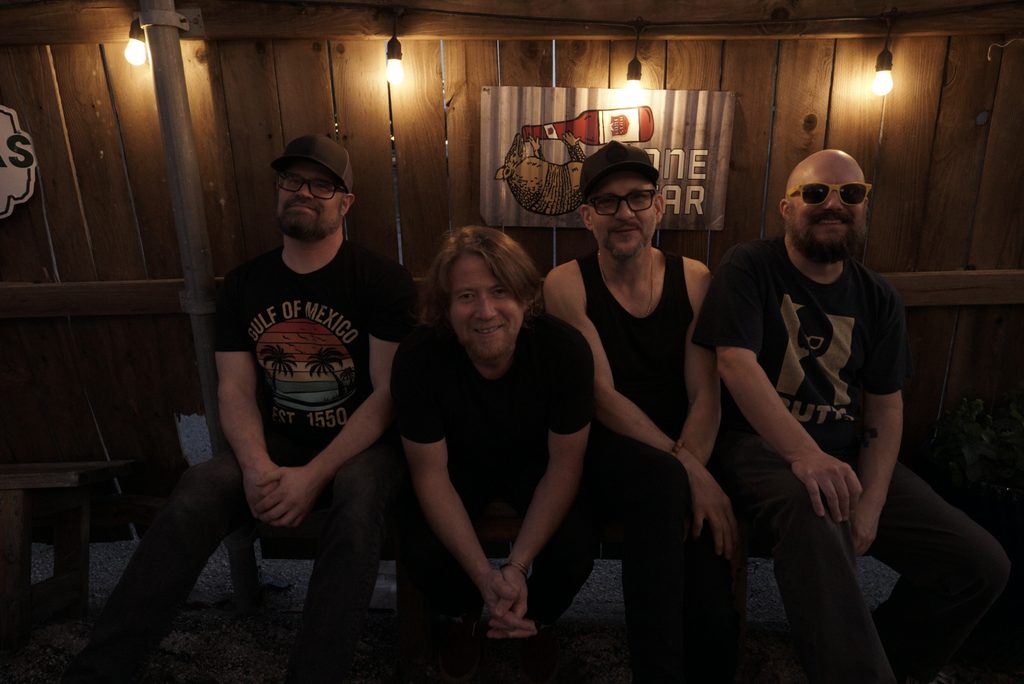
The closing stretch brings the album’s many threads together through a mixture of impressionistic storytelling, atmosphere, and collective musical expression. “Distractions” and “Seaside” lean towards cinematic, almost Beat-inspired storytelling, suggesting scenes and emotional impressions without insisting on a single interpretation. Their appeal lies in the spaces they leave open, allowing the listener to move through the music much as one might wander through a half-remembered place or a thought that has not yet settled into words. These tracks reinforce the album’s willingness to treat atmosphere as a form of storytelling in its own right. The instruments create environments, the vocal performances add human presence, and the arrangements allow meaning to emerge gradually rather than delivering it all at once. The album concludes with “In The Breeze,” a largely instrumental piece that offers a fitting final expression of the collective’s chemistry. With less emphasis on lyrics, the musicians are free to communicate through rhythm, tone, and spontaneous interplay, each part contributing to a shared movement without demanding the spotlight. Higginbotham has described the track as capturing the sensation of riding the wave of music’s spontaneity and the joy of making music together, and that description suits its role as the album’s final statement. After sixteen tracks shaped by memory, political anxiety, experimentation, and personal reflection, the music ends by returning to the simple pleasure of collective creation. That feels like the right conclusion for a record born from a band whose members have changed, separated, reconnected, and found their way back to unfinished work. One More Thing To Say succeeds because it treats history not as a weight to carry, but as a source of renewed possibility. Its psychedelic textures, alternative-rock force, political urgency, and contemplative passages form a compelling whole, while its unusual production history gives every track an added layer of meaning. The Wheel Workers have not merely recovered a lost album; they have completed a conversation that time could delay but never entirely silence. Two decades on, these songs still have something to say—and, more importantly, they have found a way to make themselves heard.
For more information, follow THE WHEEL WORKERS
WEBSITE – FACEBOOK – SPOTIFY – SOUNDCLOUD – BANDCAMP