
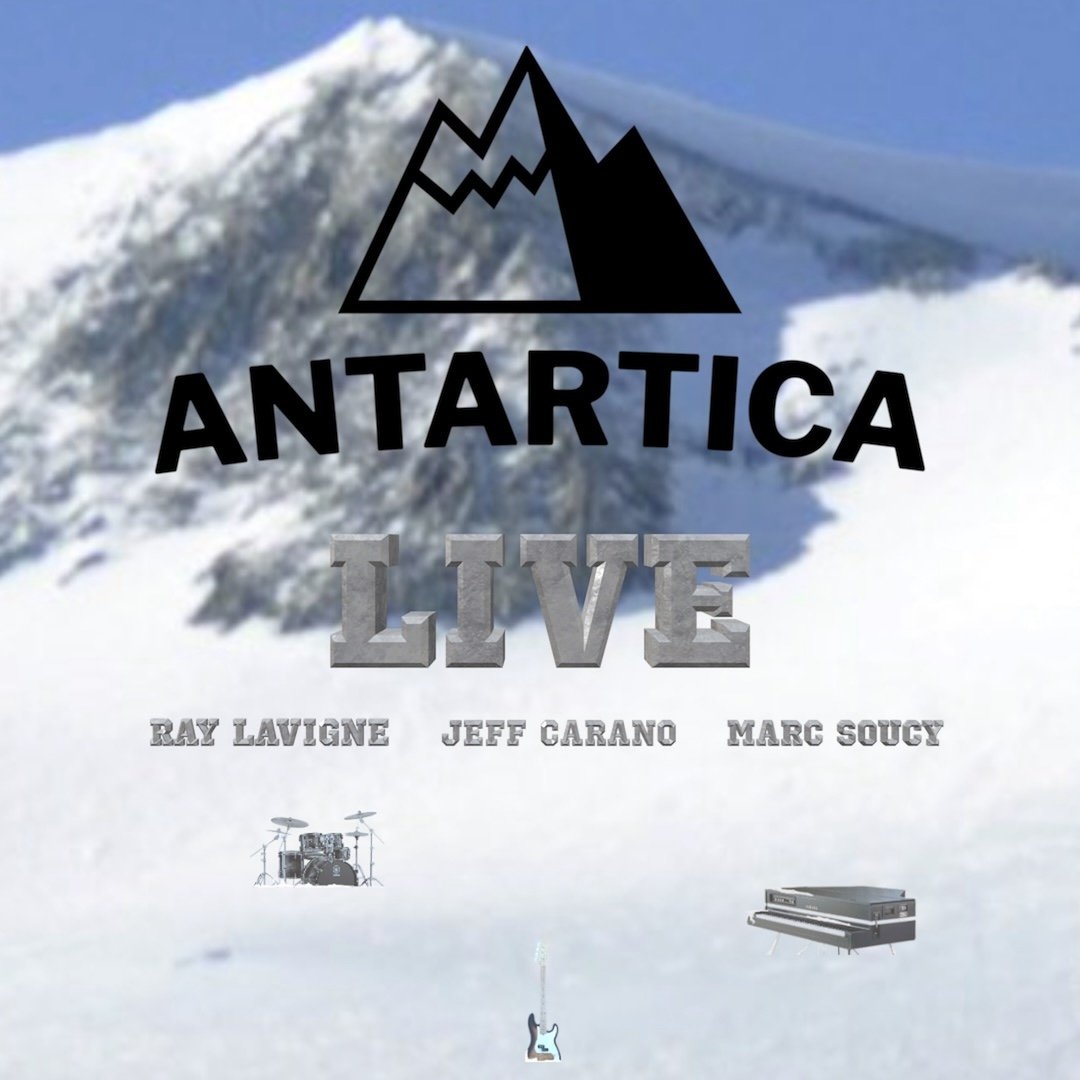
There are live albums that celebrate a successful tour, and there are live albums that are really just polished greatest-hits packages with cheering crowds sprinkled in between the familiar songs. Antarctica Live feels like the opening of a musical time capsule that has been closed for more than four decades. In 1982, the band recorded these performances inside their rehearsal space in Dracut, Massachusetts, never intending them to become a commercial release. Instead, they recorded a working band creating ambitious instrumental compositions in the night-to-night performance, using each rehearsal as a chance for discovery rather than repetition. The organic philosophy makes the album so irresistible. Overdubs, studio tricks, and efforts to smooth out rough edges are almost nonexistent. What you hear are simply three talented musicians responding to each other in real time, relying on instinct as much as they do preparation. 6. The keyboardist Marc Soucy carefully restored the album, which sounds remarkably fresh considering its source. Rather than sounding like an artifact weighed down by nostalgia, Antartica Live radiates the timeless excitement that only genuine musical chemistry can produce. It is an invitation to witness creativity unfolding in the moment, where precision and spontaneity become equal partners in an exhilarating dialogue.
The opening run is a statement of confidence from the band and their unwillingness to be pigeonholed into one style. ‘Mayhem In Antartica’ is true to its name, a journey to an adventurous world where the sophistication of progressive rock meets the fluidity of jazz fusion. Soucy’s expressive keyboards, the agile bass lines of Jeff Carano, and the endlessly inventive drumming of Ray Lavigne combine to create an atmosphere that seems to be in constant motion. There is a wonderful discipline in the apparent disorder; every rhythmic change, every melodic detour, is in the service of the piece, not just a display of technique. One of the defining moments of the album is “Charlie Backwards,” which is a good example of the way the trio is able to balance intricate arrangements with infectious momentum. You never have the sense of mechanical complexity. Rather, each phrase seems to develop naturally from the previous one so that there is a feeling of forward movement that sustains the listener’s interest even when the harmony goes in the most surprising directions. “When I Take The Five” continues that adventurous spirit, embracing unusual rhythmic structures without sacrificing accessibility. Rather than treating odd time signatures as intellectual exercises, Antartica transforms them into grooves that feel surprisingly intuitive, proving that sophisticated musicianship can remain deeply enjoyable.
One of the album’s greatest achievements lies in its ability to surprise listeners from track to track without ever sacrificing cohesion. “No This Isn’t Jazz Either” arrives with a playful title that cleverly acknowledges the band’s refusal to fit comfortably within traditional genre boundaries. Jazz is surely an influence on the improvisational spirit, but the composition also takes in equal measure from progressive rock, orchestral sensibilities, and cinematic storytelling to make for a truly Antarctic sound. “The Out Cats” takes that adventurous palette even further, mixing melodic passages with rhythmic unpredictability in ways that feel daring and remarkably natural. There’s also “Accelerator,” one of the most energetic performances on the record, where the trio pushes its collective chemistry into exhilarating territory. One gets the sense that the players are daring each other on, but not competitively, always raising the emotional stakes and completely trusting each other’s instincts. Chemistry is the album’s hallmark. Every transition, every unplanned embellishment, every slight change in dynamic speaks to years of musical understanding between the two.
The middle part of the record reveals an emotional depth as impressive as the dazzling musicianship. Turn For The Worst” is more ominous, using tension as a device but in the form of harmonic movement and tight dynamics rather than volume. Cinematic in composition, the listener can see vivid scenes unfolding without even a single lyric. Next is “The City,” another evocative story that conjures up an urban soundscape of multiple keyboard textures, restless rhythms, and melodic fragments wafting like lights across a night sky. They are a tribute to the compositional skill of Marc Soucy and the technical prowess of the trio. His writing invites complexity but is never difficult to read, always preferring atmosphere and emotional development to empty virtuosity. In these performances, the musicians know when to unleash stunning technical passages and when to pull back and let silence, space, and subtle interaction convey the emotional story. It is that mix of restraint and exuberance that makes for such a consistently engaging listening experience, and the album never feels like an exhausting display of instrumental gymnastics.
Another unarguable highlight, “Clem’s Cakewalk,” is the album’s winding-down jam. That playful energy is what allows the band to combine humor, sophistication, and pure musical pleasure in one composition, and there is a lot said about that. The piece moves easily across styles, taking unexpected rhythmic turns but keeping an infectious sense of motion that makes it one of the album’s most immediately rewarding performances. “Broken Latin” follows with rhythmic variety, with touches of Latin in there, but it’s still progressive in the context of the record. Instead of borrowing stylistic elements on the surface, Antartica weaves them seamlessly into its emerging musical language, showing a real curiosity rather than genre tourism. The closer “Actual Snow” is a beautifully reflective track that finishes off the journey with a contemplative yet quietly triumphant atmosphere. It’s a graceful goodbye, allowing listeners to take in the extraordinary creative journey they’ve just been on and leaving them with a sense of wonder rather than closure.
In the context in which they created it, Antarctica Live is particularly striking. These recordings were not made in an expensive recording studio with unlimited editing possibilities but in the band’s own rehearsal space. That distinction is important, because it shapes the listening experience at a fundamental level. Every performance is exactly as it happened, with the excitement and vulnerability of live collaboration. So a lot of credit must go to Marc Soucy for his painstaking restoration work that makes these tapes available without sacrificing their authenticity. The remaster is not about taking away all the rough edges or edges or modernizing the recordings. In-kind honesty is a welcome change, increasing clarity and retaining the original dynamics, warmth, and immediacy. But there’s never a loss of the feeling of three musicians in a room, feeding off each other live. In an age when so many recordings are cobbled together with digital editing, this kind of honesty is a welcome change. The remaining imperfections do not detract from the music but rather reinforce its humanity, reminding listeners that real artistic expression often thrives precisely because it is imperfect.
The influence of such progressive legends as Frank Zappa, Gentle Giant, Return to Forever, and Emerson, Lake & Palmer is certainly audible throughout the album, but Antarctica never rests in imitation. Instead, these three channel these influences and mold them into a unique musical identity forged through collaboration, not individual self-promotion. Soucy’s keyboard playing ranges from orchestral grandeur to jazz-inflected improvisation to rock intensity and never sounds disjointed. Jeff Carano’s bass playing is equally impressive, providing harmonic support and functioning as an active melodic force that often sets the direction of the music. Special thanks to Ray Lavigne for the wonderful versatility of his drums. Whether dealing with complex time signatures, propelling intense rhythmic climaxes, or adding subtle textural nuances, his playing stays refreshingly inventive and always contributes to the collective sound. Together the three musicians achieve what many technically proficient bands fail to do: they make complexity sound effortless. Never do their performances demand that the audience admire difficulty as an end in itself. Instead, all technical achievement serves communication, emotion, and musical storytelling that everyone can share.
Antarctica Live stands proud as a powerful artistic statement that is every bit as engaging today as it must have been in that Massachusetts rehearsal room in 1982. The album is a tribute to a time when musicians had enough faith in each other to let the compositions breathe, to take risks rather than chase perfection. Reviving it opens the door for a new generation of listeners to experience a remarkable creative partnership, whose members still consider it the musical highlight of their lives. If, after hearing these recordings, one can understand why, then we have done well. On every track there is an extraordinary chemistry, a fearless curiosity, and a common dedication to making music that is more about expression than convention. Antarctica Antarctica Live is a voyage of imagination, technical prowess, and emotional resonance for the longtime fan of progressive rock and jazz fusion or for anyone who wants instrumental music that rewards close attention. It’s a reminder that inspired performances never grow old, no matter how many years it takes for the world to finally get to hear them.
For more information, follow Antartica
WEBSITE – BANDCAMP – YOUTUBE – SPOTIFY