


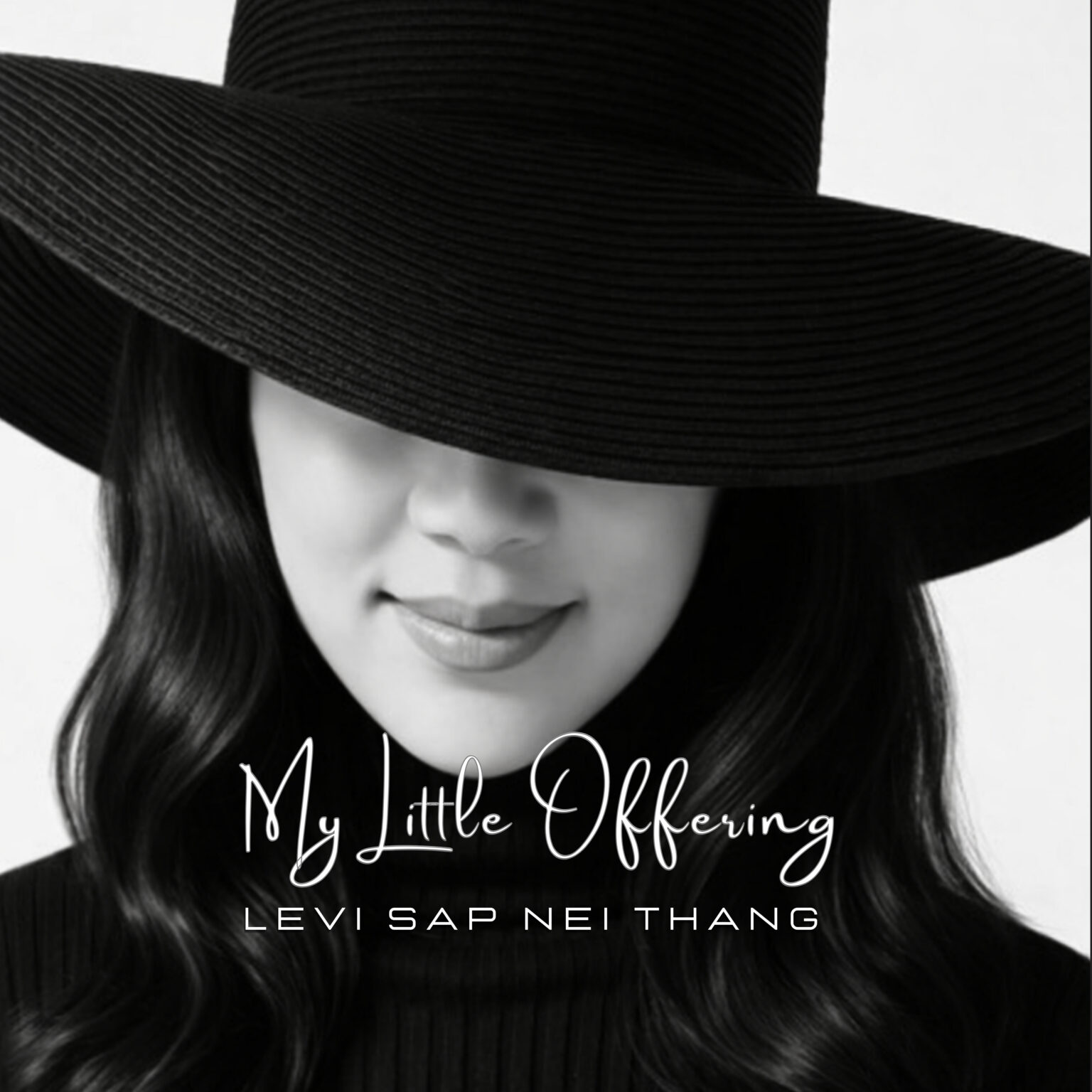
Released on February 14, 2026, My Little Offering by Levi Sap Nei Thang arrives as a carefully structured testimony. Launched on Valentine’s Day, the symbolism is clear: this is an album centred on love — not romantic affection, but the enduring, redemptive love of Jesus Christ. Across fifteen tracks, including nine English originals and six multilingual worship renditions, Levi shapes a deeply personal spiritual narrative. The result is an album that moves with intention, guiding listeners through surrender, repentance, healing, assurance, and finally, global devotion. It is intimate and expansive, grounded in personal trial yet directed toward the wider body of believers.
The album opens with its title track, “My Little Offering,” a gentle act of surrender that sets the theological and emotional tone. The song reflects the humility of bringing one’s smallest gift before God, trusting that sincerity matters more than grandeur. Levi’s vocal delivery is restrained yet earnest, carrying a quiet conviction rather than theatrical intensity. “If All I Have Is Me” continues this posture of dependence, acknowledging that when material securities fall away, self-offering remains enough. Together, these opening songs establish the album’s first movement — surrender as the foundation of faith. There is no pretence here, only the honest admission that everything begins with yielding.
The second movement, centred on repentance and confession, deepens the emotional register. “I Confess My Shame” approaches vulnerability without self-condemnation. The lyrics confront human weakness directly, yet they are anchored in the assurance of mercy. “Jesus I Come To You” follows as a natural progression, transforming confession into communion. The tone shifts from introspective remorse to a confident approach, emphasising that repentance leads not to distance, but to restored fellowship. Levi’s phrasing throughout these tracks feels prayerful, as though the microphone captures moments first spoken in solitude before God.
The third thematic section — restoration, grace, and healing — forms the heart of the album. “Grace That Carried Me Home” stands out as a testimony of divine faithfulness during seasons of opposition and suffering. Levi has shared that this project emerged from a difficult period marked by rejection and profound personal trial. Rather than responding with retaliation, she chose silence and trust. That decision permeates this track, where grace is not abstract theology but lived experience. “Don’t Let Go Of Me” is a tender cry for sustaining presence, capturing the tension between fragile faith and steadfast hope. Meanwhile, “Wounds into Music” transforms pain into praise, articulating how brokenness can become a vessel for worship. In “Lord Come Clean Me,” the plea for purification underscores a belief in continual renewal. These songs do not rush healing; they dwell within it.
“He Knows My Name,” the album’s ninth track, transitions into the fourth movement: identity and assurance. After surrender, confession, and restoration comes the rediscovery of belonging. The song emphasises that God’s love is personal and attentive — that no individual is overlooked. Its melody is comforting, almost lullaby-like, reinforcing the message of divine recognition. In the broader structure of the album, this track functions as a turning point. The believer who began by offering herself now stands secure in identity, no longer defined by past wounds but by divine affirmation.
The final movement broadens the album’s scope through multilingual worship expressions of devotion. Beginning with “يسوع أحبك” (Arabic – “Jesus, I Love You”), Levi declares love in a language spoken across the Middle East and North Africa, symbolising faith that transcends borders. The simplicity of the refrain enhances its universality. “耶稣 我爱你” (Chinese) continues this global embrace, celebrating Christ’s love reaching East Asia. The Hebrew rendition, “יֵשׁוּעַ, אֲהַבְתִּיךָ,” reconnects worshippers to the linguistic heritage of biblical faith, grounding devotion in its historical roots.
The album then turns toward South and Southeast Asia with “येशु, मैं तुझ से प्यार करता हूँ” (Hindi) and “Yesus, Aku Mengasihi-Mu” (Malay). Each track preserves the same core declaration — love for Jesus — while reflecting distinct cultural expressions. The closing Persian piece, “دوستت دارم، ای نجاتدهنده” (“I Love You, O Savior”), completes the circle. Ending with Persian feels intentional: it affirms that divine love extends even into regions where Christian worship may be costly or hidden. By presenting the same devotional heartbeat across six languages, Levi underscores the universality of worship. The multilingual section does not feel appended; it feels climactic.
Musically, My Little Offering maintains cohesion despite its linguistic diversity. Arrangements are understated, allowing lyrics to remain central. Soft piano passages, gentle string textures, and restrained percussion support Levi’s vocals without overshadowing them. The production favours clarity and warmth over complexity. This simplicity enhances the album’s devotional quality. Rather than dazzling listeners with technical flourishes, the songs invite reflection. The consistency of tone across fifteen tracks ensures that the album unfolds as a unified spiritual meditation rather than a fragmented playlist.

Beyond its musical qualities, the album’s greatest strength lies in its authenticity. Levi’s testimony — choosing trust over retaliation, faith over fear — shapes every lyric. There is no sense of performance for acclaim; the project feels genuinely offered. The title itself, My Little Offering, becomes thematic shorthand for the entire endeavour. Each note, each translated phrase, each prayerful refrain functions as a gift laid before God and shared with listeners. The Valentine’s Day release date reinforces the central message: the greatest love is not fleeting affection, but steadfast devotion rooted in Christ.
In its entirety, My Little Offering succeeds as a personal confession and communal invitation. It guides listeners through a deliberate five-part journey: surrender, repentance, restoration, identity, and global love. The arc feels pastoral rather than promotional, encouraging believers to bring their own wounds, doubts, and hopes before God. By the album’s conclusion, the listener is not merely entertained but gently drawn into worship. Levi Sap Nei Thang has crafted a project that honours her testimony while extending comfort and encouragement to others. As a devotional work grounded in lived faith, My Little Offering stands as a sincere and enduring expression of hope.
For more information, follow Levi Sap Nei Thang:
WEBSITE – FACEBOOK – SPOTIFY – YOUTUBE – INSTAGRAM


