

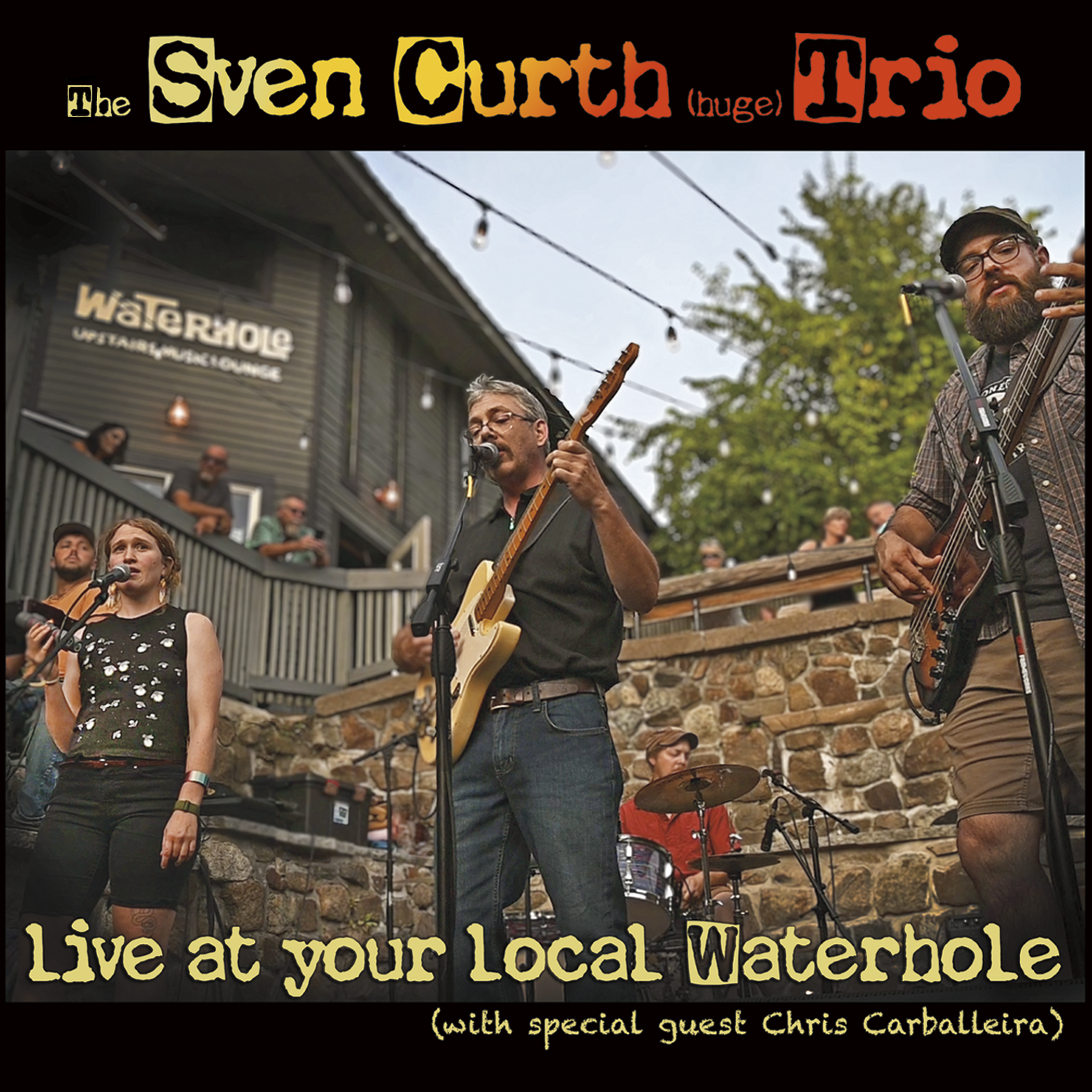
Few recordings manage to capture the raw spontaneity of a live performance while maintaining musical clarity and emotional presence, yet Live at Your Local Waterhole accomplishes exactly that. Performed by The Sven Curth (Huge) Trio with special guest Chris Carballeira, the album documents a spirited evening performance recorded in Lake Placid, New York. Across nine tracks, the group blends roots rock, blues, Americana, and moments of playful genre experimentation into a lively and engaging set. What makes the record particularly compelling is the sense that the listener is seated among the crowd, absorbing the energy of the room as the band moves effortlessly between humour, reflection, and vibrant musicianship.
The album begins with “How Come?”, an opening number that immediately establishes the band’s character-driven songwriting style. Twangy guitars and a steady blues-influenced bassline create a relaxed yet purposeful groove, while Sven Curth’s vocals deliver a conversational reflection on the fleeting nature of life’s better moments. The lyrics present life as a game with “limited seating,” an observation that feels humorous and quietly philosophical. As the track unfolds, vibrant organ textures enter the arrangement, adding depth to the band’s sound while amplifying the laid-back, barroom charm of the performance. The applause at the song’s conclusion reminds the listener that this is not a studio recreation but a genuine shared moment between performers and audience.
Following the playful introduction, “Rain” shifts the mood toward a more atmospheric direction. The song’s title proves fitting as the arrangement evokes the contemplative feeling of a grey afternoon. A jazzy rhythm section carries the track forward while guitar lines drift in gentle waves, occasionally punctuated by expressive bursts of organ melodies. The performance moves gracefully between subtle restraint and expressive improvisation, highlighting the band’s ability to explore different emotional textures within the same live set. While the track carries a reflective tone, it never loses the warm sense of groove that anchors the album’s overall sound.
Momentum returns with “Worse Before Better,” a track that introduces an energetic rhythmic bounce reminiscent of ska and punk influences. The sudden shift in style demonstrates the group’s willingness to dismantle strict genre boundaries in favor of creative spontaneity. The brisk tempo and upbeat instrumentation frame lyrics that explore anxiety and uncertainty with a hint of irony. This ability to balance serious themes with playful musical arrangements is one of the defining qualities of the trio’s songwriting approach. Even when addressing life’s challenges, the band seems determined to maintain a sense of movement and optimism.
Humor becomes even more central in “My Baby Hates Me When She’s Drinking.” Built around a lively 12-bar blues structure, the track leans fully into the storytelling tradition that has long defined roots and barroom rock music. The narrative traces a relationship complicated by alcohol-fueled disagreements, yet the song never feels bitter. Instead, jangling guitars and energetic keyboard flourishes transform the subject into a lively tale delivered with self-aware charm. The band’s chemistry is particularly noticeable here, as each instrumentalist finds space within the arrangement while still contributing to the song’s chaotic yet controlled momentum.
A similarly playful tone continues with “Jesus Loves Tractors,” perhaps the album’s most eccentric and memorable composition. The track blends Americana influences with tongue-in-cheek observations that imagine spiritual figures appreciating something as mundane as heavy farm equipment. The result is absurd and strangely insightful, capturing the trio’s ability to inject humour into unexpected thematic territory. Musically, the song leans on a swaying rhythm and twangy guitar textures that evoke rural landscapes, creating a backdrop that perfectly complements the song’s imaginative narrative.
The set takes another stylistic turn with “Wonder What.” Here, the band explores a reggae-tinged rhythm that gradually builds into a more intense rock climax. Beginning with mellow introspection, the track slowly gathers energy as guitars become more expressive and the rhythm section tightens its grip on the groove. The transformation from relaxed contemplation to passionate release illustrates the band’s strength as live performers. They understand how to guide an audience through shifts in mood without losing cohesion, allowing each song to unfold as part of a larger narrative arc.
Later in the performance, “Let There Be Light” introduces a moment of uplifting simplicity. The song operates as a roots-rock reflection on human connection, sidestepping complicated philosophical debates in favour of a message grounded in everyday compassion. Its buoyant rhythm and melodic accessibility create a communal atmosphere that feels perfectly suited to a live setting. The audience response captured in the recording suggests that the song resonates strongly in the room, reinforcing the sense that the album captures a shared emotional experience.
The penultimate track, “Of Weddings,” delivers a witty commentary on the elaborate rituals surrounding modern marriage ceremonies. Funk-leaning grooves intertwine with bluesy guitar phrases as the lyrics humorously describe the financial and social spectacle that weddings can become. The storytelling is sharply observant without ever feeling cynical, maintaining the album’s overall warmth. By presenting the narrative from the perspective of a slightly bewildered participant, the song highlights the trio’s talent for creating relatable characters who bring everyday situations to life.
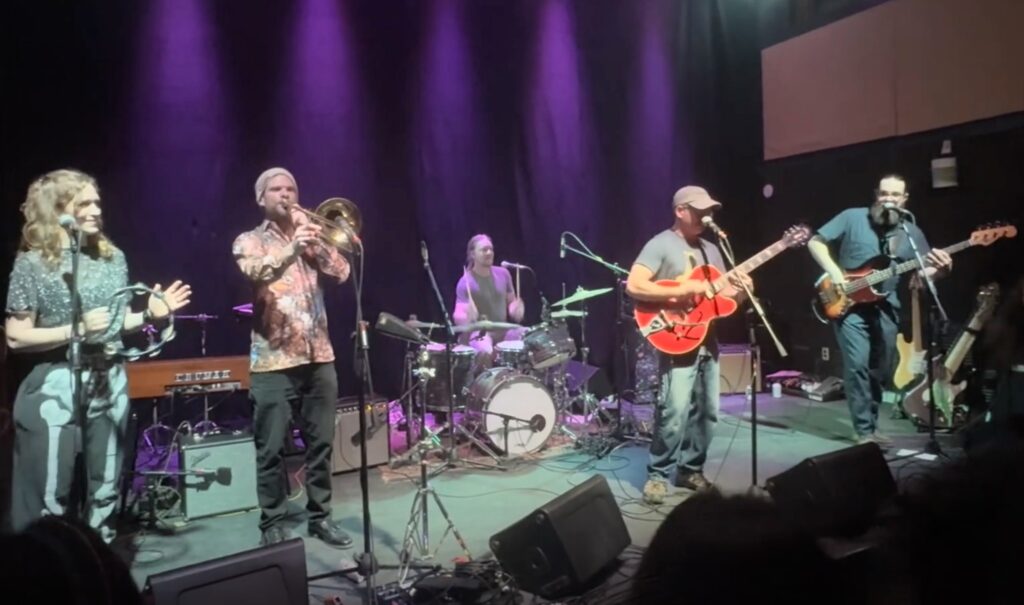
Closing the album is “Go Away, Cloudy Day,” a spirited finale that leaves the listener with a sense of hopeful release. The track blends acoustic blues rhythms with bright organ flourishes and layered vocal harmonies, creating an uplifting conclusion to the set. Its message—pushing away gloom in favor of lighthearted resilience—captures the spirit that runs throughout the entire album. Even when exploring themes of heartbreak, confusion, or frustration, the music consistently returns to the idea that humor and creativity offer a way forward.
Ultimately, Live at Your Local Waterhole stands as a vivid snapshot of The Sven Curth (Huge) Trio at their most authentic. Anchored by Sven Curth’s charismatic songwriting and supported by the steady rhythms of Kyle Murray on drums and Colin Dehond on bass, the group performs with an effortless chemistry that feels relaxed and electrifying. The addition of special guest Chris Carballeira further enriches the sonic palette, allowing the arrangements to expand beyond the core trio format. What emerges is a live album that celebrates spontaneity, storytelling, and the simple joy of musicians playing together in front of an appreciative crowd. Through humour, genre-blending experimentation, and heartfelt performance, the record proves that sometimes the most memorable music happens not in polished studios, but in the warm, unpredictable environment of a local stage.
For more information, follow The Sven Curth (Huge) Trio:
WEBSITE – FACEBOOK – SPOTIFY – BANDCAMP – YOUTUBE – INSTAGRAM