

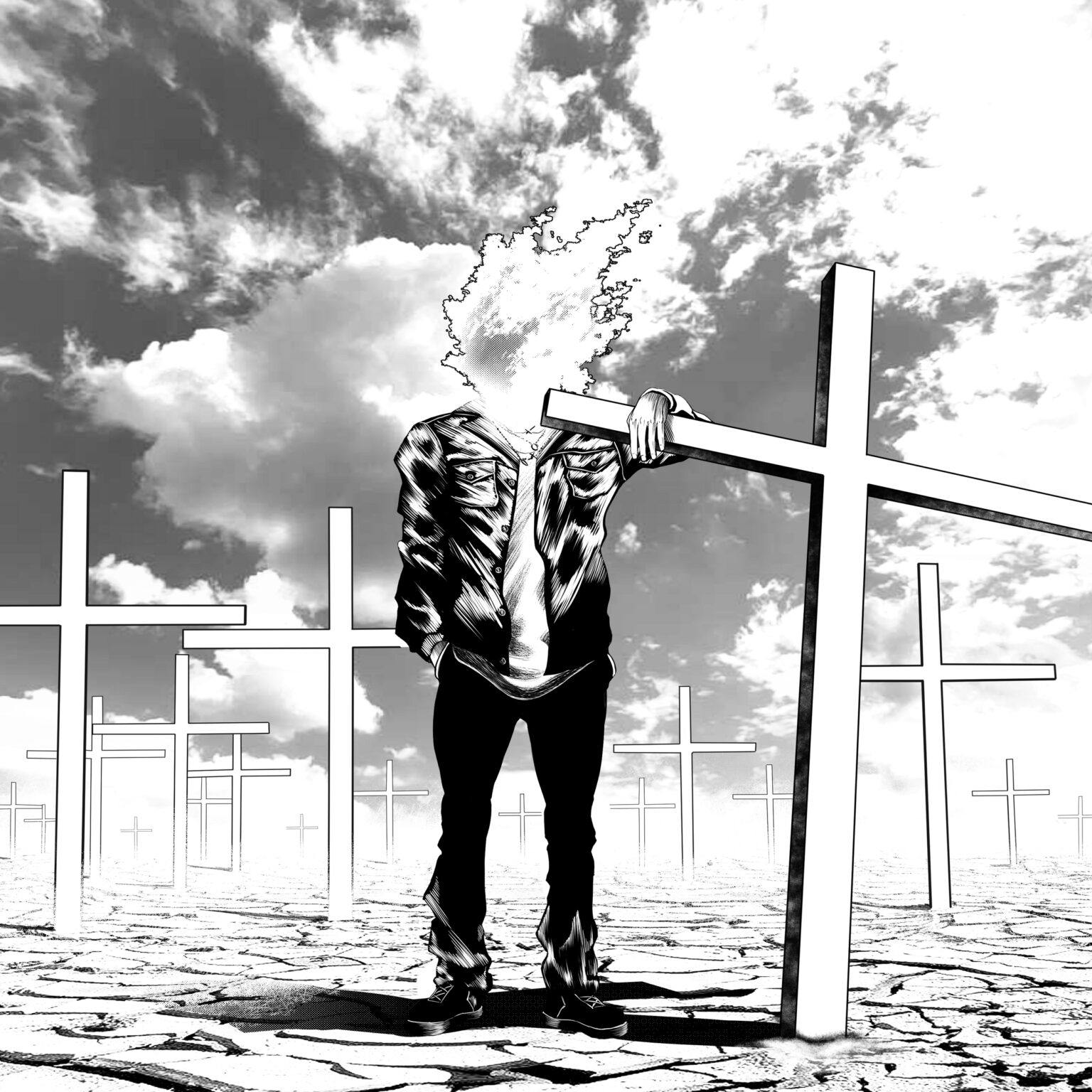
Jake Vera’s Lost is an album that lives up to its title not by drifting aimlessly, but by courageously mapping the emotional terrain of disorientation, faith, anger, and self-reckoning. Released on October 16, 2025, the record feels like a late-night confession whispered through walls of reverb and distortion, born not in glossy studios but in the intimacy of a bedroom and the boundless space of online collaboration. Working alongside producer Reactance and mixing engineer Sefi Carmel, Jake Vera crafts a body of work that feels deeply human in an increasingly digital age. Lost doesn’t chase trends, but wrestles with them, standing as a reminder that vulnerability, when paired with conviction, can still cut through the noise.
The album opens with “Welcome,” a fitting introduction that feels less like an invitation and more like a threshold. It sets the emotional tone with restrained tension, drawing the listener into a world colored by shoegaze haze and alt-rock grit. From there, “Wasteland” expands the sonic palette, leaning into desolation both lyrically and musically. The track echoes the influence of bands like Three Days Grace and Breaking Benjamin, but Jake Vera avoids imitation by grounding the song in his own emotional vocabulary. The guitars feel wide and windswept, while the vocals hover between exhaustion and resolve, capturing the sensation of standing in the aftermath of something broken and wondering what remains.
“Haunted” and “Burn” push the album into darker territory, both sonically and thematically. “Haunted” feels like a confrontation with inner demons, its layered guitars and echoing vocals creating a claustrophobic atmosphere that mirrors the weight of unresolved memories. There’s a shoegaze sensibility here—sound as emotion rather than ornament—where texture becomes storytelling. “Burn,” by contrast, is more direct and volatile. It simmers with resentment and frustration, channelling nu-metal energy reminiscent of Amira Elfeky’s modern edge, yet filtered through Jake’s introspective lens. The song feels like a necessary release, a moment where restraint gives way to raw expression without losing emotional clarity.
At the album’s core lies a sense of internal conflict, most vividly explored in tracks like “Resentment” and “Inside.” “Resentment” pulses with restrained anger, its melodic structure carrying a bitterness that never quite explodes but instead lingers, unresolved. It’s a mature take on rage—less about catharsis, more about acknowledging its presence. “Inside” turns inward even further, offering one of the album’s most intimate moments. The fact that the vocals were recorded in Jake’s bedroom becomes especially significant here; you can almost feel the closeness, the quiet room surrounding each line. The song speaks to isolation, faith, and the struggle to reconcile belief with reality, making it one of Lost’s most emotionally resonant pieces.
“Time” and “Divide” function as reflective mirrors to one another, exploring how distance—emotional, ideological, or temporal—can fracture relationships. “Time” carries a melancholic patience, built on acoustic textures that soften the album’s heavier edges. It’s a moment of breathing room, allowing the listener to reflect on everything that has come before. “Divide,” however, reintroduces tension, tackling separation head-on. The production here shines, with reactance’s influence evident in the balance between atmospheric depth and structural clarity. The song feels expansive yet focused, underscoring the album’s recurring theme: connection strained but not entirely severed.
As Lost approaches its conclusion, “Collapse” and “Forsaken” deliver a powerful emotional descent. “Collapse” feels like the inevitable breaking point, where the cumulative weight of the album’s themes finally buckles. The instrumentation grows heavier, more urgent, while Jake’s vocals carry a sense of surrender that is painful and honest. “Forsaken,” the closing track, doesn’t offer an easy resolution. Instead, it sits in the aftermath, acknowledging loss without rushing toward redemption. There’s a quiet strength in this choice—a refusal to sugarcoat healing or force closure where it doesn’t yet exist.
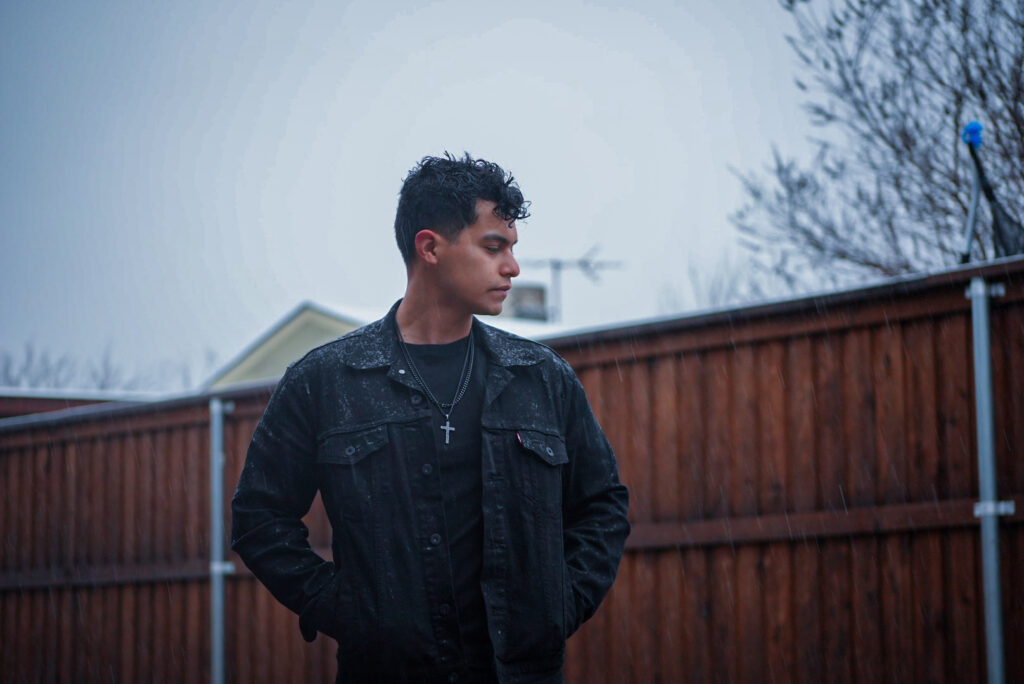
One of the most compelling aspects of Lost is how seamlessly it blends acoustic elements with alternative rock and shoegaze textures. The influence of Thirty Seconds to Mars can be felt in the album’s cinematic ambition, but Jake Vera keeps the focus grounded in personal storytelling rather than grandiosity. Sefi Carmel’s mixing ensures that even the densest moments retain clarity, allowing emotion to breathe within the walls of sound. The album’s production never overshadows its intent; instead, it amplifies the sincerity at its core.
Ultimately, Lost is a document of thought, faith, and lived experience filtered through distortion and melody. It speaks to listeners who feel caught between certainty and doubt, connection and isolation. In a world increasingly shaped by automation and surface-level interaction, Jake Vera offers something rare: a reminder that music can still be a place of refuge, reflection, and real human connection. Lost doesn’t promise answers, but it offers companionship in the search—and sometimes, that’s exactly what we need.
For more information, follow Jake Vera:
WEBSITE – SOUNDCLOUD – BANDCAMP – YOUTUBE – SPOTIFY – INSTAGRAM