


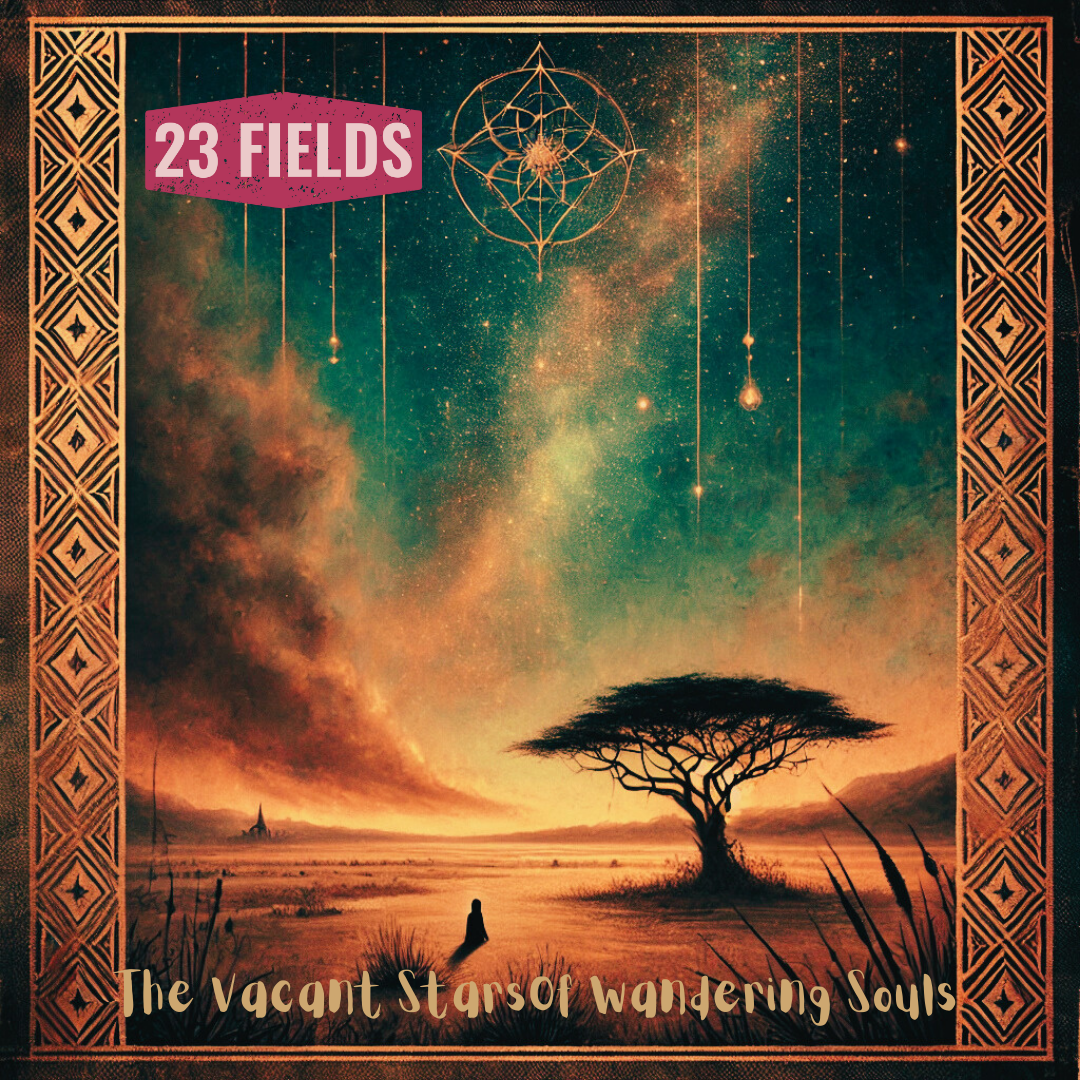
23 Fields’ The Vacant Stars of Wandering Souls is an album that feels less like a conventional collection of songs and more like a drifting constellation of memories, places, and emotions. Emerging as an evocative alternative project, 23 Fields craft a deeply atmospheric record that explores isolation, longing, and the quiet gravity of human connection in a world that often feels too large, too fast, and too impersonal. From the very beginning, the album positions itself as a reflective journey rather than a spectacle. This is music built on mood, space, and emotional resonance — textured indie instrumentation, intimate vocal performances, and carefully shaped arrangements that invite listeners inward rather than pushing outward. The guiding theme, as expressed by Step, revolves around drifting: the feeling of searching for meaning, belonging, and grounding in uncertain times. That concept defines the entire sonic architecture of the album, making it feel cohesive, immersive, and purpose-driven from start to finish.
What makes The Vacant Stars of Wandering Souls so compelling is its cinematic quality. The production emphasises atmosphere and negative space as much as melody and rhythm, allowing silence, reverb, and restraint to become emotional tools in themselves. There’s a strong sense of visual storytelling embedded in the sound — late-night drives, empty streets, long journeys, quiet rooms, and moments of unexpected clarity that arrive without warning. Each track feels like a scene rather than a standalone song, contributing to a broader narrative arc that rewards full-album listening. This is not a record designed for instant gratification or algorithmic consumption, but built for immersion. The pacing is deliberate, the transitions feel natural, and the emotional flow never feels rushed. You’re encouraged to pause, to breathe with the music, and to locate your own memories and meanings within its layered landscapes.
The album opens its gates with generosity and warmth, immediately setting a welcoming tone that contrasts beautifully with the underlying themes of isolation and wandering. Tracks like “Afrika Nitarudi” and “The Mary Stanford (Eternal Father Strong To Save)” establish a sense of emotional openness, where melody and groove coexist with introspection. There’s a warmth in the rhythmic movement that subtly nods toward classic soul and pop influences — even hints of Lionel Richie-like smoothness — while orchestral textures evoke the golden glow of old cinematic storytelling, reminiscent of classic Walt Disney Pictures adventure soundscapes. This opening stretch feels like light before shadow, connection before distance, grounding before drifting. It gives the album an emotional foundation that makes the later introspective and melancholic moments feel deeper and more human rather than cold or detached.
As the album unfolds, songs like “Where Did We Go So Wrong?” and “Sidelines” introduce a shift in emotional temperature. Celebration gives way to distance, and warmth is replaced with reflection. “Sidelines” in particular feels like a pivotal emotional turn — the vocal delivery enters with measured drama, carrying a theatrical quality that recalls the expressive depth of David Bowie, without ever slipping into imitation. The grain in the voice adds texture and vulnerability, making the performance feel lived-in rather than performed. The phrasing bends around the rhythm, allowing the story to breathe instead of rushing. You feel suspended between memory and presence, between what was and what is. Beneath the reflective surface, a hypnotic pulse continues to move forward, reminding the listener that time never truly stops, even when emotions linger in stillness.
Tracks like “Lost Evening” and “Shotgun Bring Me Down” expand the album’s emotional geography. “Shotgun Bring Me Down” shifts the scenery dramatically, introducing a rhythm that feels cinematic and kinetic, like outlaws moving through desert dust and open landscapes. There’s motion here, urgency, and tension, yet the band never abandons refinement. The syncopation hits with force, but space remains for nuance. Elegance and grit coexist, creating a balance between raw energy and emotional control. This duality becomes one of the album’s defining traits: nothing is ever purely soft or purely aggressive. Every track lives in the in-between — between light and shadow, intimacy and distance, movement and stillness.
The emotional core of the album becomes even more intimate with tracks like “Trace Her Sun,” “You’re Alright,” and “Pavement Cracks.” These songs lean into vulnerability without melodrama. “You’re Alright” in particular softens the edges of the record, offering a gentle melodic reach that feels like reassurance rather than resolution. The arrangement supports the vocal instead of dominating it, allowing emotion to grow organically. Nothing shouts — everything speaks. There’s a quiet power in that restraint, a confidence in subtlety that many modern productions lack. These tracks feel like conversations rather than declarations, like shared moments rather than performances.
“Sioux” and “With Your Stars” bring the album toward its emotional closure with a sense of reflection and forward motion. “With Your Stars” feels especially significant as a closing piece. An ’80s-flavored rhythm section emerges, carried by a beautifully interwoven bassline that adds both movement and elegance. The farewell it creates is neither tragic nor triumphant — it’s contemplative, bittersweet, and honest. Folk roots remain visible throughout the composition, but 23 Fields shape them into something unmistakably their own, blending nostalgia with modern atmosphere. The ending doesn’t resolve every emotional question the album raises — and that’s precisely the point. It leaves space for the listener to continue the journey beyond the final note.
Lyrically and emotionally, The Vacant Stars of Wandering Souls succeeds because it never tries to over-explain itself. The themes of drifting, searching, memory, and connection are present, but they’re expressed through feeling rather than exposition. The album trusts the listener’s emotional intelligence. It doesn’t dictate meaning, but invites interpretation. That openness is what gives the record its lasting impact. Different listeners will find different stories inside these songs, different reflections of their own experiences, different emotional anchors.

Ultimately, this album stands as a quietly powerful statement in modern alternative music. 23 Fields has created a record that values atmosphere over excess, emotion over spectacle, and cohesion over chaos. The Vacant Stars of Wandering Souls is not loud, but it is deep. It is not flashy, but it is resonant. It doesn’t demand attention, but earns it through honesty, texture, and emotional intelligence. This is an album for long nights, long journeys, and long thoughts.
In the end, “The Vacant Stars Of Wandering Souls” stands as a haunting, beautiful, and deeply human piece of music. It captures the essence of 23 Fields as an artistic project — atmospheric, introspective, cinematic, and emotionally sincere. It’s a track for late nights, long journeys, quiet rooms, and reflective minds. Not designed for distraction, but for connection. Not built for noise, but for meaning. In a world that often feels overwhelming and impersonal, this album offers something rare: a space to breathe, to feel, and to simply exist within sound.
For more information, follow 23 Fields:
WEBSITE – FACEBOOK – SOUNDCLOUD – YOUTUBE – SPOTIFY – INSTAGRAM