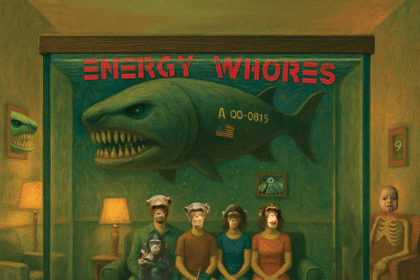


Atlanta’s Blackfox has always been a band unafraid to stretch the limits of genre, but Blackfox4 is where that fearless experimentation finds its fullest, most exhilarating expression. Released after years of slow-burning evolution and post-pandemic reflection, the album feels like a statement of purpose — not just for the band, but for rock itself. Across nine dynamic tracks, Blackfox4 builds a bridge between alternative rock, punk, prog, and alt-pop, balancing grit and grace in equal measure. It’s the sound of a band firing on all cylinders, tapping into decades of rock lineage while keeping feet firmly in the present.
The record opens with “Beaming”, an energetic, sunlit burst that immediately establishes the album’s tonal range. Written and sung by Andy Gish, the track glows with the warmth of classic power pop but pulses with the urgency of early new wave. There’s something joyfully human about its message — that dizzy, electric rush of connection when someone lights up your world. The interplay between Gish’s soaring vocals and the dual guitars of Stacey Cargal and Ryan Taylor sets the stage for what’s to come: a band that thrives on contrast, chemistry, and controlled chaos. Beneath the effervescence lies Greg Wright’s bass, playful yet grounding, and Mitch Sosebee’s crisp drumming that keeps the whole thing airborne without losing its punch.
“Bring Your Fire” shifts gears with punkish ferocity — a track that could have slipped seamlessly into a late-’70s CBGB playlist yet feels utterly modern in its execution. It’s loud, fast, and unrelenting, a rallying cry for unapologetic passion. Monica Arrington’s vocals cut through like a spark in a gasoline-soaked room, commanding but not domineering, emotive yet razor-sharp. The band’s tightness is palpable here; every riff and rhythm feels deliberate, yet spontaneous — the sound of musicians who know how to listen to each other. The song’s raw drive recalls early Blondie or The Pretenders, but with Blackfox’s own brand of Southern cool, forged in Atlanta’s eclectic rock underground.
Then comes “Jump”, where the band leans into its 1980s influences with a dance-punk sheen that’s as infectious as it is intelligent. The keyboards of Jim Combs shimmer like strobe lights over a crowded floor, while the rhythm section pulses with precision. There’s a joyful elasticity in the way Jump moves — a track that dares listeners to let go, to surrender to motion. It’s a reminder that Blackfox are a rock band and sonic architects, capable of crafting songs that make you feel before you even realise why. In a lesser band’s hands, genre-jumping could feel like indecision; here, it feels like mastery.
“Goodbye This Time”, sung by Monica Arrington, offers a more introspective counterpoint — a power-pop breakup song that aches with bittersweet resignation. Arrington’s voice, equal parts vulnerability and resolve, carries the narrative with quiet conviction. The track captures that familiar emotional terrain of endings that don’t feel final — where closure and longing coexist in uneasy balance. Musically, the band keeps it restrained, allowing the melody to breathe, yet there’s a cinematic quality to the arrangement that hints at their prog and art-rock sensibilities. Like much of Blackfox4, the song refuses to settle neatly into a single mood; instead, it lives in the space between heartbreak and healing.
The album’s midpoint marks a tonal shift with “Running Out of Danger”, a sprawling, epic rock track that showcases the band’s more ambitious side. It’s here that Blackfox’s musical dexterity shines brightest — the intricate guitar work, the fluid tempo changes, the blend of melody and menace. Stacey Cargal’s songwriting takes centre stage, weaving lyrical threads of anxiety, escape, and persistence. There’s a cinematic tension running through the piece, a sense of propulsion that feels almost visual. “Running Out of Danger” could easily score a neo-noir chase through neon-lit streets — its energy restless, its heart pounding. It’s no surprise that radio gravitated toward this one; it’s accessible and richly layered.
“Difficult” follows, offering a reflective breather without losing momentum. Built around a Springsteen-like narrative core, it deals with reconciliation — the tug-of-war between pride and forgiveness. The guitars ring out with clarity, echoing the emotional push and pull at the song’s heart. You can hear the years of collaboration in the band’s delivery; each instrument seems to know when to speak and when to hold back. Wright’s production here is particularly elegant — full-bodied but never cluttered, allowing the song’s emotional resonance to shine.
With “She Died Inside”, Blackfox delivers one of the album’s standout moments — a crisp, 1980s-style power-pop anthem reminiscent of Joe Jackson and Elvis Costello, yet imbued with the band’s unique modern melancholy. The hooks are undeniable, but it’s the lyrical undercurrent of alienation that gives the song its staying power. There’s an almost theatrical flair in the way the band balances upbeat rhythm with tragic emotion, turning contrast into catharsis. The harmonies are tight, the guitars biting, and the energy is infectious. It’s easy to see why this one has become a favourite among DJs and fans alike — it feels like rediscovering a lost classic that’s been hiding in plain sight.
“Strangers” and “Sacred” close out the album with depth and dimension. “Strangers” leans into the band’s prog and art-rock instincts, carrying shades of Pink Floyd in its atmospheric layering and haunting chord progressions. It’s the most introspective track on Blackfox4, an exploration of distance — emotional, temporal, and existential. The guitars shimmer like distant stars, the rhythm slow and deliberate. “Sacred,” meanwhile, ends the album on a transcendent note, musically and spiritually. Featuring dual vocals from Monica and Stacey, the track unfolds like a ritual — shifting time signatures, swelling harmonies, and dynamic builds that feel almost symphonic. It’s the perfect closer: expansive, searching, and full of light.

Ultimately, Blackfox4 is a testament to collaboration, resilience, and reinvention. The band’s evolution from a swamp-blues power trio into a seven-member creative powerhouse mirrors the album’s thematic undercurrent: the beauty of transformation. Recorded over an extended period, the project benefited from both patience and persistence, allowing each song to develop its own atmosphere while remaining part of a cohesive whole. It’s eclectic, yes, but never disjointed — like a mosaic, every piece essential to the larger image. As one Atlanta musician put it, “It’s one of those rare albums that immediately feels familiar, as if you’ve been listening to it for years.”
In a landscape often obsessed with trends, Blackfox4 stands as a defiant reminder that authenticity still matters. It’s not a record-chasing relevance, but relevance, distilled through decades of craft and community. Blackfox has created a sonic universe that feels timeless and current, wild and deliberate, personal and universal. Their next chapter — already being written at Peter Gabriel’s legendary Real World Studios — promises to push even further. But for now, Blackfox4 is their defining moment: a blazing constellation of sound where every star burns bright.
For more information, follow Blackfox:
Website – Facebook – Bandcamp – Spotify – YouTube