

Destiny Imani’s new EP Wishful Thinking is something you sit with, breathe through, and feel beneath the ribs long after the last note fades. In an alt-R&B landscape overflowing with mood-driven production and aesthetic melancholy, Destiny distinguishes herself with narrative honesty and emotional interiority that feel almost startling in their clarity. Across four intimate tracks, she constructs a soft, cinematic universe where heartbreak is not a spectacle but a study — a space where the private battles of loving, losing, unlearning, and hoping unfold like whispered confessions. Coupled with the thematic YouTube episodes she created for each track, Wishful Thinking lives as a musical and visual journal, blurring the line between sound and story. It’s an EP about vulnerability, but even more so, about the bravery it takes to believe again.
The project opens with “Love Again,” a tender and breath-caught-in-your-throat meditation on reopening the heart after it’s been shattered. Destiny’s voice — warm, reflective, and full of trembling courage — floats over atmospheric production that feels like early-morning sunlight through curtains. The lyric “I would do it over again; break my heart for love that won’t end” captures the soul of the EP: the willingness to risk pain for the possibility of connection. What’s striking here is her refusal to sugarcoat the process. It’s scary, she admits. It’s fragile. But it’s also beautiful. Destiny positions this track not as a triumphant beginning, but as a hesitant step forward — the emotional inhale before the EP’s deeper dives.
From there, “Blank Slate” arrives like the quiet aftermath of choosing to try again. The production feels more spacious, mirroring the sense of standing in a new emotional landscape and realising how much has been lost — and how much must be relearned. This track is the turning point, the moment when Destiny acknowledges that starting over is about grief. The storytelling becomes sharper, more introspective, acknowledging the weight of memories and the courage needed to let them go. Her delivery is soft but resolute, as if she’s writing a goodbye letter wrapped inside a hello. The song captures the duality of rebuilding: the exhilaration of new beginnings intertwined with the ache of what didn’t survive the journey. In this way, “Blank Slate” becomes the EP’s emotional shift from longing to healing.
“Therapy,” the third and arguably most piercing track, forms the core of the EP’s emotional architecture. Here, Destiny exchanges romantic introspection for self-interrogation. The tone is quieter, almost confessional, as though she’s opening a journal not meant for anyone else’s eyes. She acknowledges the push-and-pull between avoidance and accountability, between wanting love to soothe old wounds and recognising that sometimes the work has nothing to do with anyone else. Destiny isn’t afraid to show the rawness of realising that healing requires facing yourself — perhaps the hardest truth of all. The track pulses with a subtle tension, mirroring the inner conflict of wanting relief without doing the hard internal excavation. In many ways, “Therapy” is the EP’s thesis: love cannot fill what self-awareness refuses to acknowledge.
Closing with the title track “Wishful Thinking,” Destiny brings the emotional journey full circle. The production feels airy, weightless — like a breath finally released after holding it too long. This is not the naive hope of someone pretending the hurt never happened. Instead, it’s the grounded, trembling hope of someone choosing possibility despite knowing the risks. The beauty of the track lies in its gentleness. Destiny doesn’t promise that everything will heal perfectly. She doesn’t offer clichés or neat endings. Instead, “Wishful Thinking” acts as a reminder that hope itself is an act of courage — one that must be chosen, not stumbled into. By the time the final notes drift away, the listener is left with a sense of soft resilience, as though Destiny has taken us to the edge of her heartbreak and shown us the horizon beyond it.
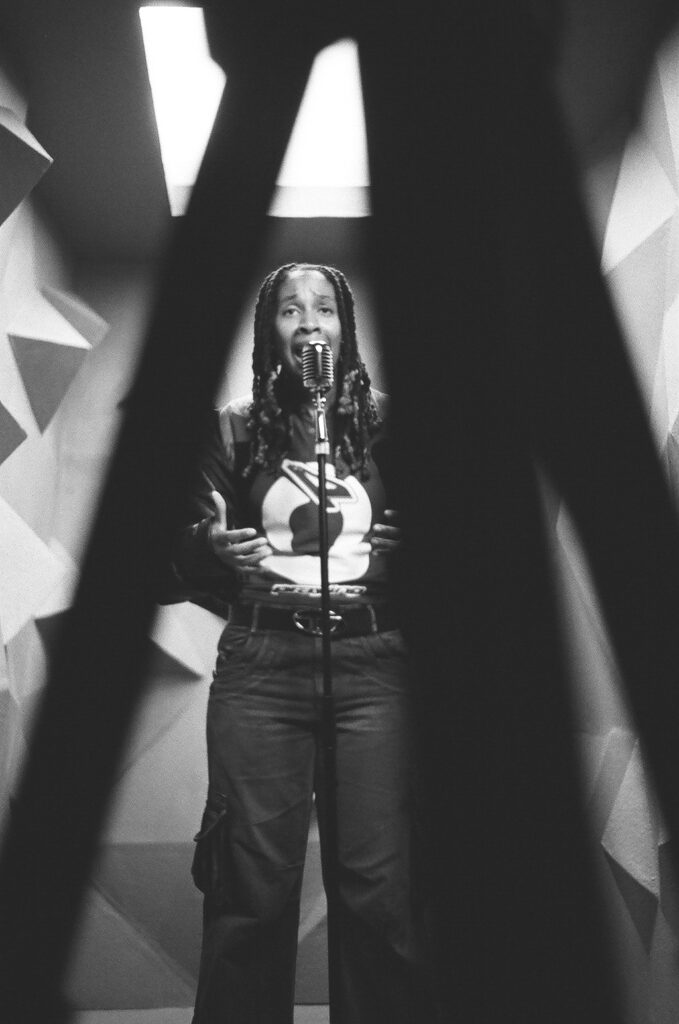
Across all four tracks, Wishful Thinking thrives because Destiny Imani isn’t simply chronicling heartbreak; she’s documenting evolution. Every song builds on the previous one, creating a narrative arc that moves from fear to grief, to introspection, to renewed hope. The project feels cinematic not just because of her accompanying YouTube episodes, but because her lyrical and vocal choices are rooted in storytelling rather than performance. There is no emotional posturing here — only truth laid bare with poetic clarity. She doesn’t dramatise her pain; she humanises it. And in doing so, she creates an empathetic bridge to listeners who have stood in the same spaces between heartache and healing.
Ultimately, Wishful Thinking is Destiny Imani’s most vulnerable and cohesive body of work to date — a delicate, immersive exploration of what it means to grow through love, not just go through it. She invites listeners into her inner world with openness and sincerity, offering solace. In an era where vulnerability is often aestheticised, Destiny offers the real thing. She shares her fears, her doubts, her hopes — and, most importantly, her heart. In doing so, she reminds us that staying wishful is not a sign of weakness, but of resilience. And for those navigating their own quiet battles, this EP might be the gentle hand that guides them toward healing.
For more information, follow Destiny Imani:
Website – Spotify – Soundcloud – YouTube – Instagram