
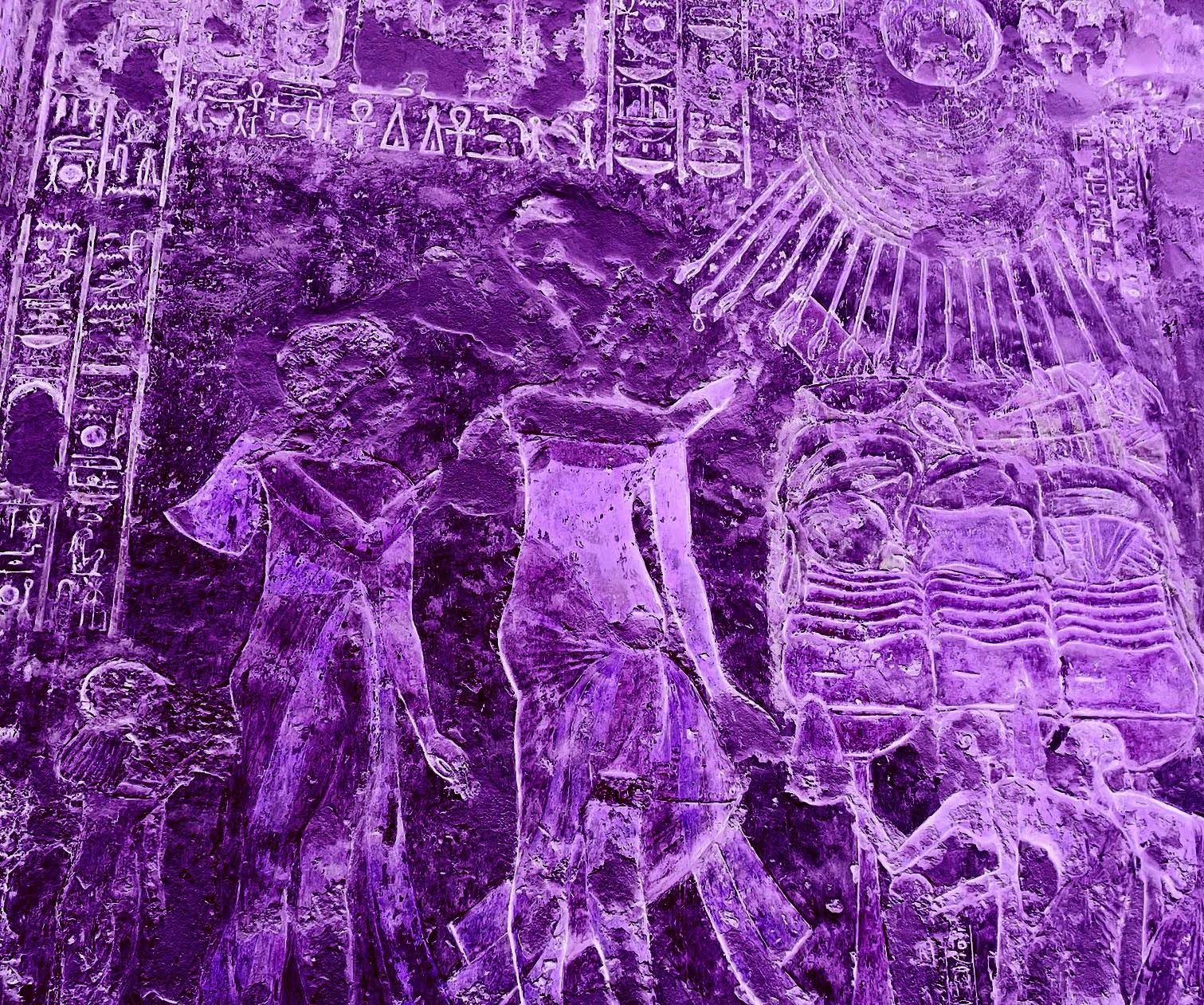
“Amarna Letters” by Lekursi arrives less like a conventional track and more like an artefact unearthed from a forgotten archive, still humming with relevance. From the opening moments, the music establishes itself as something outside linear time, as if ancient memory and modern consciousness are briefly overlapping. BBC Introducing’s description of Lekursi’s work as “unique” feels not only accurate but understated here. This is a piece that resists genre labels and instead functions as a living document—part sonic ritual, part historical meditation, part personal liberation. Listening to “Amarna Letters” feels like reading a message written across centuries, addressed to anyone willing to confront how power, belief, and fear continue to shape human life.
The conceptual foundation of the track is deeply compelling. Inspired by the Amarna tablets and the reign of Akhenaten—Egypt’s most radical pharaoh—Lekursi draws from a moment in history when spiritual language, political order, and collective identity were violently reimagined. Akhenaten’s solar-focused revolution, his rejection of Egypt’s traditional gods in favour of a single divine source, was both visionary and destabilising. In “Amarna Letters,” this historical rupture becomes a mirror for the present. Lekursi does not retell history in a literal way; instead, he channels its emotional residue. The track feels like a coded warning and an invitation at once, suggesting that humanity has stood at similar crossroads before—moments where fear-driven systems tighten their grip, and liberation becomes dangerous and necessary.
Musically, “Amarna Letters” is a collage in the truest sense of the word, layered with care and intention. Abstract electronica forms the core, but it is constantly being interrupted and enriched by post-rock expanses, jazz-inflected phrasing, and folk-like textures that feel hand-played and human. The sitar, winding and orbiting through the arrangement, is particularly striking. It acts as a spiritual thread, looping the listener back into something ancient and cyclical. Each sonic element feels like a fragment of a larger civilisation, superimposed over the present moment. The result is a vivid tapestry that feels simultaneously intimate and monumental, as if the music is whispering secrets while standing beneath a vast, unblinking sun.
What truly sets “Amarna Letters” apart is its emotional architecture. Despite the density of ideas and sounds, the track never feels cluttered or academic. There is a strong sentimental current running through it, a sense that this music is born from lived experience rather than abstract theory. Lekursi’s connection to ancestral roots and lucid dream states is palpable; the track moves with the logic of dreams, where symbols replace explanations and emotions arrive before meaning. There is liberation here, but it is not loud or triumphant. It feels earned, hard-won, like a manifesto smuggled out of an inner prison. The music suggests escape not through rebellion alone, but through remembrance—by recognising patterns that have repeated across centuries and choosing, consciously, to respond differently.

In the end, “Amarna Letters” feels less like a song you finish listening to and more like a space you leave reluctantly. It lingers, asking questions long after the final notes dissolve. Lekursi draws a clear parallel between Akhenaten’s era and our own: worlds governed by fear, rigid belief systems, and enforced narratives that suppress alternative ways of seeing. Yet within that parallel lies hope. By blending modern and ancient sounds, by collapsing timelines into a single emotional experience, Lekursi suggests that awareness itself is a form of freedom. “Amarna Letters” is nothing like anything else—not because it seeks novelty, but because it dares to be sincere, complex, and historically conscious all at once. It is a reminder that music can still function as prophecy, memory, and quiet resistance—and that sometimes, the most radical act is simply remembering who we have always been.
For more information, follow Lekursi:
WEBSITE – SOUNDCLOUD – SPOTIFY – BANDCAMP – YOUTUBE – INSTAGRAM