
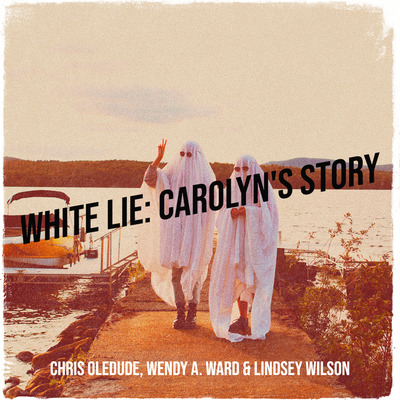
“WHITE LIE: CAROLYN’S STORY” seeks confrontation. Chris Oledude, Wendy A. Ward, and Lindsey Wilson craft a piece of music that feels more like a reckoning than a composition, using sound as a moral lens to examine one of America’s most haunting historical crimes: the murder of Emmett Till. Rather than retelling the event from the familiar angles of tragedy or martyrdom, the track does something far more unsettling — it imagines the internal landscape of Carolyn Bryant, the woman whose accusation helped ignite the violence that took Till’s life. This narrative decision alone makes the song profoundly uncomfortable, but also deeply necessary. By stepping into the psychological space of the accuser, the track exposes the machinery of racism as a human decision — a lie, a silence, a choice — and shows how one moment of falsehood can ripple outward into irreversible destruction.
Musically, “White Lie” moves with a restrained gravity that mirrors its subject matter. The arrangement avoids melodrama, instead favouring tension, atmosphere, and emotional pressure. The production feels intentional in its pacing — slow-burning, controlled, and heavy with implication. Wendy A. Ward’s lead vocals carry a haunting clarity, delivering the narrative with a voice that feels intimate and distant, as if the story itself is being confessed from a place of moral dissonance rather than emotional release. Lindsey Wilson’s contributions add layered depth, reinforcing the internal conflict and fractured psychology that the song seeks to portray. The backing vocals and ad-libs function not as embellishment, but as echoes — voices that feel like memory, guilt, and history colliding in the same sonic space. Geoffrey Owens’s electric guitar work adds texture rather than spectacle, grounding the track in an earthy, human realism that avoids romanticising the subject matter.
What makes the song especially powerful is its refusal to sanitise history. The narrative does not attempt redemption, justification, or moral neutrality. Instead, it exposes the psychological complexity of a lie rooted in racist ideology — a lie protected by power, silence, and social structures. The song becomes less about Carolyn Bryant as an individual and more about what she represents: a system where whiteness functioned as authority, accusation as verdict, and Black life as expendable. By drawing this line forward into contemporary America — with direct cultural resonance in the era of MAGA and modern racial extremism — the track asserts that this is not a closed chapter of history. It is an evolving pattern. The same attitudes that enabled Emmett Till’s murder still breathe inside institutions, rhetoric, and social behaviour today, making “White Lie” a modern warning.
There is also a profound emotional intelligence in how the song frames guilt and consequence. Rather than theatricalising violence, it focuses on the moral gravity of causality — how one untruth can generate a chain reaction of irreversible harm. The reference to Mamie Till’s strength and the galvanising impact of Emmett Till’s death anchors the track in historical reality, reminding listeners that this tragedy was not just a story, but a turning point that helped ignite the Civil Rights Movement. This gives the song a dual function, where it mourns the innocent, and it indicts the systems that made innocence irrelevant. The tree of liberty metaphor becomes brutally literal here — watered not by abstract ideals, but by real blood, real children, real lives stolen before they could begin.

Ultimately, “WHITE LIE: CAROLYN’S STORY” is neither designed for casual listening nor entertainment in the traditional sense. It is cultural testimony — a piece of sonic literature that uses art to interrogate history, power, and moral responsibility. Chris Oledude, Wendy A. Ward, and Lindsey Wilson have created a track that feels more like a memorial and a warning than a song. It challenges listeners to confront not only what happened in 1955, but what continues to happen now — through silence, distortion, denial, and inherited prejudice. In doing so, it transforms music into witness and sound into accountability. This is not a track you simply hear, but one you carry, because it forces you to remember that history is not distant, and injustice is never accidental.
For more information, follow Chris Oledude:
WEBSITE – FACEBOOK – SOUNDCLOUD – YOUTUBE – SPOTIFY – INSTAGRAM