
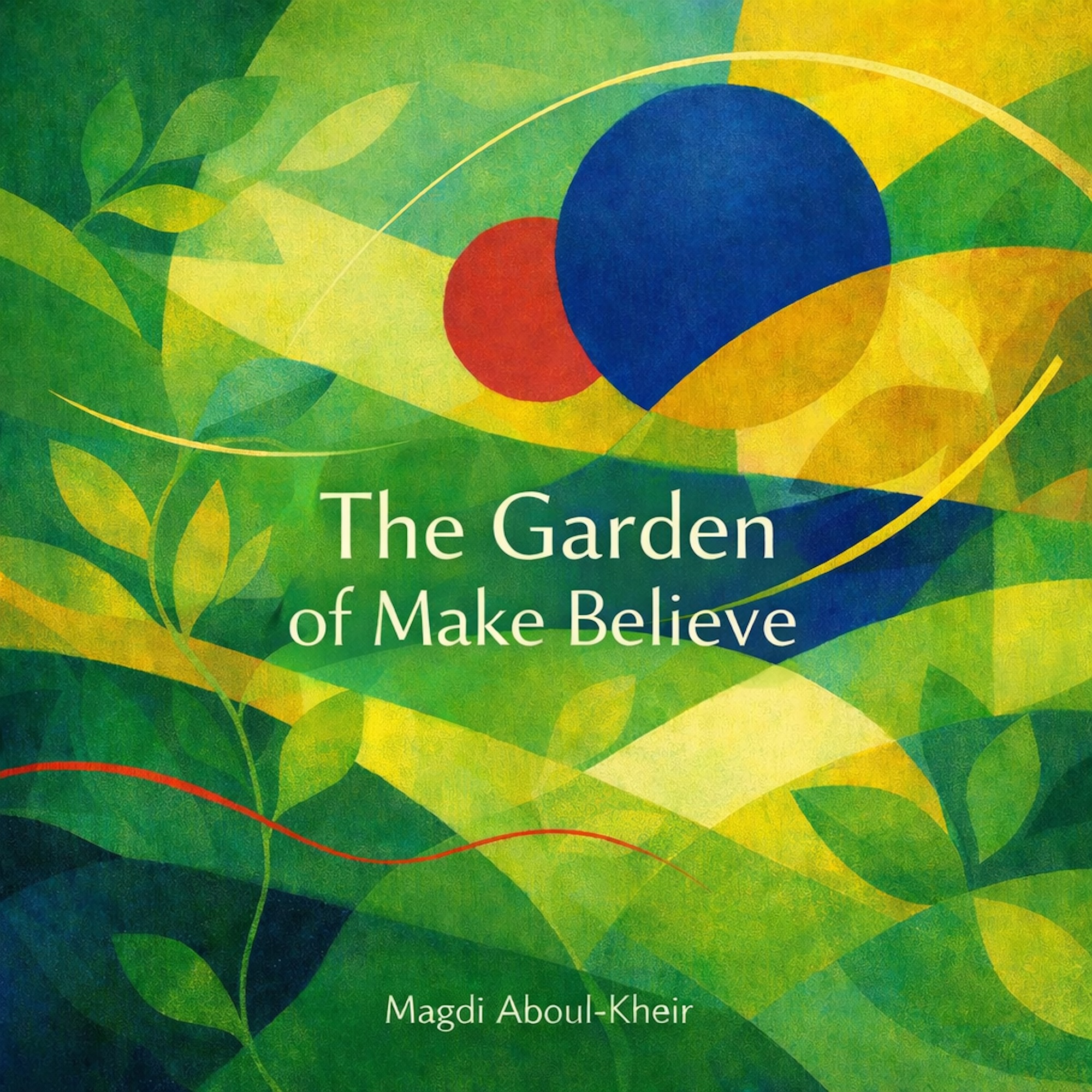
In an era where instrumental music often competes with fast-paced digital production, composer and pianist Magdi Aboul-Kheir continues to demonstrate that thoughtful orchestration and emotional storytelling can still command deep attention. His album The Garden of Make Believe arrives as a graceful continuation of the artistic vision explored in earlier works, including The Piano Has Been Dreaming. While the previous record leaned heavily into dreamlike introspection, this new release expands its sonic canvas, weaving together orchestral arrangements, delicate piano melodies, and ambient textures. Across ten compositions, Aboul-Kheir invites listeners into a tranquil yet imaginative world where nature, emotion, and cinematic grandeur intersect. The album unfolds as a carefully curated journey, one that moves between reflection and wonder with remarkable fluidity.
The opening track, “On the Meadow,” establishes the album’s meditative atmosphere almost immediately. Soft flute tones hover gently above harp patterns and subtle synth layers, evoking the calm sensation of standing in an open field on a warm summer morning. As the composition progresses, a lush string arrangement gradually expands the soundscape, bringing a sense of cinematic scale to what begins as an intimate moment. The music feels suspended in time, allowing the listener to settle into a peaceful rhythm. It is the kind of introduction that sets a narrative tone—less like a traditional album opener and more like the first scene of a thoughtfully scored film. Aboul-Kheir’s ability to evoke vivid imagery through restrained orchestration is evident here, making the listener feel as though they have stepped into the pastoral setting suggested by the title.
Following this tranquil beginning, “If I Could Freeze Time” introduces a deeper layer of introspection. Anchored by an intricate piano performance, the piece explores a reflective emotional landscape that gently questions the fleeting nature of life. The piano phrases feel deliberate and contemplative, while the accompanying strings add a quiet sense of melancholy. Occasional flute accents and airy textures expand the sonic environment, suggesting both the vastness of nature and the introspective solitude of human thought. As the album’s longest composition, the track provides ample space for its ideas to breathe. Its structure gradually builds toward a subtle emotional peak before returning to stillness, echoing the central theme implied by its title—the universal desire to hold on to meaningful moments even as time inevitably moves forward.
The transition into “Love in an Alternate Universe” feels almost seamless, as though the preceding track gently opens the door to a new emotional chapter. Here, Aboul-Kheir leans more heavily into orchestral grandeur, allowing swelling strings to guide the listener through a romantic and cinematic landscape. The composition carries a sense of narrative tension, as if depicting a story of connection that transcends time and place. Its orchestral architecture recalls the sweeping emotional tone often associated with classic film scores, yet it remains unmistakably personal in its melodic phrasing. There is a warmth to the arrangement that suggests both longing and possibility, reinforcing the album’s broader themes of imagination and emotional exploration.
A slightly darker emotional hue appears with “The World in His Arms.” While still grounded in melodic elegance, this track introduces a more brooding atmosphere. Piano and guitar lines intertwine over a restrained orchestral backdrop, creating a sense of quiet gravity. The composition suggests contemplation rather than despair, offering a reflective pause within the album’s narrative arc. There is a cinematic quality here as well, reminiscent of the emotionally charged scoring often heard in dramatic film sequences. Yet the piece never loses the delicate intimacy that defines Aboul-Kheir’s style, allowing its emotional depth to emerge through subtle shifts in harmony and texture rather than overt dramatics.
Returning to a lighter tonal palette, “Gentle Ties” reconnects the album with the natural imagery that shapes much of its atmosphere. The reappearance of flute melodies brings a hint of fantasy back into the soundscape, while soft orchestral swells create a sense of quiet wonder. This track feels like a bridge between emotional reflection and imaginative exploration. Its pacing remains calm, yet the melodic lines carry a quiet optimism, suggesting that connection—whether between people, memories, or ideas—can provide stability in an ever-changing world. The piece’s gentle progression makes it one of the album’s most soothing moments.
The emotional complexity of the album becomes especially apparent in “Tears and Smiles.” Here, Aboul-Kheir’s piano takes center stage, delivering a melody that gracefully balances contrasting emotions. The composition seems to capture the strange intersection between joy and melancholy that often accompanies significant memories. The melodic structure allows moments of brightness to coexist with subtle hints of sadness, creating a deeply human emotional palette. Rather than forcing a singular mood, the piece embraces emotional ambiguity, reminding listeners that life’s most meaningful experiences often contain both celebration and reflection simultaneously.
Nature imagery returns vividly with “The Summer Wind in the Wheat.” This composition demonstrates Aboul-Kheir’s remarkable ability to translate visual and sensory experiences into music. Light orchestral textures ripple through the arrangement like wind moving through tall grass, while gentle melodic patterns evoke a sense of quiet adventure. There is an almost storybook-like quality to the track, reminiscent of cinematic journeys through expansive landscapes. The music feels playful without losing its elegance, encouraging the listener to imagine wide open spaces and golden fields swaying under a bright sky.
The album’s emotional centerpiece arrives with the title track, “The Garden of Make Believe.” As its name suggests, the piece represents the conceptual heart of the record. Piano and strings intertwine in a graceful dialogue, gradually building toward a serene yet emotionally resonant conclusion. The composition feels like a moment of arrival—a realization that imagination and reality are not opposing forces but complementary experiences. By embracing the beauty of everyday life while acknowledging the power of creative interpretation, the piece encapsulates the album’s overarching message. Its closing ritardando leaves the listener suspended in a moment of calm reflection.
Penultimate track “My Yearning and Longing” introduces a slightly more dramatic tone. The orchestration grows richer and more expansive, suggesting a search for meaning beyond the immediate physical world. Rising melodic phrases create a sense of upward movement, almost like a spiritual ascent. The piece raises questions about what drives human curiosity and aspiration: a longing for knowledge, connection, or perhaps something more transcendent. This emotional intensity adds depth to the album’s narrative, reminding listeners that introspection often leads to uncertainty and discovery.

The album concludes with “Sleepletter,” a meditative closing composition that gently guides the listener toward stillness. Harp motifs shimmer softly beneath ascending piano lines, creating an atmosphere that feels almost celestial. The music gradually dissolves into a quiet, contemplative fade, suggesting a return to unity with the natural world. As a closing statement, the track offers comfort rather than finality, leaving space for reflection long after the final notes disappear.
Ultimately, The Garden of Make Believe stands as one of Magdi Aboul-Kheir’s most emotionally resonant projects to date. Drawing from influences that range from classical romanticism to cinematic scoring and ambient sound design, the composer crafts a musical landscape that feels expansive and intimate. Each piece contributes to a cohesive narrative that explores nature, memory, imagination, and emotional connection. Rather than overwhelming the listener with technical complexity, the album prioritises melody and atmosphere, allowing its themes to unfold naturally. The result is a deeply immersive listening experience—one that invites audiences to slow down, reflect, and rediscover the quiet beauty hidden within everyday life.
For more information, follow Magdi Aboul-Kheir
SPOTIFY – FACEBOOK – SOUNDCLOUD – BANDCAMP – INSTAGRAM