
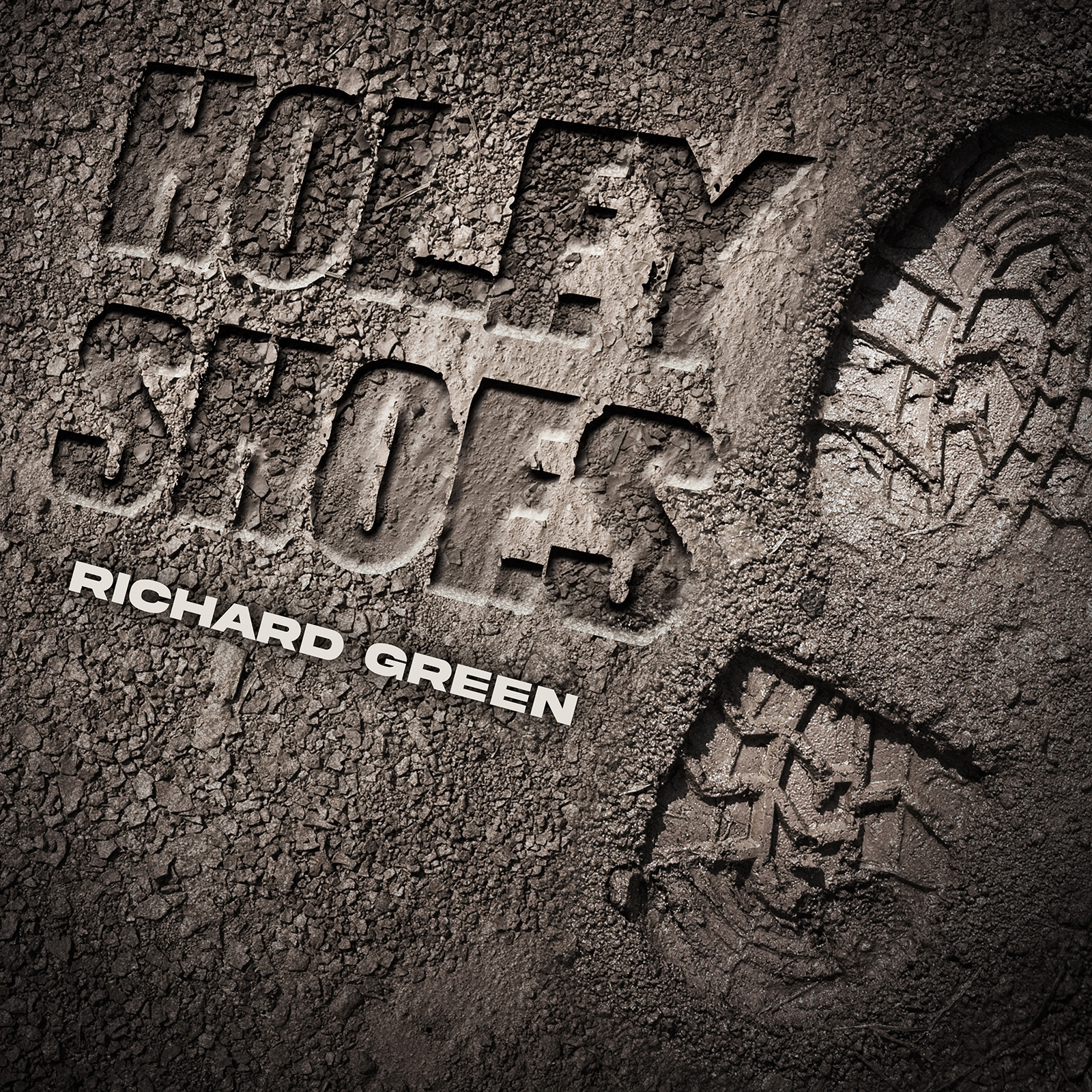
There is a lovely unpredictability about Richard Green, the artist. In his career the Milan-born composer, producer, and multi-instrumentalist has never allowed himself to be restricted to a single genre, flitting between neoclassical compositions, electronic experimentation, and cinematic soundscapes without losing his own artistic identity. But on “Holey Shoes,” Green ventures into perhaps one of his most immediately ingratiating musical realms to date, blending funk-rock verve with indie smarts and sleek electronic production for a song that’s irresistibly catchy and subtly deep. The single refracts the swagger of classic funk rock through a thoroughly modern lens, inspired by the groove-heavy spirit of the Red Hot Chili Peppers’ Blood Sugar Sex Magik era. But it’s a thoughtful meditation on poverty, homelessness, and the unseen struggles of so many in modern cities, all with its infectious rhythms. Green isn’t preachy or over-dramatic in his pronouncements but allows the music to draw you in first, slowly revealing a deeper emotional message that continues to reverberate long after the final chorus has faded. “Holey Shoes” opens with confidence and a groove that doesn’t overbear.
The rhythm section instantly locks into a hypnotic pulse, the bass and drums working together to create a base that seems impossible to ignore. Every beat propels things forward, and the forward momentum of each leaves a lot of room for the surrounding instrumentation to breath naturally. It is especially worthy of note that Green plays a fine guitar on this track. It never requires your attention every second; it flows easily between rhythmic support and lyrical melodic forays. It adds color and character without dominating the arrangement. His guitar solo, especially, is memorable for its leaning toward musical storytelling rather than technical exhibitionism. Every line is there for a reason; it builds the anticipation while staying true to the heart of the song. The production is equally impressive in its balance. It was recorded in Green’s home studio and sounds surprisingly polished. But that doesn’t take away from any warmth or genuineness. The electronic elements are crisp and mesh well with the organic instrumentation of the rock elements. The constructed soundscape is just as easily blasting out of speakers at a festival as it is unraveling through a pair of headphones on a solitary walk in the evening. Each instrument is given its own carefully considered spot, a testament to Green’s precision as a musician and as a producer.
But the song’s best feature is the nuance of the songwriting. On the surface ‘Holey Shoes’ seems like a celebration of groove and melody, but the deeper you dig, the deeper the story behind the energetic surface. The title itself is a powerful metaphor, with tired shoes being symbolic of poverty, homelessness, and society’s tendency to ignore those on its margins. This view is surely shaped by Green’s years living in London, where he has seen firsthand the yawning gulf between the city’s incredible creativity and its continuing economic inequality. He doesn’t beat us over the head with these realities with dark imagery or heavy-handed social commentary but lets the symbolism arise naturally within the lyrical structure of the song. The metaphor of worn shoes is not just about material hardship but also about resilience, endurance, and the many miles traveled by individuals whose stories are often unheard. The music is so captivating that it will bring back those who missed the deeper meaning the first time around, and the emotional pull only intensifies with each replay. Perhaps Green’s greatest artistic achievement is his ability to make intelligent stories accessible.
What’s also so compelling about “Holey Shoes” is the way musical influences are mixed together. Sure, there are clear echoes of classic funk rock, but Green never rests on nostalgia. Instead, he adds subtle electronic flourishes, textured synths, and modern production techniques that expand the song’s sonic identity. Layered synths glimmer beneath the guitars, adding warmth and atmosphere but not detracting from the groove. Sharp percussion, nuanced electronic touches, and carefully placed vocal effects create an immersive listening experience where everything seems to have a purpose. Green’s voice reflects the song’s philosophy of restraint. He sings with a truly conversational tone and a subtle expressiveness, not overdoing it with the dramatics, letting the words do the work. His voice has a lived-in quality that meshes so well with the song’s themes of experience, perseverance, and quiet dignity. The bridge is especially effective, stripping away all but the essential instrumentation, then building to a restrained but emotionally satisfying climax. No explosive dynamic, but a slow unfolding that rewards the patient listener with a sense of earned resolution. It is this attention to musical nuance that sets “Holey Shoes” apart from so many other genre-fusion releases.

Overall “Holey Shoes” is another interesting chapter in the ever-evolving artistic journey of Richard Green. We don’t consider versatility to be stylistic experiments but a real creative philosophy of curiosity and emotional honesty. Green never allows genre conventions to define his creative path, whether writing orchestral music, electronic music, or groove-based rock. Here he manages to make a fun song on the surface but gives one something to think about under the catchy beats. With memorable musicianship, sophisticated production, thoughtful lyrics, and subtle social commentary, it is both timely and timeless. In a musical world that is increasingly formulaic and algorithm-driven, “Holey Shoes” is a reminder that great music can be both mind-expanding and instantly accessible. It’s chic. That’s emotionally intelligent. You can play it again and again. A song that makes you want to dance, makes you think, and maybe see a little more closely the people whose worn shoes tell stories the rest of the world too often ignores.
For more information, follow Richard Green
Website – Facebook – Spotify – Instagram – Soundcloud