
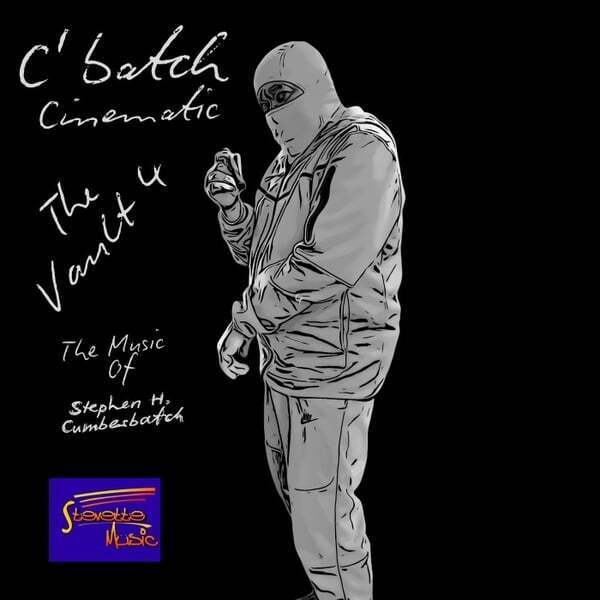
There are albums that come with an image. And then there are albums that create their own image. C’batch’s The Vault 4 – Cinematic is definitely the latter, unfolding less like a traditional twenty-track record and more like a giant soundstage waiting for a story to come along. Stephen H. Cumberbatch shows an instinct for atmosphere, pacing, and emotional suggestion throughout this ambitious collection, building compositions that can feel intimate one moment and almost panoramic the next. Orchestral passages that open doors to unfamiliar places, piano figures that sound like fragments of private thought, electronic textures that add a slightly futuristic edge, and percussion that knows when to push a scene forward and when to let the tension breathe. What’s more amazing is that none of this requires a screen. Vault 4—Cinematic puts you in the role of director, editor, and audience simultaneously. C’batch doesn’t prescribe a narrative but provides enough room for one to emerge. A deserted street at midnight. A character facing a difficult choice. A reunion after years apart. A journey through an imagined landscape. The music leaves all of those possibilities open. That freedom is one of the record’s greatest strengths.
The cinematic ambition is apparent from the opening moments of “The Beat of the Nite (Alternate Version),” which establishes a mood of anticipation instead of going for immediate spectacle. And that distinction matters. C’batch knows that cinematic music is most effective when it suggests that something is about to happen. The arrangement allows for movement under the surface, so the listener can feel an approaching scene without being told what that scene is. From there, “Clubadub (Cinder Circuit Game Board)” pushes the mood into electronic territory, bringing a rhythmic energy while keeping the open quality that helps give the collection its soundtrack-like personality. Here, the curious equilibrium of The Vault 4 – Cinematic begins to emerge. The result is not orchestral music with electronic effects added, nor is it electronic music trying to sound like a film score. C’batch is able to navigate these worlds, with an instinctual sense of how different textures can serve the same emotional purpose. The result is modern, but it does not become a slave to contemporary production habits. There is polish throughout, but it never completely obliterates the personality of the compositions. Instead, it allows layers to live side-by-side, sometimes moving forward, sometimes fading into the background, like different elements in a carefully edited scene.
Then comes “Breaking My Heart (Cinematic & Orchestral 1),” and emotion takes the spotlight, turning the album’s wide-ranging sound into something a lot more personal. The title suggests heartbreak, but the music doesn’t seem inclined to wallow in sadness. There is beauty in the sorrow, in the sense of emotional hurt being viewed from a distance and gradually transformed into something significant. “Trapped (Mental Telepathy Is)” takes that emotional tension into darker territory, creating mystery and psychological unease without requiring it to be over dramatic. Then there’s “Ascension (To Our Love),” and the change in emotional temperature feels significant. Hope begins to emerge. The melodies seem to come forward, not go back, as if we are moving toward something brighter. This ability to create contrast is essential to a cinematic album, as a film of pure suspense or sadness would soon become tiresome. C’batch knows that emotional storytelling requires both peaks and valleys. “Next Time (I Won’t Be Falling) – Cinematic Version” is a continuation of that conversation, taking a familiar emotional premise and setting it in a larger, more spacious musical setting. The effect is not so much hearing an old idea again as seeing it from another angle. C’batch sees reinterpretation as an opportunity to enrich atmosphere so that the same emotional material can take on a different weight.
The middle stretch of the album works especially well because it changes scenery without losing its sense of identity. “Spring (Alternate Version)” has a more buoyant, restorative feel, almost like the moment in a movie when the clouds part and the characters are allowed to breathe. “Have You? (Alternate Version)” continues in a more pensive vein, consistent with the album’s general predilection for suggestion rather than excess. Then “Cop the Nite 2” returns to the darker palette, while “Badabing (Cinematic 2)” adds a touch more rhythmic momentum to the journey. What makes these transitions work is the feeling that C’batch is thinking in terms of scenes, not just tracks. Each piece is unique, but their interaction is determined by the order in which they are placed. Another change is “The Dance Song (Alternate Version),” demonstrating that cinematic music does not have to choose between accessibility and grandeur. It remains melodic and inviting, while “That Sparkle in Your Eyes” delivers one of the collection’s warmer emotional moments. There’s something especially appealing about a piece of music that can express love without being too sweet. It gives the listener enough melodic information to relate to it emotionally while leaving enough space for imagination. One of the album’s recurring tricks: C’batch supplies the emotional architecture, but the listener supplies the furniture.
“The Chase in the Maple Thunderlight” moves faster and feels more urgent. Its very title sounds like a series from an eccentric adventure film, and the music delivers, suggesting motion, danger, and heightened stakes. After that rush, “The Gift (Alternate Version)” offers a welcome emotional counterweight, back to a softer, more intimate space. The album shifts back and forth between these extremes with “In the Mood?-2” and another version of “Next Time (I Won’t Be Falling),” proving how much emotional color can be wrung from related musical ideas. Perhaps the most telling return is ‘Breaking My Heart (Cinematic Version 2).’ Hearing another filmic interpretation of the heartbreak theme reinforces one of the main ideas of the project: a composition does not necessarily have one permanent emotional meaning. Change the staging, change the atmosphere, and change the tempo, and the same underlying idea can tell a different story. That philosophy gives The Vault 4 – Cinematic an interesting depth. C’batch isn’t just filling twenty slots with material; he’s looking at how music gets transformed when put in new environments. Alternate versions are no longer leftovers from earlier projects but alternate views of the same emotional landscape.
The final part of the collection retains that spirit of exploration. Another character change, “Trina-Tina 2,” adds to the album’s feeling of variety but is compatible with its wider production language. “All For You” is more straightforward, allowing melody and emotional sincerity to be the focus rather than relying on elaborate sonic drama. Then there’s “Underwater Chorus Chrome Carousel Groove 1,” such a creative closing title that it almost creates its own visual sequence in the mind before a single note is played. There is a dreaminess to those words that fits in nicely with the album’s larger philosophy. There is something subaqueous about the collection as a whole, not in that every composition sounds submerged, but because the music often seems to operate beneath the surface of ordinary listening. Details emerge gradually. What are mere incidental textures on initial listenings that can become important after a few listenings? Rhythms may imply motion; melodies, recollection. The closing number doesn’t need to be a big finale. Instead, it leaves the listener suspended somewhere between reality and imagination, which perhaps is the most fitting ending for an album based around unseen cinema. C’batch’s twenty compositions illustrate time and time again that atmosphere can be as powerful as volume, and restraint can elicit a greater emotional response than endless musical building.
Behind The Vault 4—Cinematic also has a sense of accumulated experience, which gives the project a bit more character. Stephen H. Cumberbatch is not approaching composition as someone discovering the basic language of keyboards, synthesizers, samplers, programming, guitars, and production for the first time. The confident mix of sounds and approaches on the album draws on decades of creative work. This release is also part of a larger creative journey that has included his work with Stevette Music, Inc., the independent publishing and production company he co-founded with Yvette Cumberbatch in 1984. There is a reason to reckon with that history: The Vault 4 – Cinematic doesn’t seem like an attempt to follow whatever production trend is popular but rather the work of an artist mining a deep personal archive and repeatedly remaking it. In this regard the album’s accessibility is especially important. There’s plenty here for those who enjoy orchestral, ambient, electronic, downtempo, and soundtrack-inspired music, but C’batch doesn’t make it feel like homework. The compositions ask, rather than command, attention. They can be a companion to a creative project, a soundtrack to a quiet evening, or an intense listening experience through headphones. That flexibility is just as valuable for filmmakers, content creators, music supervisors, and others looking for music that can support images without overwhelming them.

The Vault 4 – Cinematic is ultimately successful because it understands something elemental about soundtrack music: the best score doesn’t always tell you what to feel. Sometimes, it gives you space to find out what you already feel. C’batch has made an album in which orchestral color, ambient space, melodic piano, electronic detail, and cinematic percussion are pieces of an open-ended visual language. The twenty compositions are each unique but come together to form a remarkably fluid voyage of tension, tenderness, mystery, movement, nostalgia, romance, and renewal. More than this, the record never demands that there is only one way to experience it. A listener might hear the beginning of a movie. Another could hear memories. Another may simply enjoy the atmosphere of working, reading, traveling, or thinking. This very versatility is not a defect; it is what makes the collection compelling. The Vault 4 – Cinematic is a vault of musical scenes waiting for someone to unlock them, and C’batch wisely leaves the key in the hands of the listener. It’s a wide-ranging and satisfying listen for anyone who enjoys music that can transform a blank wall into a landscape or a quiet room into a movie theater, and it becomes more interesting with each new place the imagination decides to put the next scene.
For more information, follow C’BATCH
WEBSITE – FACEBOOK – SPOTIFY – YOUTUBE