
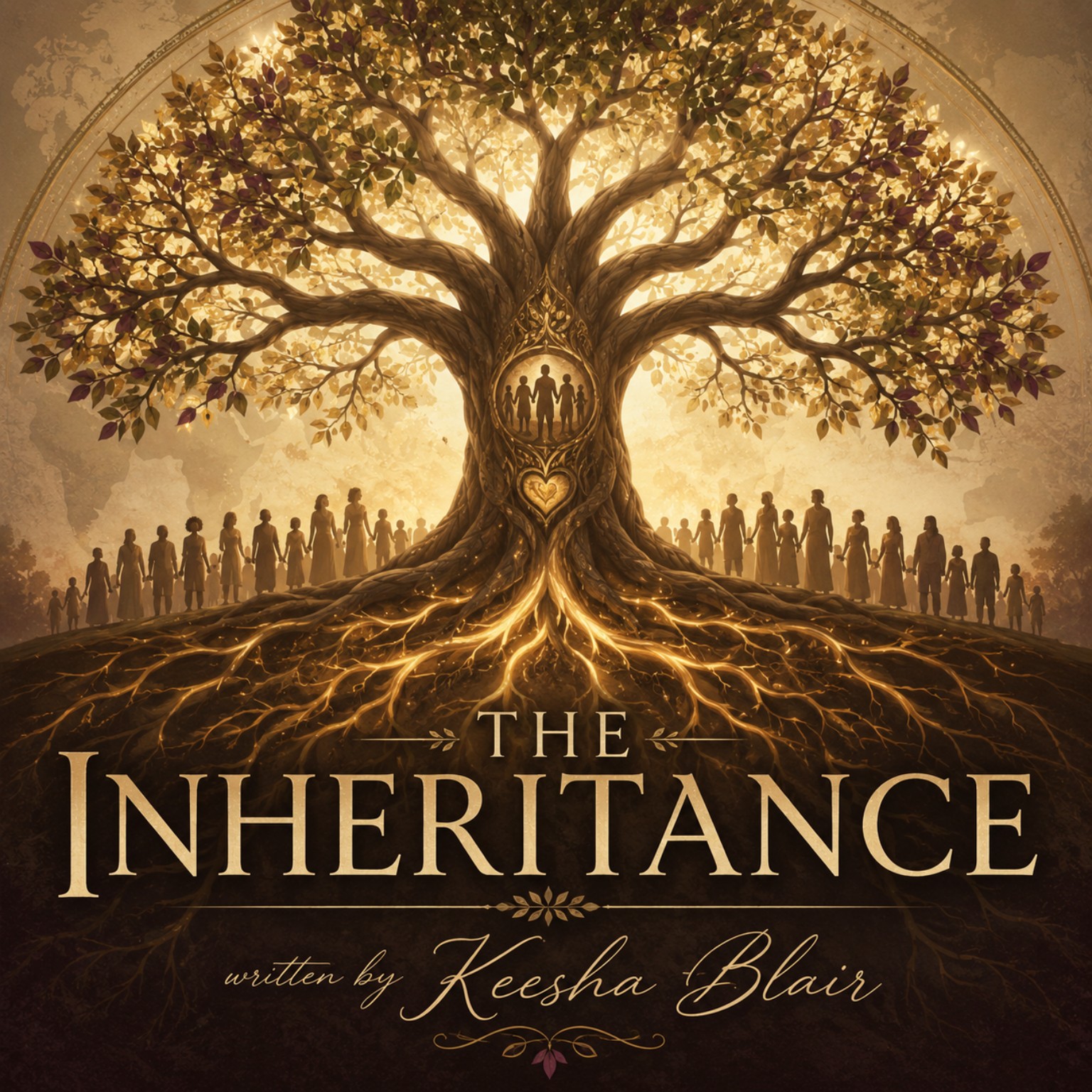
Some songs already come with a story, and some songs make you think of your own story before they finish. Keesha Blair’s “The Inheritance” is a good example. The track was inspired by her mother and grandmother and begins with something intensely personal but slowly grows out of the bounds of one family to ask a much broader question: what do we really inherit from those who came before us? Blair’s answer has little to do with property or money or possessions or anything that can be measured on paper. Her inheritance is a human, emotional one. That is wisdom learned through experience, resilience born of adversity, compassion learned by example, generosity freely given without expectation, and love that lives on in the hearts of others long after the giver is gone. That viewpoint lends the song a serious emotional weight. Blair makes legacy intimate and ordinary, rather than something reserved for famous figures whose names appear in history books. Advice from a grandmother can be a legacy. A mother’s strength can be an inheritance. “The kindness of a stranger can become part of one’s character. The song understands that the most important things a person leaves behind are often invisible, carried from one person to another through behavior, memory, values, and example. There’s something immediately comforting about that idea, but there is responsibility lying within it as well. To inherit something meaningful is not to receive it, but to decide what you will do with it. Blair takes that understanding and makes it the emotional core of “The Inheritance,” writing a song that feels less like a tribute to the past and more like a conversation between generations.
The song’s heart is the beautifully accessible line “we all add to the pot,” just a simple metaphor that gives Blair’s larger philosophy an image anyone can understand. The words suggest that life is not made up of separate individual experiences but is a constantly expanding communal creation. Everyone finds something prepared for them by the time they arrive. Families are part of it. It is helped by communities. Cultures add to it. Teachers, friends, neighbors, artists, mentors, and so many others whose names we may never know all leave behind something that becomes part of what others inherit. But Blair does not stop at the idea of getting. Each person is also expected to participate, and the metaphor becomes more meaningful. We are taking from the collective pot, but we have to put something in before we can go on. That makes “The Inheritance” a song of participation, not just a song of gratitude. It’s not just about appreciating what previous generations have given us, but also about thinking about what we put back into the world. This is an especially powerful idea because it doesn’t make legacy sound grand. You don’t have to do something great to contribute to the pot. A caring response, a piece of wisdom, an act of generosity, a creative idea, a loving relationship, or even a decision to treat another person with dignity can become part of someone else’s legacy. Blair knows that human history is made up of these tiny contributions. Thus, the metaphor gives the song a rich emotional core: we all come from something, and we all leave having affected what follows.
What makes the writing so compelling, in particular, is Blair’s own tracing of her family tree, leading toward the idea of a universal family tree. Her mother and grandmother provide the emotional starting points, but the song slowly invites listeners to expand their points of view until the borders between individual lives are less clear. That expansion lends the track a reflective quality, but not a distant one. The message may be universal, but Blair’s story is personal. We can imagine her looking back at the women whose qualities helped to form her, but we can also imagine listeners doing the same with their own families. Who taught you patience? Who taught you to be brave? Who loved you when you did not know how much love you needed? Whose quiet example shaped the person you became? “The Inheritance” asks those questions without requiring that every answer be dramatic. One of its most attractive propositions is that influence often happens without acknowledgment. People might never know how a small act of kindness changed someone’s life. But a lesson can live, through generations, long after the one who taught it has died. An idea can travel from brain to brain until the original source is all but forgotten. “Legacy is alive for Blair; it moves. That makes the song feel less like a study in ancestry and more like a meditation on continuity. We don’t visit the past like a locked room we occasionally pop into; it’s something we bring with us into every relationship, decision, and interaction. At the same time, whatever we choose to add, the future is already waiting for us.
The central message of “The Inheritance” is also refreshingly free of self-importance. Blair is writing about a subject that could easily slide into sentimentality, but the idea is kept grounded because it is based on participation, not praise. The song does not merely say that past generations deserve admiration. It forces the listener to realize that every generation eventually becomes a previous generation for someone else. This realization changes the emotional arc of the piece in a subtle way. First we consider what our mothers, grandmothers, fathers, grandparents, or mentors have given us. Then the question turns around: what are we giving? And that is where the song gains its deeper purpose. Blair is the creative force behind Divine Purpose Music and centers her artistic work around songwriting, concept, and direction, an approach that puts the message first and is especially evident here. She is not telling us about her family just for the sake of it; she is using the personal story as a way of entering into a larger conversation about human responsibility. The song advocates appreciation without indulging in nostalgia for its own sake. It acknowledges the past but doesn’t say that everything inherited from it has to be preserved. Instead, Blair’s view of inheritance is dynamic. We receive, we look, we change, we give, and finally we leave something behind. There is space in that cycle for growth and correction, for creativity and for change. It’s a hopeful song because legacy is not a burden that makes us repeat everything that came before. We can celebrate what made us while also adding something that is uniquely us.
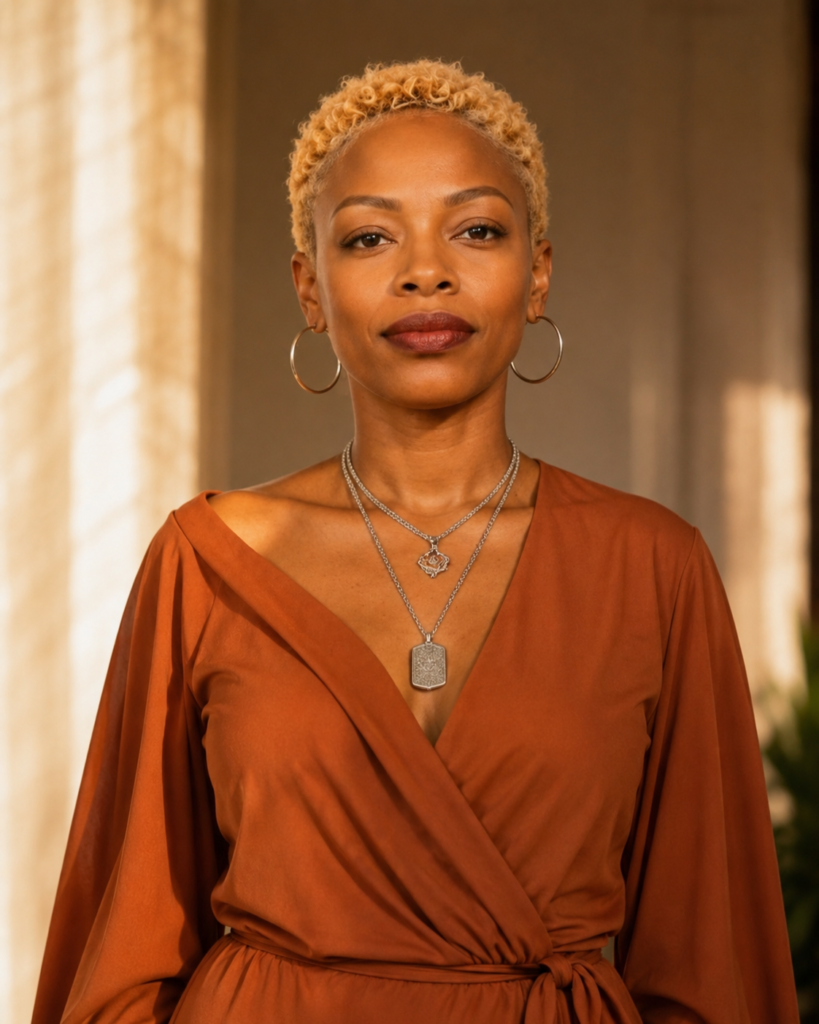
In the end, “The Inheritance” works because Keesha Blair takes an idea that could have been intensely personal and makes it accessible to just about anyone. The song’s roots are in the emotional inspiration of her mother and grandmother, but the idea of shared inheritance gives it branches that reach much further. What is left when a person is gone? The answer, Blair suggests, is in the qualities they awakened in others: love, strength, compassion, wisdom, generosity, courage, and willingness to contribute. Those things can’t be locked in a safe or split among heirs, but they may be far more valuable than material possessions because they can keep moving through the world. Thus, “The Inheritance” reads as both a recognition and an invitation. It calls us to look back with thanks, but it also calls us to look forward with purpose. In that light, we all add to the pot, which becomes all the more powerful because it reduces the monumental concept of human legacy to a single responsibility: Add something worthwhile. Blair’s song is a reminder that we’re all the product of people we may never be able to repay, and the best way we may honor what we’ve received is to make sure someone else receives something meaningful from us. There is tenderness in that realization but purpose, too. In the end, “The Inheritance” is less about what we have than what we leave behind, less about where our individual stories end than where their influence continues. Keesha Blair has written a beautiful, meaningful song that turns family history into a universal message of connection and contribution, calling us all to remember our inheritance and to be part of the inheritance we pass on.
For more information, follow KEESHA BLAIR
WEBSITE – FACEBOOK – SPOTIFY – YOUTUBE – INSTAGRAM