
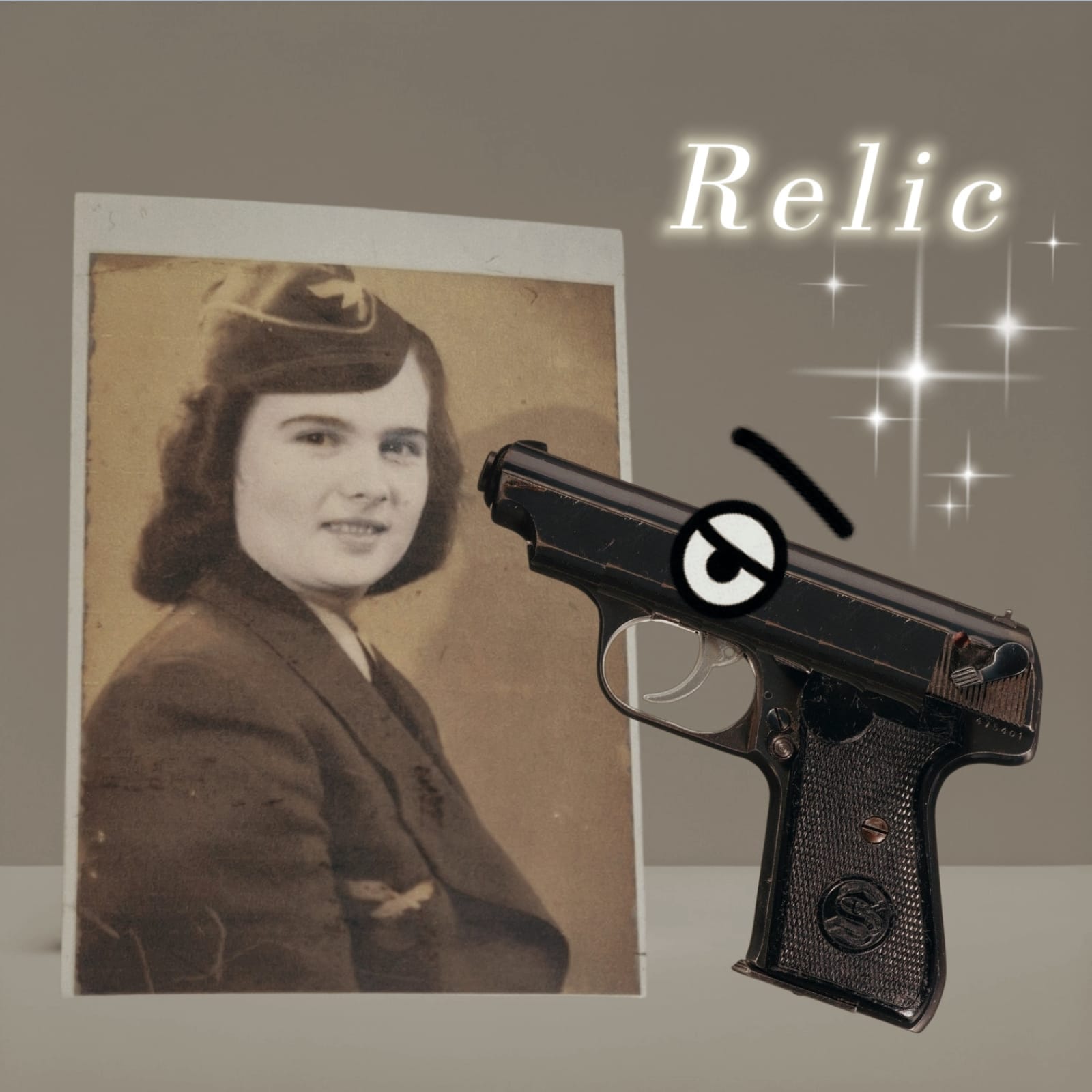
Relic, the latest historical meditation from Trude and Soldiers, is immediately unsettling, because the song does not approach war from the perspective we usually expect. Instead of telling the story through a soldier, general, survivor, or politician, the composition gives voice to an object: a pistol kept in a museum after decades of silence. That choice makes for a strangely intimate and morally complicated recognizable story of war. The weapon remembers its owner, remembers the violence it was involved in, and appears almost bewildered that the world has moved on without it. The very first image of the lyric, waiting for 81 years, conjures a sense of arrested time, as if the pistol has been frozen in one historical moment while everything has marched on around it. From here, the museum’s loneliness is almost palpable. Behind glass now, an artifact that visitors can look at but never really hear, what was once an instrument of action. The real magic of this view is in Trude’s vocal storytelling. As the German vocalist of Trude and Soldiers, she inhabits the material with a theatrical, poetic sensibility that makes the song feel less like a conventional rock or pop performance and more like a short historical fable. The haunting quality of the result is because the object has been invested with human feelings: longing, memory, attachment, and even a disturbing desire to go back to the battlefield. Relic, therefore, starts not with an easy moral answer, but with a question of what happens when violence becomes history and history becomes an object on display.
The most provocative element of the song is the willful contradiction between love and destruction. The pistol considers itself a “relic,” insisting on an ongoing connection with the person who once held it, but also recognizing its own link to massacre and combat. That contradiction is part of what gives the lyric its dramatic power. Trude and Soldiers are not presenting the weapon as innocent but the opposite. The pistol knows its purpose; its memories are violent. But it still speaks in the emotional language of something that believes it was loved by its owner. And that’s where Relic becomes more interesting than just an anti-war song. Rather than explain history from a safe distance, it enters into the psychology of an object that is connected to it and allows that object to reveal an uncomfortable attachment to its own past. The constant assertion that it will “always” be a relic lends a ritualistic dimension to the song, almost as if it’s an incantation. Repetition counts because memory is repetitive: history returns in fragments, symbols, pictures, monuments, weapons, uniforms, and stories transmitted from generation to generation. Meanwhile, the pistol’s hunger to be used again in combat is deliberately disturbing. It shows how nostalgia for a previous identity can easily become nostalgia for violence itself. That tension should not be mistaken for an endorsement of war. Rather, it can be heard as the voice of a relic caught in the logic of the epoch that created it. The weapon cannot understand peace, for it was not created to understand peace. And which makes its longing tragic rather than triumphant.
This unusual perspective is consistent with the broader artistic identity of Trude and Soldiers, a group that uses historical subjects to explore political ideas, human emotions, military culture, and the repetition of history. Relic’s stated interest in exploring how soldiers experienced both victories and losses and how medieval stories can echo through modern societies makes for an especially fitting context. The song seems to be based on the premise that history is never quite as distant as museums would have us believe. An artifact in a glass case might seem harmless enough, but the conditions that produced it can continue to thrive in political discourse, cultural recollections, national legends, and human conduct. Trude’s storytelling method enables the band to interact with that gap between object and the world that generated it. The lyric has almost a theatrical monologue quality, as if the museum has closed for the night and the exhibits have suddenly started talking to each other. The pistol is a character, but it is also the symbol of a much larger problem: what do societies do when they remember the tools of violence but do not fully confront the conditions that made those tools necessary or desirable in the first place? It’s particularly sensitive historical territory, with the song’s references to the Third Reich and to the emotional experiences of soldiers. That stuff needs to be approached with distance and critical thought and not romanticized. And the power of the concept is that it makes the listener uncomfortable. The memories of the weapon are not offered as a tidy heroic tale. They are broken, contradictory, and morally compromised, and that’s exactly what makes the historical point of view so compelling.” Trude and Soldiers are less interested in polishing up the past than in making it speak loud enough for the present to hear.
Musically and conceptually, Relic is a good fit for listeners who like songs that are more like miniature stories than entertainment. Even in the lyrics there is a strong visual staging: the museum, the pistol all alone, its absent owner, memories of combat, and the strange confrontation of past and present. The central image almost calls for an atmospheric arrangement, one that can make silence as significant as sound. That theatricality is where Trude and Soldiers can differentiate themselves from artists who approach historical songwriting as simple chronology. To the group, psychological atmosphere seems to matter more than the recitation of dates and events. The loneliness of the weapon, one emotional layer. Its violent history, another. Its longing for relevance, a third. All those things together make the song feel like a sort of conversation between memory and modernity. There is also a dark irony to the difference between the museum as a place of preservation and the desire of the pistol to become active again. Museums are meant to prevent the disappearance of the past, but Relic questions whether saving an object can also save the feelings attached to it. If a weapon can remember, what does it remember? Victory? Is it master? Violence? Purpose? “Identity? Those questions remain after the lyric is done. Instead of giving the audience a comfortable resolution, Trude and Soldiers leave the listener standing in that uncomfortable museum corridor, looking at an object that has suddenly become disturbingly articulate.
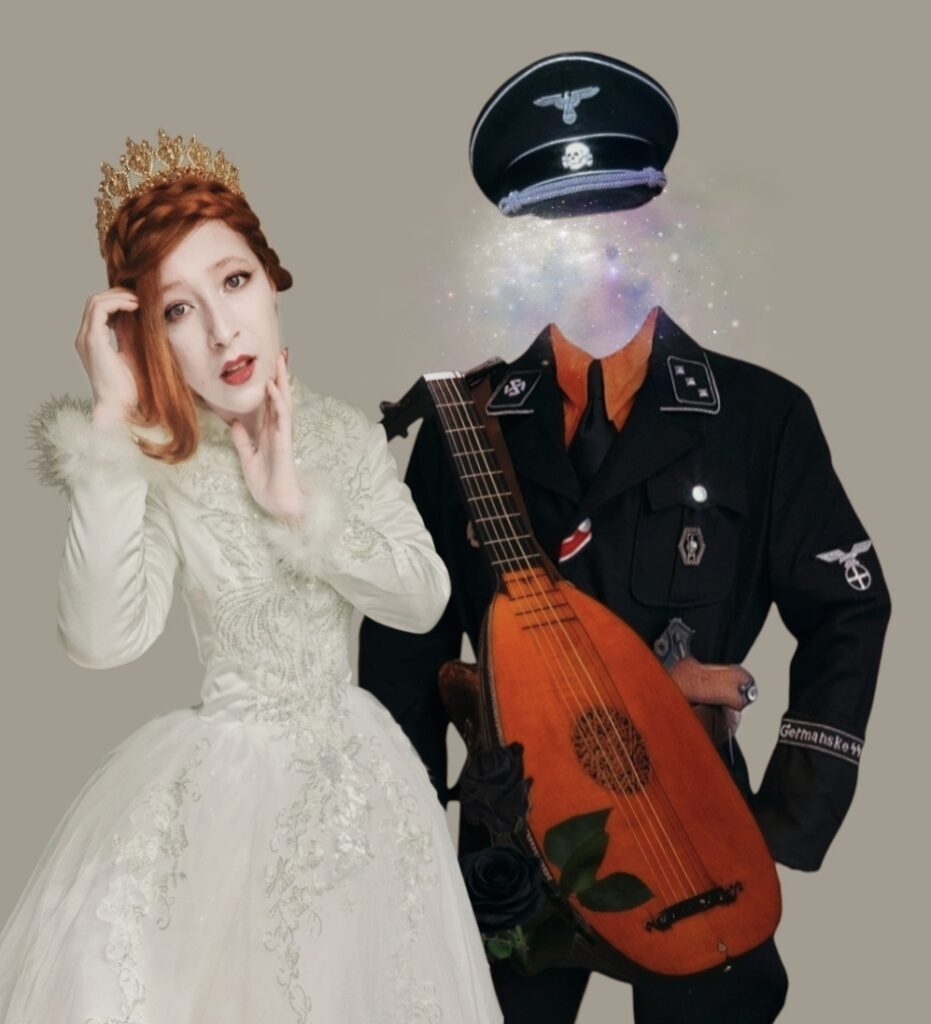
But what’s most compelling about Relic is its refusal to tidy up history. The last movement toward bringing the past into the future is perhaps the most important idea in the whole piece, but it is wrapped in deliberately troubling language. The past is a powerful force in determining the future, but the problem is in determining what is worthy of being carried forward and what must be left behind the glass in the museum. A pistol may be a relic, but it does not depend on the revival of its function for its existence. That distinction gives the song a potent contemporary relevance. Through personification, Trude and Soldiers expose the odd emotional connection that human beings can have with the objects and symbols of their own history, demonstrating how memory can hold not only lessons but also dangerous attachments. There is magic, poetry, political observation, and historical storytelling all blended together in the band’s approach so that Relic feels more like an unsettling fable than a typical war song. It asks the listener to take the point of view of something that cannot distinguish between usefulness and destruction, between loyalty and violence, and between the affection of an owner and the results of an action. It’s a risky artistic premise, but that’s also what makes the song memorable. Relic does not permit the comfort of pretending history goes away because the battlefield has become a museum exhibit. But instead, it’s a reminder that the past can still speak—and sometimes the most important thing to do is not to obey its voice, but to understand why it’s still speaking at all. Trude and Soldiers have produced a haunting tale of history that uses a forgotten weapon as a mirror to reflect humanity’s complicated relationship to memory, violence, nostalgia, and the future.
For more information, follow Trude and Soldiers
WEBSITE – SPOTIFY – SOUNDCLOUD – YOUTUBE – INSTAGRAM