
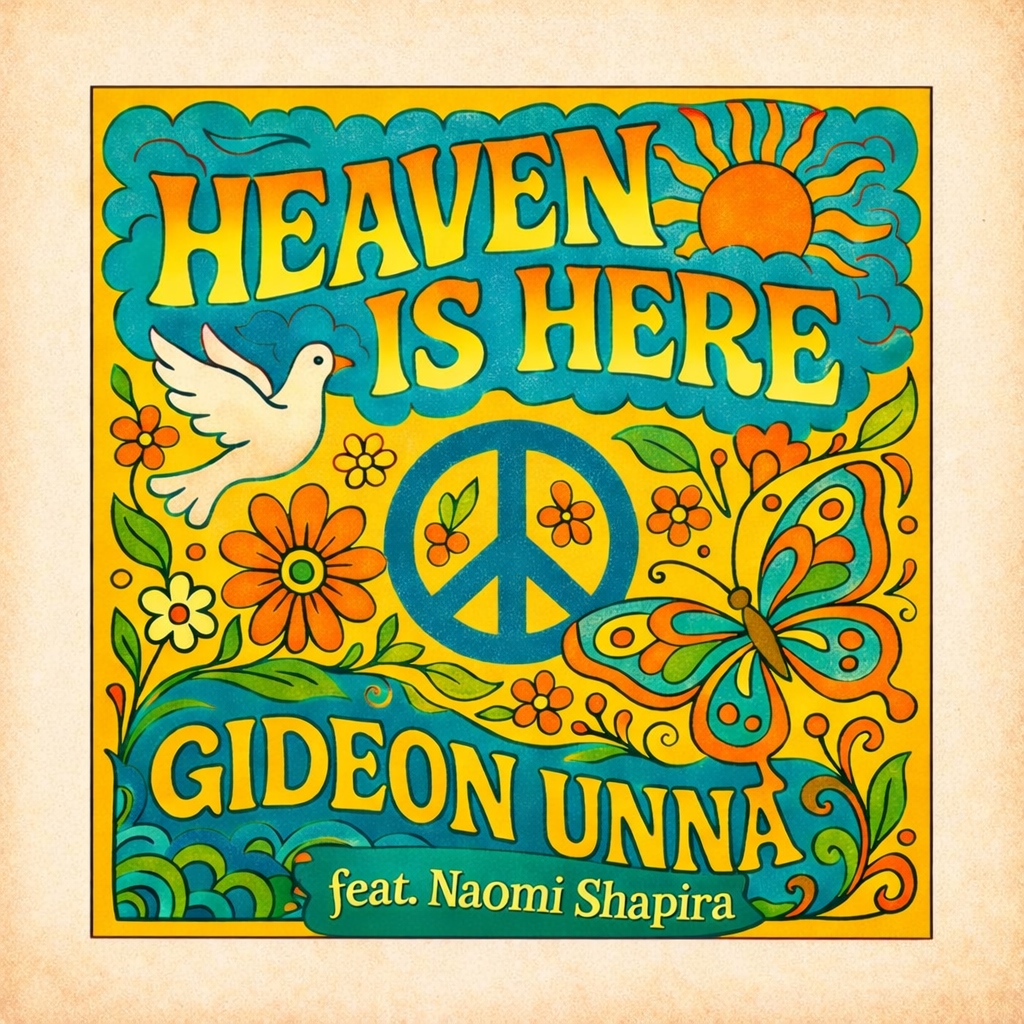
There’s something quietly subversive about a pop song that won’t be cynical. In an era when emotional distance can sometimes masquerade as sophistication, Gideon Unna’s “Heaven Is Here” arrives with its heart completely exposed, offering gratitude, kindness, and wonder without apologizing for any of it. From the very first notes, the track sets a tone that feels both nostalgic and newly alive, fueled by an infectious, upbeat, thumping beat that instantly boosts the mood. But underneath that approachable pulse lies a meticulously built nexus of vintage pop sensibilities and contemporary production. Unna and longtime collaborator and arranger Lior Medan take ample inspiration from the melodic sunshine of The Mamas & the Papas, the soft warmth of The Carpenters, and most notably the spirit of Scott McKenzie’s “San Francisco.” The influence is plain, but Heaven Is Here never feels like a musical archeology lesson. It considers those sounds instead a living language, rediscovering the emotional openness of a previous pop era and translating it into something that feels remarkably relevant. The result is bright and sincere, almost provocatively optimistic, nostalgic but forward-looking, and not sugary.
The magic of the track is largely dlends Naomi Shapira, whose vocal performance gives Unna’s abundant ideas a human face. Her voice is free of studio theatrics and emotional overkill. Instead, she sings with a laid-back melodic quality, letting the melody breathe, skating over the rhythm with a natural grace that makes the song’s message less of a declaration and more of a personal realization being shared with the listener. Her delivery has a winning softness, but never frailty; underneath the tenderness is an unmistakable confidence in what she’s singing. That difference is important because “Heaven Is Here” could easily have gotten too earnest in less assured hands. Shapira sidesteps the issue by maintaining the performance in an intimate and emotional setting. While the song is aiming for bigger thoughts about existence, consciousness, gratitude, and connection, her voice keeps bringing the listener back to something real. The effect is almost physical: the track seems designed to loosen the shoulders, slow the breathing, and bring a moment of attention. Her performance also imparts the song a timeless quality, because real warmth rarely sounds dated. In a production environment where vocal perfection can sometimes remove personality, Shapira leaves enough humanity in the performance for the listener to feel a person behind the microphone rather than just a perfectly processed voice.
The production adds another compelling dimension to the song. Produced by Lior Medan and recorded in the intimate setting of Yoav Asif’s home studio in Moshav Tzrufa, “Heaven Is Here” exists in a curious space between the handmade intimacy and the modern studio technology. AI-assisted production can certainly raise questions about authenticity, especially when the music it creates is so intentionally rooted in the warmth of human performance. But here the technology doesn’t seem to be the point. It is part of the toolbox. It helps to shape an arrangement that feels organic rather than futuristic in the end. The instrumentation provides a lush sonic bed for Shapira’s voice, and the rhythmic foundation supplies the song with the song enough momentum to remain clearly pop. The balance works through restraint. Unna and Medan don’t just layer the production over the song because they can. Instead, the arrangement allows the melody and lyric to be the focus. It has a nice feeling of light passing through the recording rather than just reporting it, as if the track were built around sunlight. That feature also connects the contemporary production to its vintage influences. The song may have been pieced together with contemporary tools, but its emotional architecture is of an older pop tradition, in which melody, harmony, and direct feeling were allowed to carry enormous weight.
But the most striking thing about “Heaven Is Here” is the idea behind it. Unna takes the philosophical premise behind John Lennon’s “Imagine” and approaches it from a completely different angle. Instead of asking people to imagine a world without heaven, he suggests that maybe heaven is already here, hidden in plain sight because mankind has lost the ability, or maybe just the habit, of recognizing it. That flip adds a lot more depth to the song than you might expect from its cheery face. The lyric neither seeks to reconcile spirituality with complex theological arguments, nor does it impose a singular meaning upon the listener. Instead, it encourages a sort of attentiveness: to see the people around you, to appreciate the natural world, to notice moments of connection, and to stop treating ordinary experiences as if they are disposable. There is something almost radical about that simplicity. “Heaven Is Here” suggests that paradise may not be an escape from the everyday but a fuller awareness of it. The idea that it’s not just a fall from paradise but a collective fall from consciousness adds an intriguing philosophical angle to the song, but Unna wisely keeps the argument light enough that the music remains inviting. The result is not a sermon in pop clothing. It’s more of a musical nudge, gently asking the listener to take another look at what’s in front of them already.

Ultimately, “Heaven Is Here” works because it understands optimism only works when it’s genuine. The flower-power imagery, peace-sign spirit, and open-hearted references to gratitude and kindness could easily invite an ironic smirk, especially in a musical culture that has spent years rewarding detachment. But Unna is never embarrassed by the prospect of joy, and that faith lends the track its quiet strength. It makes no pretense of hiding its tenderness behind fashionable obscurity or clever ambiguity. Instead, “Heaven Is Here” embraces the idea that a song can still make people feel lighter, kinder, and more attentive without sacrificing its depth. Vintage influences provide a warm base, Medan’s arrangement bridges that base to modern production, and Shapira’s voice gives the emotional heart. What matters most is that the song leaves the listener with an idea that lingers long after the rhythm stops. Maybe the extraordinary isn’t out there waiting for us to discover it, but rather in the ordinary moments we’re too distracted to see. In that sense, Gideon Unna has done more than just a fun throwback. Heaven Is Here is a small but convincing celebration of presence, connection, and everyday wonder—a reminder that sometimes the most radical thing a pop song can do is simply believe in happiness.
For more information, follow GIDEON UNNA
FACEBOOK – SPOTIFY – YOUTUBE