
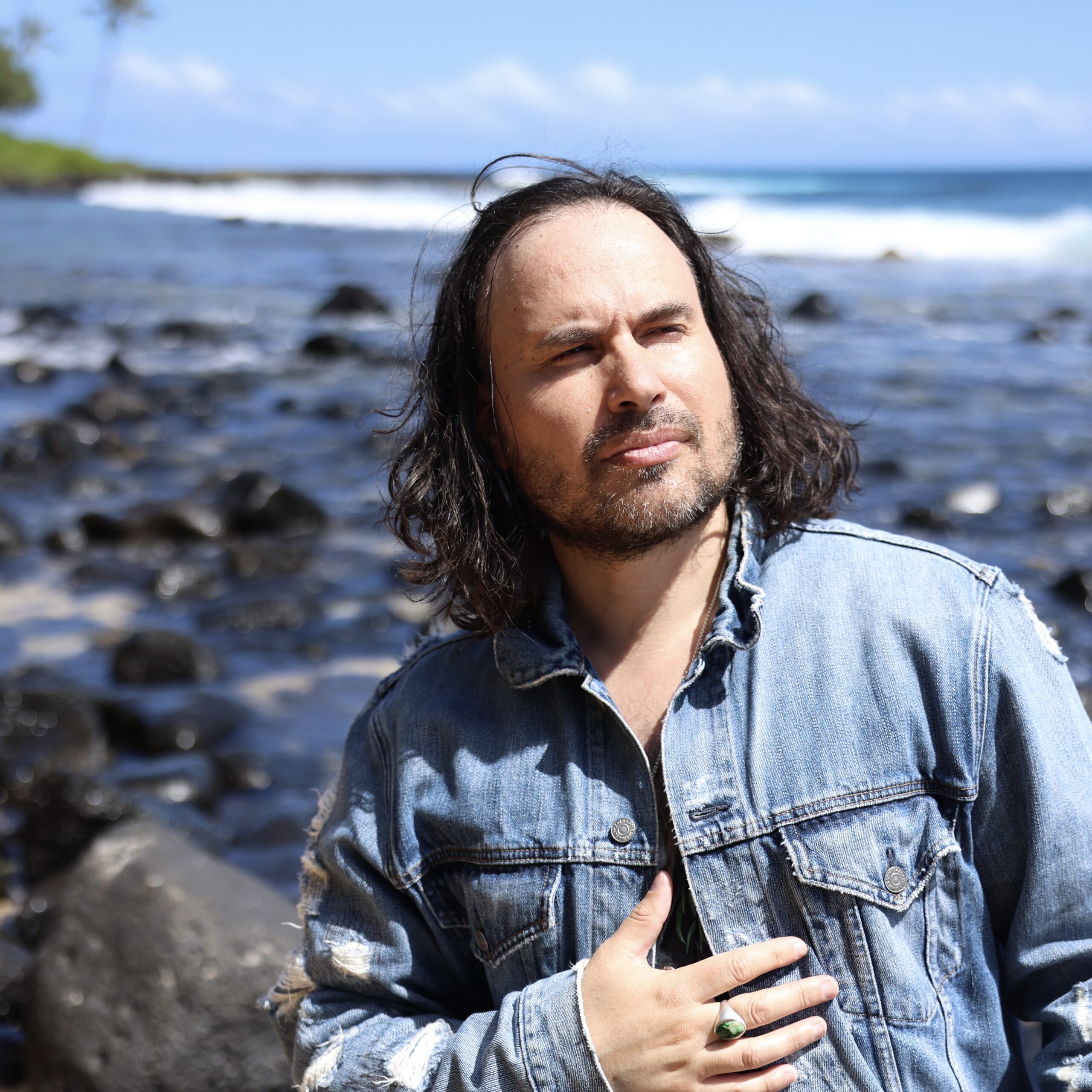
There are albums that announce themselves with a chorus, albums that arrive through a beat, and albums that seem to open a door into another room of consciousness. Mikhail Tank’s Prima Materia belongs firmly to the third category. Released on September 15, 2026, the nine-track collection feels less like a conventional sequence of songs than an invitation into a carefully constructed interior landscape, one shaped by atmosphere, spoken word, electronic textures, imagination, and the mysterious territory between thought and instinct. Tank’s description of the title as “Raw Soul and Psychic Energy” provides an illuminating starting point, because the album repeatedly reaches toward that pre-verbal place where an artistic idea exists before it becomes a finished object. As an independent artist, author, filmmaker, radio host, and founder of Darksoul Theatre, Tank has spent decades working across creative disciplines, and that background is impossible to separate from the character of this record. Prima Materia does not behave like an album made simply to satisfy the expectations of a particular genre. Instead, it feels like another extension of a larger artistic philosophy that has been developing since Darksoul Theatre began in 1993. Recorded across Maui and Kauai, the album also carries an environmental spaciousness that suits its introspective ambitions. There is a sense of distance in these compositions, as though the music is deliberately stepping away from everyday noise to examine what remains when distraction falls away. The result is an immersive work concerned less with delivering instant answers than with awakening sensations, images, questions, and possibilities.
The opening track, “Apex Instinct,” establishes this approach with remarkable economy. At just over two minutes, it does not have the luxury—or perhaps the need—of traditional song development, yet its brevity becomes part of its character. Rather than building toward a conventional verse-chorus payoff, the composition seems to capture a particular state of mind and hold it in suspension. Subtle electronic pulses provide a measured sense of movement while layers of synth texture gradually emerge, recede, and change shape around them. There is no desperate attempt to seize attention through oversized percussion or an obvious melodic hook. Instead, Tank allows space to become an active part of the arrangement. Sounds appear almost like thoughts surfacing from somewhere just beyond conscious reach. The production consequently feels cinematic without becoming overly dramatic. “Apex Instinct” is concerned with the sensation of something beginning, an impulse that exists before it has acquired a name or direction. That makes the track an appropriate introduction to an album whose central concept is the raw material of creativity itself. Its restraint also demonstrates an understanding of an important principle of atmospheric music: not every moment needs to announce its significance. Occasionally a composition becomes more compelling by allowing the listener to lean toward it. “Apex Instinct” asks for that kind of attention, rewarding listeners who are willing to absorb its small shifts in texture rather than waiting impatiently for a conventional climax.
“Future Beach” expands the horizon considerably, and its title immediately introduces one of the album’s most evocative tensions: the meeting of physical landscape and imagined possibility. Recorded in Hawaii, Prima Materia could easily have fallen into the trap of treating Maui and Kauai as picturesque decoration, but the music suggests something more inward. The beach becomes less a postcard and more a psychological space, a place where future and memory, nature and imagination, can overlap. The electronic palette is warmer and more expansive here, with atmospheric tones and sustained synth textures creating the impression of open air. Yet there remains a controlled rhythmic pulse underneath it all, preventing the piece from dissolving completely into ambient abstraction. That balance between serenity and movement is one of its most appealing qualities. “Future Beach” feels peaceful, but it is not static. There is always some small element shifting beneath the surface, encouraging the listener forward while preserving the meditative mood. The effect is almost like watching a distant landscape change as the light moves across it. Tank’s approach to electronic sound is particularly effective because he does not appear interested in technology for its own sake. The synthesizers function as emotional instruments, shaping atmosphere rather than simply demonstrating sonic capability. In that respect, “Future Beach” helps clarify what Prima Materia is trying to accomplish: the music is not merely describing an environment but using sound to recreate the inner response that environment can provoke.
The album becomes increasingly fascinating when its conceptual title is considered alongside tracks such as “Prima Materia,” “Nectar of Protection (at Leolani Cove),” and “The Robes of Love.” These titles alone suggest that Tank is working with a vocabulary of archetypes, ritual, emotion, protection, transformation, and symbolic objects rather than the everyday language of conventional pop songwriting. Yet the danger of an album so conceptually minded is that the mythology can become more compelling than the actual listening experience. Prima Materia largely avoids that problem by keeping its musical language grounded in texture and mood. The compositions feel like environments in which the ideas can exist rather than lectures attempting to explain them. “Nectar of Protection (at Leolani Cove),” for example, carries the intriguing suggestion of a specific place transformed into something almost mythical, while “The Robes of Love” evokes ceremony and emotional symbolism before the music has even begun. This is where Tank’s background in theater, film, literature, and performance becomes especially relevant. He understands that a title can function like a scene heading, establishing an imaginative space before the first sound arrives. The listener is not necessarily told what to think; instead, the track names provide clues and the arrangements provide atmosphere. That open-endedness allows the album to unfold. Rather than reducing every idea to a literal statement, Tank allows metaphor to remain metaphor, creating an experience that can change based on the listener’s own associations.
“The Dragon Contains the Pearl” and “Behind the TV Screen of Your Dreams” deepen that sense of surreal storytelling, and together they demonstrate how far Prima Materia is willing to travel from conventional songwriting structures. The dragon and the pearl suggest an archetypal relationship between danger, mystery, protection, and something precious hidden within, while the image of a television screen existing inside dreams creates an altogether different kind of psychological distortion. These are not titles designed for passive consumption. They encourage the listener to construct images and connections, turning the album into a participatory experience. This moment is perhaps where Tank’s multidisciplinary identity becomes one of the record’s greatest assets. A filmmaker thinks in images, a writer thinks in language, a theater artist thinks in atmosphere and staging, while a musician thinks in sound and rhythm. Prima Materia allows all of those impulses to coexist. The electronic production becomes a kind of cinematic lighting, illuminating certain corners of the imagination while leaving others deliberately shadowed. There is also a refreshing refusal to over-explain. In an age of music where every release can arrive accompanied by an exhaustive explanation of its meaning, Tank leaves enough mystery for the listener to participate in the interpretation. That does not mean the album lacks direction. On the contrary, its recurring fascination with transformation, instinct, love, protection, prosperity, imagination, and the soul gives the collection a strong thematic spine. But the record understands that mystery can be more powerful than certainty.
By the time “Myth of Darksoul (UnderSoul)” appears, the album’s connection to Tank’s broader creative history becomes especially pronounced. Darksoul is not simply a name attached to the project; it represents a creative language Tank has cultivated for decades, and this track feels like a moment when the album turns inward to examine that mythology from within. The parenthetical “UnderSoul” is particularly suggestive, pointing toward hidden layers beneath the identity we present to the world. That concept fits naturally with the larger philosophy of Prima Materia, which repeatedly reaches beneath surface appearances toward instinct, imagination, and psychic energy. The album’s atmosphere therefore becomes its kind of narrative. There may not be a conventional protagonist moving through a sequence of events, but there is a journey from raw impulse toward increasingly articulated ideas about identity, love, transformation, and possibility. This is also where the album’s spoken-word and storytelling sensibilities become important. Tank does not treat voice and music as separate territories; instead, they appear to function as different ways of entering the same imaginative space. The result is an album that can feel theatrical without behaving like a stage production, cinematic without requiring a visual component, and literary without becoming dependent on literal narrative. That hybridity is central to its identity. Prima Materia is strongest when it trusts these overlaps, allowing sound to suggest what words might leave unsaid and allowing titles to open doors that the music does not necessarily close.

The closing “Summon Fortune from the Soul” brings the album’s preoccupation with prosperity and inner power into its final movement, but the concept feels broader than material wealth. In the context of the preceding tracks, fortune can be understood as possibility itself—the ability to recognize creative energy, emotional richness, connection, and freedom as forms of abundance. This gives the album’s conclusion a satisfying thematic resonance. The journey began with “Apex Instinct,” an almost primordial spark, and gradually moved through landscapes, symbols, relationships, dreams, archetypes, and the mythology of Darksoul before arriving at the idea of drawing something valuable from within. It is a fitting destination for an album whose title refers to raw material before it has been shaped. Tank appears less interested in presenting a finished philosophical system than in encouraging listeners to recognize the creative potential already contained within themselves. The music supports that idea by remaining spacious and exploratory. Rather than forcing everything into a predetermined emotional shape, the arrangements leave room for interpretation, allowing the listener’s own state of mind to influence the experience. That makes Prima Materia particularly suited to immersive listening rather than casual background play. Its rewards are likely to emerge through attention: headphones, quiet surroundings, an open mind, and enough time to let the textures settle. The record does not require everyone to interpret its symbols the same way, and this flexibility is part of its appeal.
Ultimately, Prima Materia is a portrait of an artist refusing to separate his creative identities into neat compartments. Music, theatre, film, literature, spoken word, electronic composition, mythology, and personal philosophy converge here to form something deliberately difficult to classify. That resistance to easy categorization can make the album feel elusive at times, but it is also what gives the project its personality. Tank is not chasing a fashionable genre label; he is constructing an environment in which ideas about transformation and creative freedom can exist through sound. The Hawaiian recording locations add a sense of spaciousness, while the electronic production gives the album a contemporary framework capable of carrying its more mystical and cinematic impulses. Most importantly, Prima Materia understands that atmosphere can be a form of storytelling. “Apex Instinct” captures the spark before form, “Future Beach” opens the horizon, the middle tracks populate that landscape with symbols of love, protection, dreams, and transformation, and “Summon Fortune from the Soul” turns the journey back toward the listener. Across nine tracks, Mikhail Tank creates a record that feels less interested in telling us what the soul is than in making us curious about where it might lead. Prima Materia ultimately lives in that uncertainty—in the space between instinct and expression, imagination and reality, the seen and unseen—and its most compelling quality is the invitation to enter that space without expecting it to explain itself.
For more information, follow Mikhail Tank
WEBSITE – SPOTIFY – YOUTUBE – INSTAGRAM