

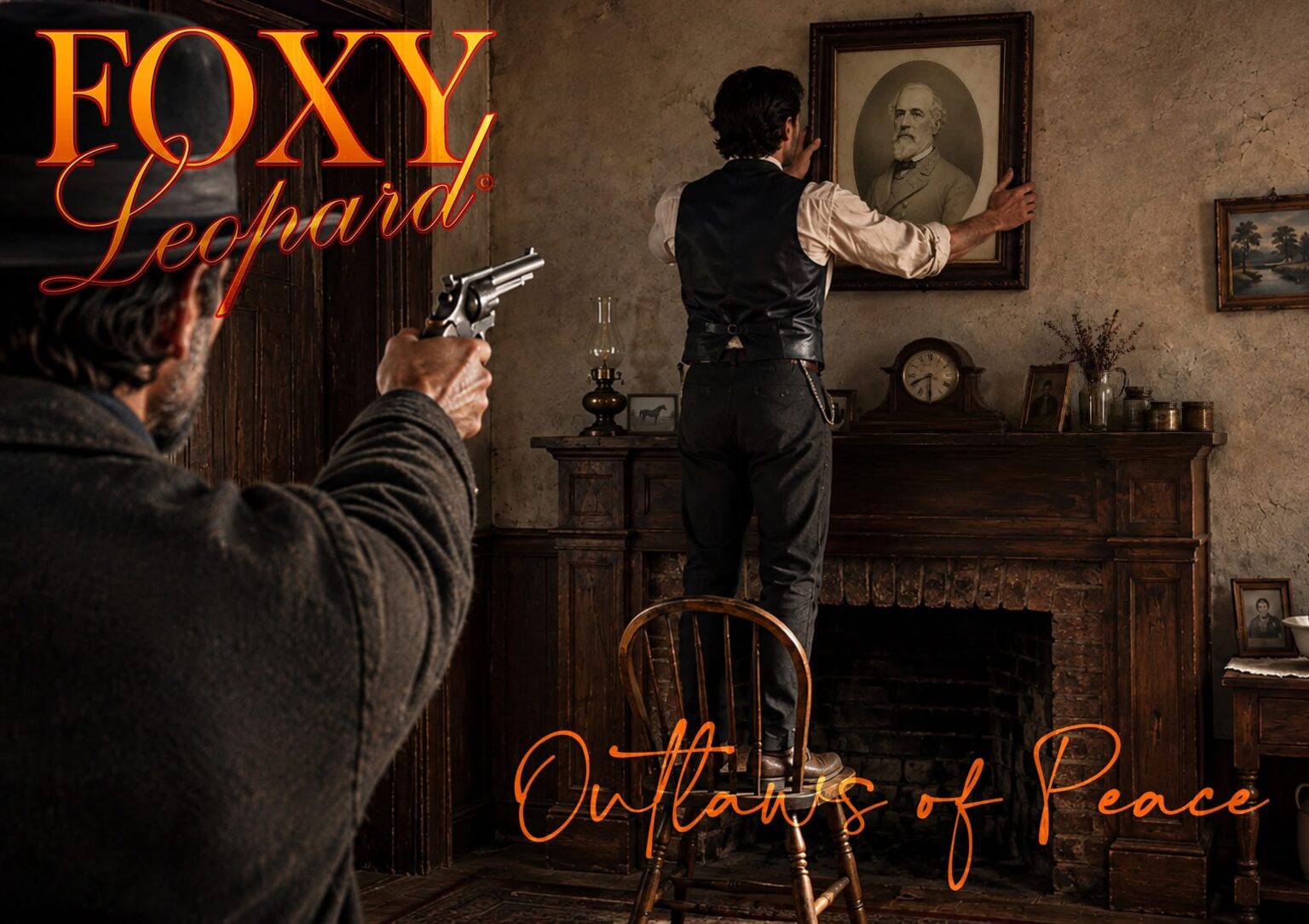
There is something deeply unsettling about the idea that peace can become another kind of battleground, particularly for those who emerge from war only to discover that the world they once knew has disappeared. It is this complicated territory that Foxy Leopard explores with “Outlaws of Peace,” a historically grounded and emotionally provocative track from the concept album After. Drawing inspiration from the turbulent aftermath of the American Civil War, the song examines what happens when soldiers return from the battlefield carrying loyalties, resentments, and violent instincts that cannot simply be buried alongside the weapons they once carried. Rather than treating the end of the conflict as a neat historical conclusion, Foxy Leopard looks into the uncomfortable spaces that follow, where former combatants struggle to find an identity in a society attempting to rebuild itself. At the center of this narrative are Jesse and Frank James, two of America’s most notorious outlaws, whose lives became entangled with the lingering divisions of a nation that had barely begun to heal. Yet “Outlaws of Peace” is not simply another musical retelling of their criminal exploits. It is an invitation to question the circumstances that shaped them, the mythology that eventually surrounded them, and the disturbing possibility that the violence of war can survive long after its original purpose has disappeared. There is a particularly compelling contradiction in the title itself: how can someone become an outlaw of peace? Foxy Leopard finds its answer in the uncomfortable suggestion that some people are so deeply shaped by conflict that tranquillity becomes almost impossible to inhabit.
Musically, the track establishes its personality through a wonderfully abrasive guitar sound that feels as though it has been dragged through the dust of an abandoned frontier town. Crisp, cutting riffs grind against a rough-edged acoustic foundation, creating an atmosphere that is simultaneously rustic, menacing, and surprisingly melodic. The resonator guitar is especially important to the song’s character, its metallic string attacks and haunting slides producing a sound that seems to carry the weight of another century. There is a fascinating physicality to its tone, with every note possessing a slightly abrasive bite, while the deeper acoustic resonance gives the instrument an almost electric growl. It is an unconventional combination that prevents the track from settling comfortably into familiar country or blues territory. Instead, Foxy Leopard creates something more individualistic, drawing upon the storytelling instincts of traditional folk while embracing a grittier musical language that feels appropriately unsettled. The guitar riffs have an almost locomotive quality, churning forward with a restless determination that evokes the dangerous movement of trains across the American frontier. Strong, hard-hitting chords gradually intensify the arrangement, but the music never feels excessively crowded or unnecessarily theatrical. There is room for the instrumental textures to breathe, and that space becomes an important part of the listening experience. The rawness is not something that needs correcting; it is precisely what gives the song its identity. Every metallic scrape, resonant slide, and forceful chord seems to reinforce the feeling of a past that refuses to remain buried. The result is an arrangement that feels lived-in rather than polished into submission, allowing its rough edges to become an essential part of its storytelling.
Equally compelling is the vocal performance, which approaches the material with a moody strength and a deliberate sense of restraint. Rather than relying on exaggerated drama to communicate the tragedy of the James brothers’ story, the singer gives the lyrics the space and emphasis they deserve. Each phrase arrives with a thoughtful weight, drawing attention to the words and allowing the historical references to settle gradually. There is something particularly effective about this measured delivery because the subject matter already contains enough violence and contradiction to speak for itself. The lyrics reportedly embrace the straightforward imagery of a traditional folk ballad, incorporating references to train robberies and desperate escapes, yet their simplicity allows the narrative to become more unsettling rather than less. These are familiar ingredients from the mythology of the American outlaw, but Foxy Leopard uses them to explore something more complicated than romanticized rebellion. The James brothers have frequently occupied an ambiguous place in American popular culture, portrayed in different accounts as ruthless criminals, rebellious figures, or products of a deeply divided society. “Outlaws of Peace” resists making their story comfortably heroic. Instead, it raises a question that hangs over the entire composition: did the Civil War turn these men into criminals, or did it merely provide their violent tendencies with a cause, a uniform, and an apparent sense of purpose? That distinction is crucial. It challenges listeners to consider how easily historical circumstances can become excuses for individual brutality and how the mythology of resistance can sometimes obscure the suffering left in its wake. The vocal performance complements this ambiguity beautifully, sounding less like a narrator delivering a final verdict and more like someone examining a troubling chapter of history that refuses to offer easy explanations.
The historical dimension becomes even more intriguing through the song’s striking parallel between Abraham Lincoln’s assassination in 1865 and Jesse James’s death seventeen years later. These events belong to different chapters of American history, but placing them within the same broader narrative creates an unsettling sense of continuity between national trauma and personal violence. Lincoln’s death represented an enormous wound in the already fractured American political landscape, while James’s eventual murder marked the end of a notorious outlaw whose life had become inseparable from the violent legacy of the postwar years. Foxy Leopard uses this historical relationship to reinforce the idea that the consequences of conflict rarely disappear when the official fighting stops. The American Civil War may have reached its formal conclusion, but its ideological divisions, personal grievances, and social consequences continued to influence lives for decades. In this respect, the song’s subject extends well beyond the nineteenth-century American frontier. Its underlying observations can be applied to conflicts across generations, where former soldiers return to communities that have changed beyond recognition, where old loyalties become dangerous burdens, and where the distinction between fighting for a cause and perpetuating violence becomes increasingly difficult to recognize. There is also something particularly uncomfortable about the romantic mythology surrounding former Confederate guerrillas. The outlaw image can be seductive, especially when presented through the familiar language of rebellion, freedom, and defiance, but the historical reality is considerably less glamorous. By revisiting Jesse and Frank James without entirely resolving the moral questions surrounding them, Foxy Leopard allows the listener to confront the difference between legend and consequence. The track does not attempt to turn history into a simplistic morality tale, nor does it pretend that the circumstances of the time can be separated from the actions of those who lived through it. Its greatest strength lies in recognizing that historical understanding and moral judgment do not always produce comfortable answers.
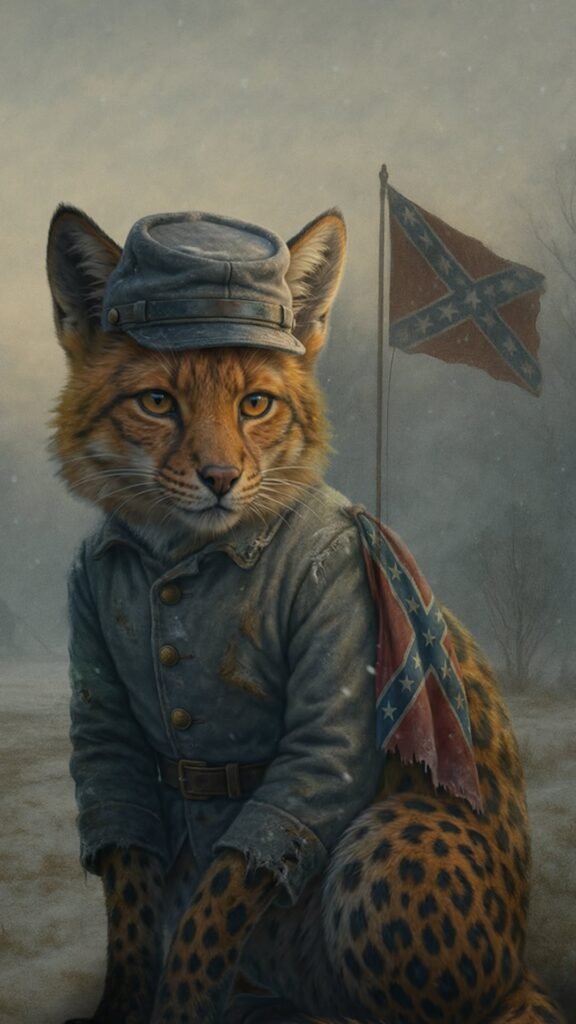
Ultimately, “Outlaws of Peace” is a distinctive piece of historical storytelling that combines gritty musical character with a narrative possessing considerably more depth than its outlaw subject might initially suggest. Foxy Leopard understands that the most compelling historical songs do not necessarily need to explain everything; sometimes their greatest achievement is making listeners reconsider what they thought they already knew. The resonator guitar provides the perfect sonic landscape for this exploration, its metallic aggression and haunting acoustic resonance capturing the uneasy relationship between a violent past and an uncertain future. Meanwhile, the measured vocals and traditional folk-ballad sensibility give the story an enduring quality, as though these events are being recounted around a fire by someone who understands that the truth is considerably messier than the legends suggest. The song’s refusal to provide a definitive answer to its central question is particularly effective. Were Jesse and Frank James products of the war, or were they simply men who found a convenient justification for the violence they were already capable of committing? Perhaps the more uncomfortable possibility is that both interpretations can coexist. That unresolved tension gives the track its lasting resonance, transforming a historical narrative into a broader reflection on human behavior, inherited conflict, and the difficulty of finding peace after a lifetime shaped by violence. As part of After, “Outlaws of Peace” also feels thematically appropriate, looking beyond the dramatic events themselves to examine the complicated emotional and social wreckage they leave behind. Foxy Leopard delivers a song that is rough around the edges in all the right ways, musically atmospheric, lyrically provocative, and rich in historical unease. It leaves the listener with an important reminder: the signing of peace agreements may silence the guns, but it cannot automatically silence the anger, grief, and destructive impulses that war leaves behind. Sometimes the hardest battle begins when everyone else believes the fighting is over.
For more information, follow FOXY LEOPARD
WEBSITE – FACEBOOK – SPOTIFY – YOUTUBE