

Some compositions take you somewhere, while others make you feel as if you are leaving the familiar behind. Sonic Sky by Leonardo Barilaro, known as The Space Pianist, belongs firmly in the latter category. Opening with a cinematic piano passage that feels suspended between intimacy and immensity, the track gradually introduces cosmic whirring textures, ascending keys, syncopated drums, and a fiercely energetic electric guitar presence that transforms its atmosphere into something considerably more monumental. What begins as a delicate invitation slowly becomes a full-scale sonic expedition, gathering momentum like a spacecraft preparing to break free of Earth’s gravitational pull. There are shades of progressive rock, industrial intensity, and cinematic metal throughout the composition, with moments that evoke the dramatic weight and muscular sound associated with Metallica’s Black Album, while still maintaining a personality that is distinctly Barilaro’s own. The piano remains the emotional center of gravity, but it is surrounded by increasingly ambitious layers that seem to stretch the music toward something limitless. The synths climb, the guitar sharpens its presence, and the rhythm begins to feel like the heartbeat of some extraordinary journey unfolding beyond the atmosphere. What makes the opening particularly effective is its gradual transformation; rather than throwing the listener immediately into the deep end, Barilaro carefully builds a sense of anticipation, allowing each sonic element to reveal itself before the composition begins to soar. It is grand, dramatic, and undeniably adventurous, yet there remains a human warmth beneath all the cosmic spectacle.
The track’s identity becomes even more compelling when considering the extraordinary story that inspires it. Sonic Sky arrives with a philosophical connection to Voyager 1, the spacecraft launched in 1977 that continues its journey into interstellar space, carrying the Golden Record, humanity’s carefully assembled collection of sounds and images intended to represent life on Earth. The idea of a human-made object travelling so far beyond our world, carrying traces of our existence into a vast and largely unknown universe, is inherently moving. Barilaro seems to understand that the emotional significance of space exploration is not simply about scientific achievement, distance, or technological ingenuity; it is about the human impulse to reach beyond ourselves, to search for answers, and to leave some small expression of who we are in the face of the infinite. That philosophical dimension provides the music with the music an additional layer of meaning. The piano feels like a voice from Earth, personal, expressive, and recognisably human, while the heavier instrumentation suggests the immense energy required to push beyond the limits of our world. As the synths rise and the musical landscape becomes increasingly psychedelic, there is a palpable sense of movement, wonder, and possibility. Rather than attempting to illustrate the technical details of Voyager’s journey, Barilaro translates its significance into sound, allowing the listener to experience something closer to awe than explanation.
What makes Sonic Sky stand apart from more conventional progressive rock compositions is Barilaro’s willingness to treat the instruments as characters within an unfolding conversation rather than simply components of a fixed arrangement. His piano playing carries the melodic framework with a mixture of delicacy and authority, while Marino Di Nino’s electric guitar introduces a contrasting personality that frequently feels as though it is responding to, challenging, or extending the piano’s ideas. The guitar does not merely arrive to make the music heavier; it bends the established melodic motifs into unfamiliar shapes, climbing into higher registers and exploring textures that give the composition a wonderfully unpredictable quality. Andrea Giovannoli’s drumming provides another essential layer, functioning both as a rhythmic anchor and as an atmospheric instrument in its own right. There is a fuzzy, almost industrial quality to some of the percussion that contrasts beautifully with the sharper, crunchier tones of the guitar, creating an interplay of textures that keeps the music constantly shifting. Particularly effective are the moments when the guitar retreats and the rhythmic elements are allowed to dominate, giving the listener a chance to appreciate just how much the drums contribute to the overall sonic architecture. The eventual convergence of these elements during the latter part of the track is immensely satisfying, with piano, guitar, percussion, and synths gathering into a sustained, powerful crescendo. The music feels as though it has finally reached orbit, having navigated its way through turbulence, uncertainty, and unexpected discoveries.
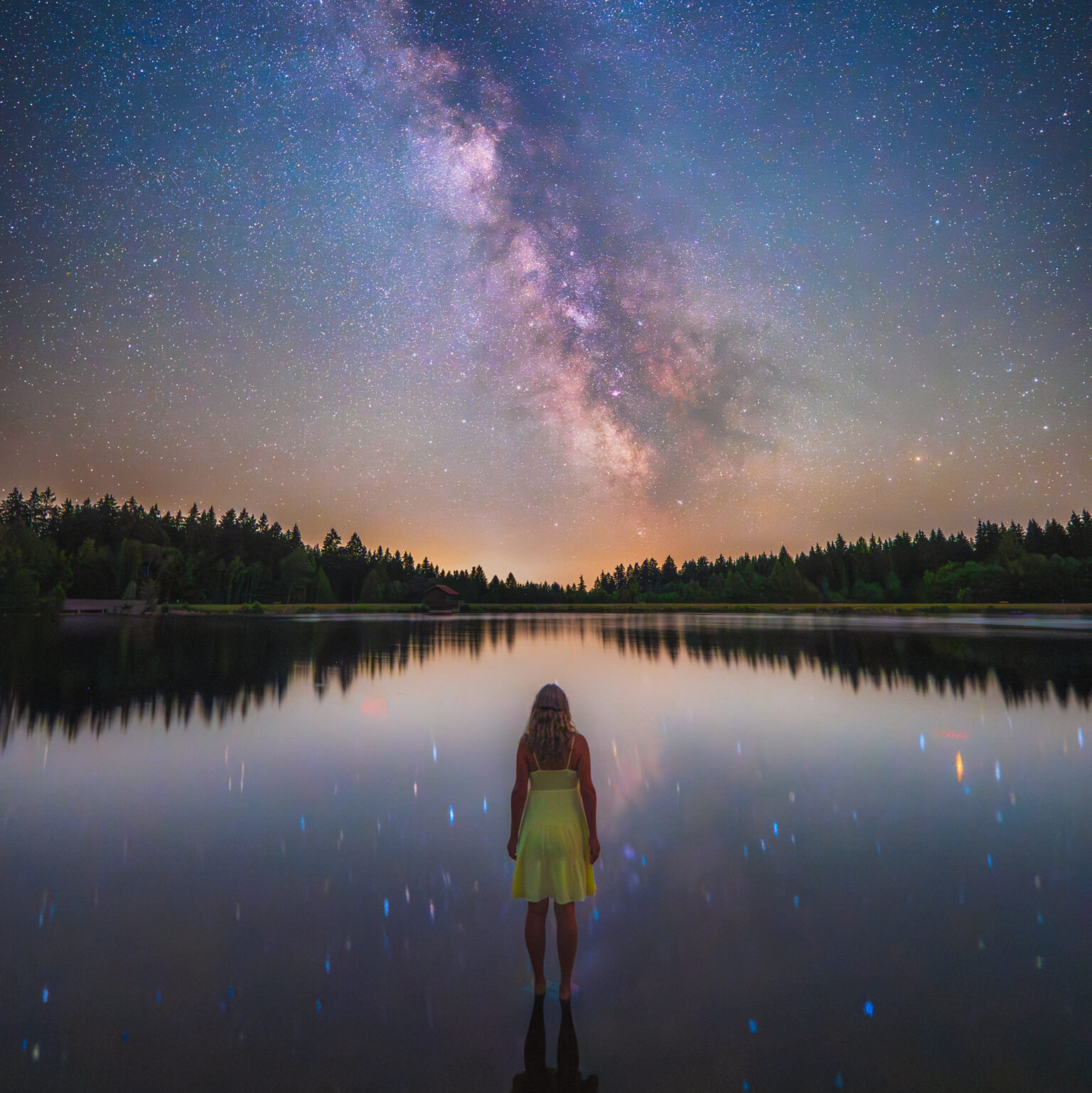
The visual dimension of Sonic Sky adds another fascinating layer to the experience, particularly through the astrophotography and videography of Andrey Prokhorov. The deep-space imagery places Barilaro’s performance against a backdrop that feels almost impossible to comprehend, reminding us of the extraordinary scale of the universe and how insignificant, yet remarkably curious, we are within it. The visuals are not simply decorative accompaniment; they reinforce the composition’s central themes of exploration, wonder, and the desire to discover what lies beyond our immediate understanding. There is a cinematic quality to the entire presentation that makes it easy to imagine the track finding a home in films such as Interstellar, 2001: A Space Odyssey, or Ad Astra, where music must convey both the emotional vulnerability of human beings and the breathtaking magnitude of the environments they inhabit. Admirers of Hans Zimmer, Dream Theater, Jean-Michel Jarre, and Vangelis will discover plenty to appreciate in Barilaro’s fusion of expressive piano, progressive rock, and expansive electronic textures. The track is most original when it doesn’t follow the rules of the genre. Its eventual breakdown feels almost surrealistic, like watching the colors and shapes of a Salvador Dalí painting slowly dissolve into another dimension. The familiar musical structures seem to melt away, leaving behind something strange, dreamlike, and wonderfully difficult to pin down. It is a bold compositional choice that reinforces the sense that this journey is not necessarily about reaching a destination but about allowing the experience itself to transform you.
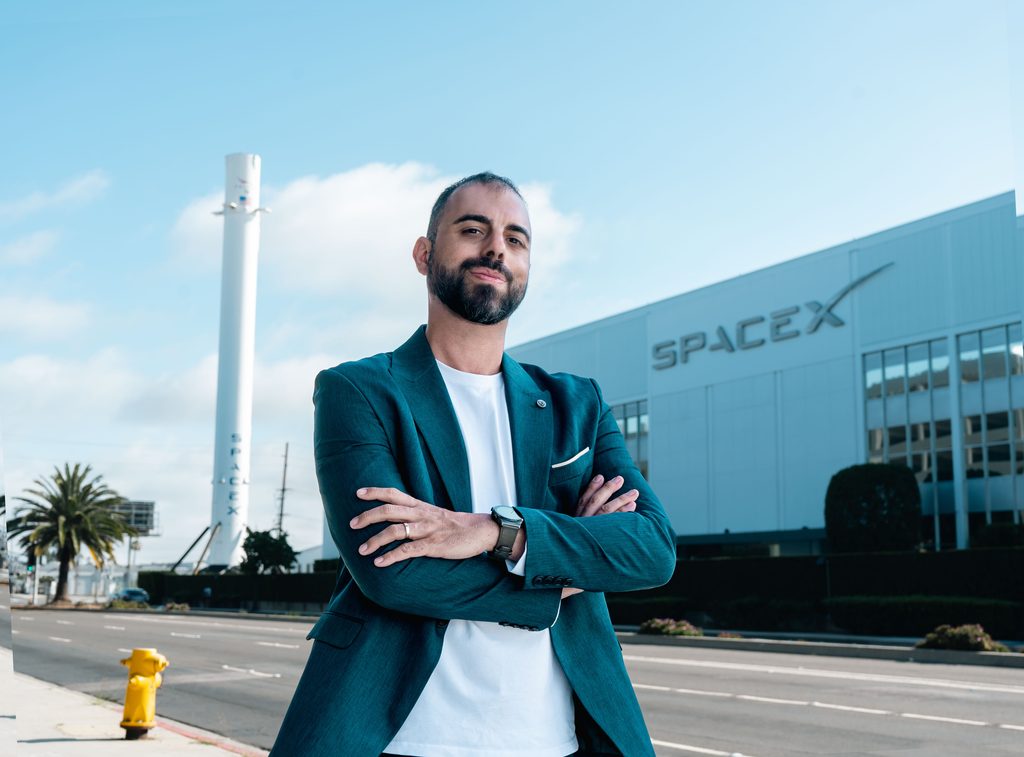
Barilaro’s own background makes Sonic Sky feel like a particularly natural expression of his creative identity. As an aerospace engineer and concert pianist, he occupies an unusual intersection between scientific curiosity and artistic expression, having previously explored musical performance in extraordinary environments, including broadcasting original compositions from the International Space Station and recording an EP during a parabolic flight involving microgravity and hypergravity conditions. This is not simply an artist using space imagery for its impressive appearance; space, science, and music appear to be deeply connected to his own creative philosophy. The project also highlights the work of the newly established NYU Abu Dhabi Space Art Lab, which seeks to bring science, technology, and artistic creativity into conversation. The fact that Sonic Sky draws upon real acoustic and electric performances makes its emotional impact even more significant. Beneath the electronic textures, the grand cinematic scale, and the progressive rock intensity, there are human hands, human decisions, and the expressive imperfections of musicians creating something together. The composition ultimately builds towards a thrilling culmination that feels both powerful and strangely reflective, leaving the listener with a sense of having witnessed something larger than the music itself. Sonic Sky is bold, imaginative, and deeply evocative, a composition that captures the tension between the intimate and the infinite with remarkable conviction. Leonardo Barilaro gives us a soundtrack for the moment we realize just how far our curiosity might take us.
For more information, follow LEONARDO BARILARO
WEBSITE – FACEBOOK – SPOTIFY – YOUTUBE