


Rooftop Screamers’ latest track, “Forsaken,” featuring the commanding vocal grit of Stephen McSwain, demands acknowledgement. This isn’t a song crafted for background playlists or passive listening. It feels like a warning siren for a world that has long ignored its own violent patterns. From its first ominous lines — “Here’s a taste, here’s a taste of what’s to come” — the song launches into a cinematic rock storm, driven by Kevin Hahn’s razor-edged guitars and anchored in a rhythm section that hits like a battalion advancing through smoke. The track wastes no time establishing its urgency: history is repeating, systems of domination persist, and silence has become complicity.
Musically, “Forsaken” builds tension like a film score, with a sense of dread lurking beneath every chord. McSwain’s vocals rise and break like a witness shouting truth into the wind — raw, pained, unflinchingly present. There’s a sweeping cinematic quality in the arrangement, yet everything remains grounded in a modern rock foundation: pounding drums, dark melodic swells, and soaring choruses fueled by anguish. The production is sharp and immersive, pulling listeners into the emotional narrative as if they’ve stepped straight into the aftermath of a world stripped bare. It’s polished, but never at the expense of the visceral human ache at its core.
Lyrically, the track confronts the legacy of colonisation and exploitation — not as distant history, but as a living, ongoing wound. The repeated refrain, “It feels like we’ve been here before,” is a powerful acknowledgement: the same patterns of conquest, resource theft, displacement, and erasure continue under different disguises. The imagery of “borrowed ground on borrowed time” frames existence as precarious for those whose land and identity have been claimed by force. Meanwhile, the invaders in the song “take it all, the earth and sky,” leaving nothing but spiritual emptiness behind. The powerful symbolism of fading footprints in dust reflects how entire cultures can be reduced, overwritten, and nearly erased by oppressive systems.
The title — “Forsaken” — becomes the emotional thesis of the song. It represents people abandoned by societies built on their suffering. The phrase “Our lives are forsaken, it’s theirs for the taking” is an accusation and lament, capturing how domination strips humanity of its rightful place in the world. Silence becomes its own character in the lyrics. When the voice declares, “These words are unspoken when everything’s broken,” it underscores the exhaustion of the oppressed — the point when storytelling, protest, and pleading no longer feel possible. The repetition of “No more” in the final moments is the exact moment where outrage becomes resolve. It’s a refusal to allow the cycle to continue unchecked.
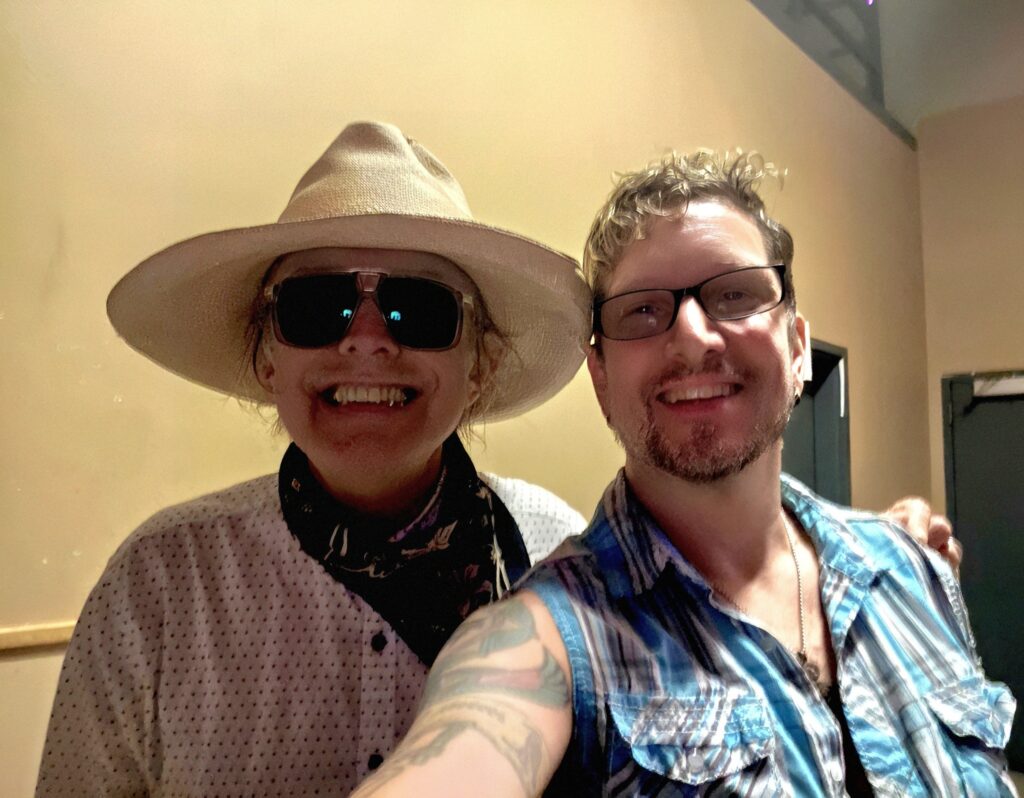
Ultimately, “Forsaken” is a confrontation. It forces listeners to look into the darker corners of how nations built their power and how that power continues to operate today. Through its emotional performance and cinematic instrumentation, the track transforms grief into a sonic act of remembrance and resistance. Rooftop Screamers and Stephen McSwain have crafted an anthem for the ignored — a voice for those whose histories have been buried but not forgotten. Turn it up, and let the truth hit you.
For more information, follow Rooftop Screamers:
Facebook – Spotify – Bandcamp – YouTube