

It takes a rare kind of confidence to make an album as exposed as Aeroplane. No fancy production techniques, no busy arrangements, no frantic attempt to fill every inch of silence. Just voice, guitar, space, and faith. Australian jazz singer Connie Lansberg joins forces with legendary guitarist Brad Rabuchin for this quietly absorbing collaboration that sounds less like a studio album and more like a deeply personal conversation overheard at exactly the right moment. Aeroplane was recorded in one day at Nolan Shaheed’s Pasadena studio, and it’s got that immediacy that can’t be faked through endless rewrites. Every pause, every breath, every tiny movement of the strings of Rabuchin’s guitar adds to a record that is based on instinct rather than perfection. That choice is the album’s greatest strength.
Knowing the story behind the collaboration makes the music all the more emotionally impactful. Fifteen years after she jammed on “Georgia on My Mind” with Ray Charles’ last touring guitarist in an accidental jam, Lansberg meets up with Rabuchin at a jazz club in Ventura and decides to record with him simply because she likes the way he plays. There’s a wonderfully organic quality to that origin story, and the album carries that same natural chemistry through its entire duration. Everything is so natural: no forcing, no overworking. Instead, Aeroplane is executed with the fluency of two skilled musicians who know that restraint often speaks louder than excess. Lansberg’s vocals never draw attention through sheer volume or theater. She sings with clarity, patience, and emotional intelligence, allowing the meaning behind each lyric to come gradually into focus. Meanwhile, Rabuchin treats the guitar not as an accompaniment but as a dialogue. He plays with the ease of a jazz phrase, the warmth of the blues, and the understatement of melodic commentary, always playing to the emotional direction of each song.
The title track, “Aeroplane,” opens the album and sets the emotional tone. At its heart, the song is about the painful process of finding oneself again after an emotional breakdown, trauma, or extended period of alienation from the self. In less capable hands, the metaphor of wings and flight might easily have become sentimental, but Lansberg handles it with remarkable subtlety. Her delivery is the perfect balance of exhaustion and hope, allowing the emotional weight of the song to settle naturally, without forcing itself. Rabuchin’s guitar work is also important here. He doesn’t overcomplicate the arrangement, leaving generous pockets of silence to breathe between phrases, creating an atmosphere that feels reflective and almost cinematic. The result is very moving because it trusts the listener to sit with the emotions rather than spelling them out.
That feeling of emotional maturity remains strong on “Broken Doll” and “Heart of Stone,” two highlights that show the album’s thematic consistency without being repetitive. “Broken Doll” has a delicate melancholy reminiscent of classic torch songs but never feels stuck in nostalgia. Lansberg’s songwriting still inhabits the emotional realities of the now, exploring vulnerability and self-preservation with a careful touch. Meanwhile, “Heart of Stone” has a somewhat darker undercurrent, with Rabuchin’s guitar taking on a smokier, blues-inflected tone that perfectly matches the guarded emotional posture in the lyrics. The beauty of these arrangements is how little they depend on obvious dramatic gestures. A little change in the way something is said, a note that hangs on too long, or a pause that is just too long can often say more than a big crescendo ever could.
One of the most quietly devastating moments of the album is Everything Ends Up in the River. The song’s timeless, poetic sensibility meditates on inevitability, memory, and emotional release. Lansberg’s songwriting is never cliché, even though it deals with universal themes of heartbreak and healing. Her lyrics have a literary quality that rewards close listening, but the emotional accessibility of the songs is intact. Rabuchin’s performance throughout the track is extraordinary in its restraint. His guitar never draws attention to itself, but its emotional presence is unmistakable. The two together create a vibe hovering somewhere between jazz club intimacy and late-night self-reflection.
A fascinating choice on the album is a surprising cover of Billie Eilish’s “What Was I Made For?” Rather than trying to reinvent the song, Lansberg and Rabuchin strip it down to its emotional skeleton, illustrating how naturally the composition fits into the larger themes of identity, vulnerability, and self-examination present in the album. Lansberg sings the lyrics with a fragile sincerity that renders the song almost startlingly intimate. Stripped from its original production context, the writing itself shines differently, and Rabuchin’s understated guitar arrangement lends the piece a timeless quality. It’s a reminder that strong songwriting in the right hands can transcend genre boundaries.
Elsewhere, tracks like “Starlight and Gold” and “The Way to You” add a measure of warmth to the album’s reflective mood. These songs provide moments of tenderness without losing the emotional complexity that characterizes the project as a whole. There’s a quiet optimism that runs through the album, but it never feels naïve or simplistic. Aeroplane knows, though, that healing is usually slow, happening in small moments of connection and recognition, not in dramatic change. One of the album’s defining achievements is Lansberg’s gift for conveying that emotional nuance. She never oversings or overstates the material, trusting that meaning will be found in the spaces between the words.
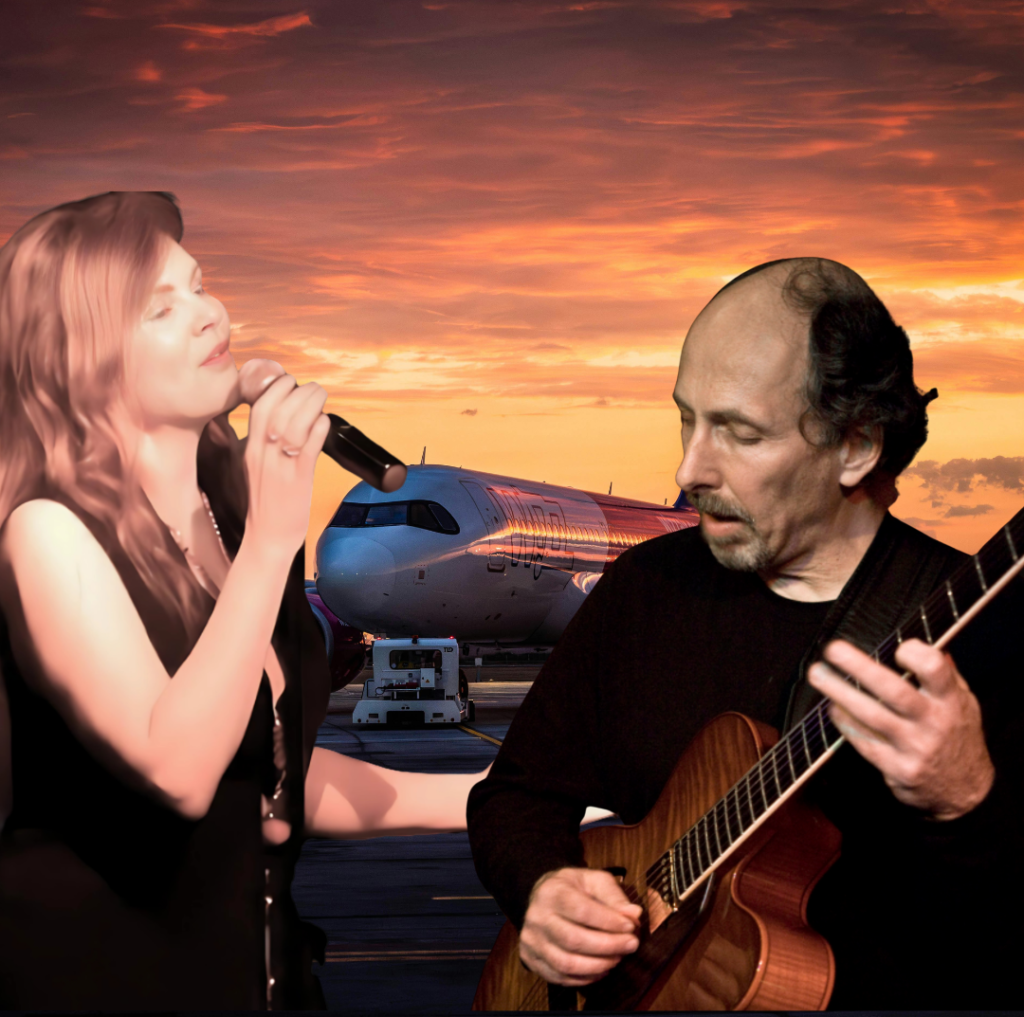
Production-wise, the back-to-basics album presentation works incredibly well. Recorded in just eight hours after one rehearsal, the project carries the imperfections and spontaneity that are the hallmarks of live jazz. You hear fingers sliding across strings, breaths between phrases, and the natural acoustics of the recording space itself. The album doesn’t gloss over those details but celebrates them wholeheartedly. This decision gives Aeroplane a humanity that modern jazz recordings often lose by focusing too much on technical precision. The sparseness of the production keeps the emotional core of the songwriting front and centre throughout the record.
Aeroplane understands that simplicity is key, and that’s why it works. Connie Lansberg and Brad Rabuchin are not trying to impress the listener with virtuosity or complexity for its own sake. Instead, they focus solely on the truth of emotion, musical compatibility, and the subtle science of knowing when not to play. This album is intensely personal yet universally relatable. It is intimate and expansive. Aeroplane offers a much-needed antidote to a musical landscape increasingly saturated with noise and overstimulation: stillness, honesty, and genuine emotional connection. It’s the sound of two musicians listening to each other with some depth and inviting the listener to do the same.
For more information, follow Connie Lansberg:
WEBSITE – FACEBOOK – SPOTIFY – SOUNDCLOUD – BANDCAMP – YOUTUBE