

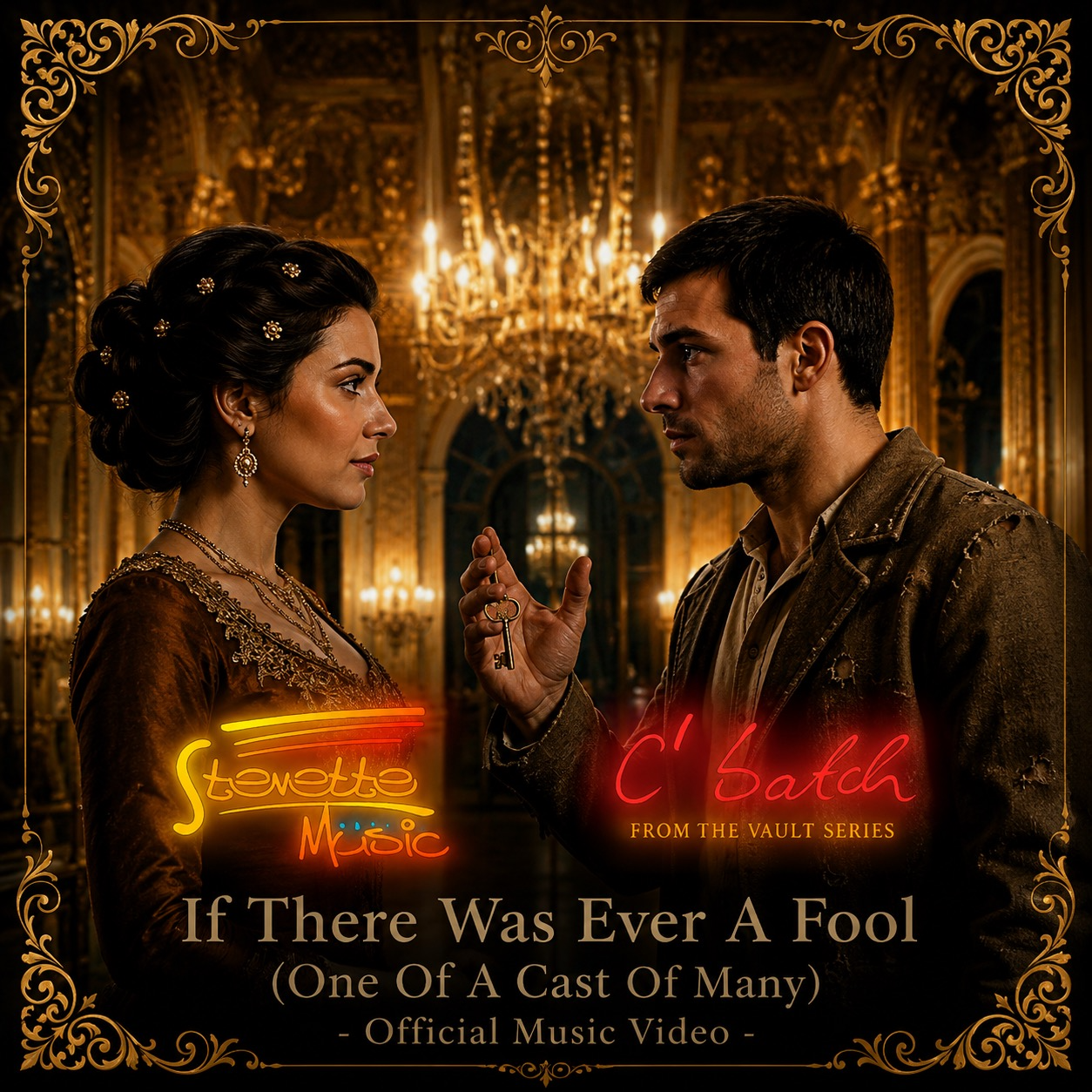
Some songs arrive with a straightforward emotional message, while others seem determined to turn an ordinary human experience into something larger, stranger, and considerably more theatrical. C’batch’s “If There Was Ever a Fool (One of a Cast of Many) 1” belongs firmly to the latter category. Conceived as an expansive, cinematic rock composition with an emotionally complicated story at its center, the track brings together passionate vocals, expressive electric guitar, sweeping strings, and a narrative that examines the peculiar decisions people make when love interferes with common sense. There is something wonderfully ambitious about its premise. Rather than approaching heartbreak as an entirely solemn affair, C’batch introduces irony, dark humor, and a theatrical sensibility that allows romantic disappointment to become a dramatic spectacle. The opening guitar reportedly establishes an immediate sense of urgency, drawing upon the grand, unapologetically expressive energy associated with cinematic rock of the 1980s and 1990s. It is the kind of entrance that seems to demand an enormous screen, dramatic lighting, and an audience prepared for emotional fireworks. The comparison to the opening credits of California Dreams captures something of that nostalgic, larger-than-life atmosphere, although the composition’s darker narrative ultimately takes it somewhere considerably more complicated. “If There Was Ever a Fool” is not simply another song about somebody getting their heart broken; it is an exploration of the absurdity, vulnerability, and occasional comedy that accompany the experience of loving the wrong person.
What gives the song its particular narrative appeal is the perspective behind its title. The phrase “one of a cast of many” immediately suggests that romantic foolishness is rarely an isolated phenomenon, with different individuals contributing to the same complicated emotional production. Inspired by a real-life relationship observed through the experience of a friend, the lyrics examine what happens when generosity becomes an expectation and devotion gradually turns into something resembling emotional exploitation. One person gives freely, hoping that affection will eventually be reciprocated, while the other appears increasingly comfortable accepting whatever is offered. The protagonist’s mistake is not necessarily loving too deeply but believing that continued sacrifice will somehow transform an unequal relationship into a meaningful partnership. The central metaphor, describing someone becoming a tool while believing they are treating their beloved like a precious jewel, captures this imbalance particularly effectively. It is an uncomfortable realization, but also one that carries a certain darkly amusing absurdity. C’batch understands that people frequently make questionable decisions when their emotions are involved, and the song’s storytelling seems interested in examining those decisions without simply condemning the people responsible. There is room for sympathy, embarrassment, recognition, and even laughter. That combination gives the narrative a more human quality than a conventional heartbreak anthem might possess, particularly when the protagonist begins to recognize the situation for what it is and gradually moves toward reclaiming their independence.
Musically, the composition is described as an ambitious fusion of stadium-filling cinematic rock and theatrical orchestration, with the electric guitar providing its muscular foundation while the strings expand the emotional dimensions of the arrangement. This is where the song’s concept becomes especially intriguing. The grandeur of the instrumental surroundings appears deliberately contrasted with the questionable behavior and occasionally humorous circumstances at the heart of the story. Instead of allowing the music to become merely decorative, C’batch seems intent on using its dramatic possibilities to illuminate the emotional journey itself. The arrangement reportedly moves between intimate passages and sweeping orchestral flourishes, creating an ebb and flow that could make the listener feel as though they are witnessing an entire relationship unfold onstage. The strings are particularly important to this vision, adding an elevated, almost operatic dimension to the composition while giving its darker themes additional weight. Meanwhile, the guitar improvisation provides a fascinating historical connection to the track’s creation. Originally recorded in 2012, that instrumental idea remained without its eventual lyrical narrative for years, until the artist revisited it after reflecting on his friend’s relationship. The pairing finally materialized in 2026, transforming an older musical fragment into a contemporary storytelling vehicle. It is a remarkable example of creative patience, and C’batch’s observation that sometimes a song takes years to find its story feels particularly appropriate here.
The theatrical possibilities surrounding “If There Was Ever a Fool (One of a Cast of Many) 1” are equally compelling. Based on its described musical character and narrative themes, the track seems naturally suited to visual storytelling that embraces extravagant emotion, heightened personalities, and a healthy appreciation for dramatic irony. The suggested connections to Moulin Rouge!, The Rocky Horror Picture Show, and Death Becomes Her make considerable sense, particularly given the song’s combination of flamboyant musical energy and darkly humorous subject matter. Its potential television associations are equally interesting, with Feud, Pose, Why Women Kill, American Horror Story: Coven, and Schmigadoon! offering different environments in which theatricality, complicated relationships, and stylized emotional drama might intersect. These comparisons point toward a composition that could function beyond the traditional boundaries of a standalone rock song, particularly in film, television, or other visual media where music is expected to communicate character and atmosphere simultaneously. The emotional contradictions at the center of the story provide plenty of material for a director or editor to explore. A lavish arrangement accompanying an increasingly uncomfortable romantic realization could produce an especially memorable juxtaposition, allowing the audience to experience both the tragedy and the absurdity of the situation. That potential cinematic dimension adds another layer of interest to a release already distinguished by its unusually long creative gestation.

Behind this ambitious musical statement is an artist whose career has developed across more than four decades of musical experimentation. New York-born composer and producer Stephen H. Cumberbatch, professionally known as C’batch, has explored an impressive range of styles, including R&B, soul, funk, reggae, dance, and cinematic instrumentals. His connections to New York’s early-1980s dance scene, including published works such as Sinnamon’s “I Need You Now” and NV’s “Let Me Do You,” provide an interesting historical backdrop to his broader musical evolution. Through Stevette Music, Inc., founded with his wife, Yvette, in 1984, he has continued developing and preserving his creative legacy while exploring new ways of bringing earlier musical ideas into contemporary contexts. The Vault project is particularly relevant to this release, offering a framework through which older recordings and unfinished concepts can acquire new meaning. In that sense, “If There Was Ever a Fool (One of a Cast of Many) 1” represents more than an isolated creative experiment. It embodies an approach to songwriting that values the possibility of reinvention, allowing an instrumental performance recorded years earlier to become the foundation for a fully realized narrative. The result, as presented, is an intriguing meeting between past and present, personal observation and theatrical expression, musical improvisation and carefully considered storytelling. With its passionate performance concept, sweeping strings, cinematic rock foundation, and unexpectedly humorous examination of romantic folly, the track offers a compelling addition to C’batch’s evolving catalogue. Arriving October 31, 2026, accompanied by a music video that brings performance and visual storytelling together, it invites listeners to consider just how many different ways people can become fools in the name of love—and how liberating it can be when they finally recognize the part they have been playing.
For more information, follow C’BATCH
WEBSITE – FACEBOOK – SPOTIFY – YOUTUBE