
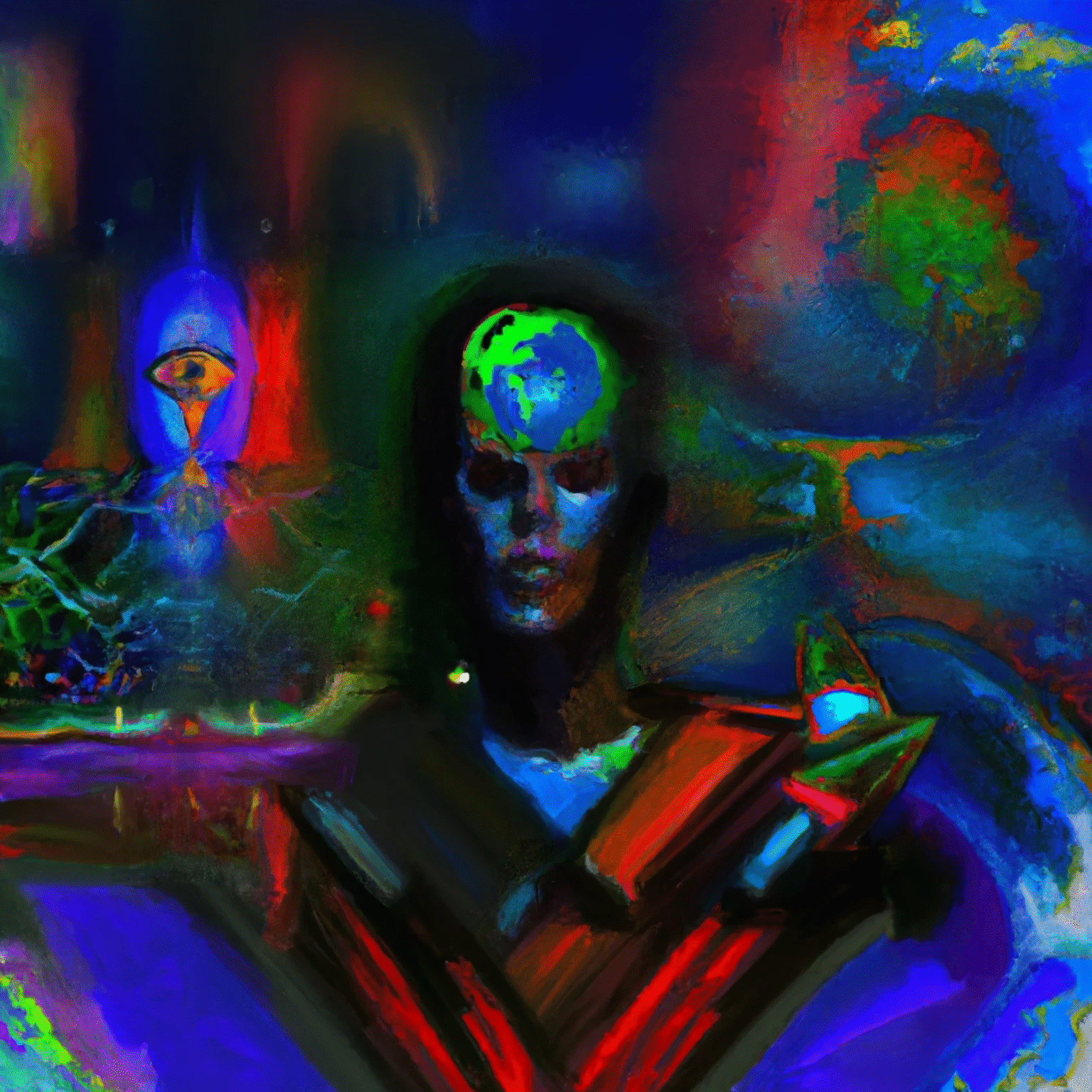
Chicago-based songwriter, producer, and multi-instrumentalist Ceyeo returns with his most emotionally raw and philosophically charged project to date, Together They Were Nothing. The seven-track EP, released in November 2024, pushes far beyond the boundaries of genre to form a conceptual and emotional continuum that reflects anger, disconnection, and the unraveling of human connection in an age of greed and alienation. While his debut, Machine Learning, wrestled with belonging in a mechanized society, and his sophomore album, Baby I Care, sought redemption in empathy, this third release strips away optimism entirely. Instead, it immerses listeners in the psychological debris left behind when love, unity, and faith collapse. The result is a reckoning.
The opening track, “Confession,” sets the tone for what follows. It’s a slow, haunting piece that blurs the line between apology and despair. Ceyeo’s lyrics unravel the internal decay of a relationship, yet his words carry broader implications—echoing a collective exhaustion with moral contradictions and emotional distance in modern life. “Why do we fight, when wrong is just the same as right?” he asks, his voice trembling with quiet resignation. The song, buoyed by Katie Burke’s ethereal backing vocals and Adam Ward’s expressive guitar work, captures that moment when two souls recognize the futility of reconciliation but can’t stop reaching out. It’s a dirge for broken systems, broken promises, and the fading warmth between people.
“Love Is Angry” takes the emotional core of the album and flips it inside out. Over hypnotic rhythms and flickering synths, Ceyeo delivers a poetic manifesto that recasts love as both weapon and wound. Drawing from the lyrical density of Pablo Neruda and the existential poetry of Leonard Cohen, he reimagines affection not as salvation, but as a force that exposes human hypocrisy. “Love is stuck on the outside, love is always looking in,” he sings, challenging the listener to see love not as comfort, but confrontation. This track encapsulates the album’s thematic paradox: the same emotions that bind us also destroy us. When love turns into expectation, when desire becomes possession, what remains is anger—an energy that burns but also illuminates.
From there, “Bedlam” plunges headfirst into chaos. The song’s title nods to the infamous asylum, and fittingly, it’s both a mental and social breakdown. Over Ryan Streeter’s distorted guitar riffs and Fede Gucciardo’s precise drumming, Ceyeo paints a surreal picture of a collapsing world: “Greed never stops, it never stops / It’s a vampire listening to your pumping heart.” The lyric is brutal, evoking both economic exploitation and emotional predation. Yet what gives “Bedlam” its power is the weary compassion underneath. Ceyeo doesn’t simply condemn, but mourns. “A life in Eden is just pretend,” he laments, hinting that paradise itself was always an illusion, undone by the same hunger that built it.
“Contact” shifts the tone toward transcendence, though not without pain. It’s the album’s most cinematic moment—a journey through memory, loss, and spiritual release. The song unfolds like a fever dream, where fragments of love and regret swirl in and out of consciousness: “That day, that house, that kite, that touch, that reason why.” It’s a meditation on letting go, rendered through language that feels at once intimate and cosmic. The line, “You are a light, a piece of sun,” becomes a mantra for closure, suggesting that even amid disconnection, there’s beauty in the act of remembering. Musically, Luca Giachi’s bass adds gravity to the floating textures, grounding the song’s emotional turbulence in something tangible—like holding onto the last note of a fading song.
If “Contact” is about departure, “Colossus” is about what remains after the leaving. It’s a requiem of silence and reflection, where Ceyeo’s voice hovers over echoing piano chords and spectral strings. The song explores mortality and memory: “Behind that star do I see you? / Behind that veil that masks the truth?” Here, he confronts not only the death of others but the slow erosion of the self. The track’s power lies in its vulnerability—it’s the sound of someone reaching for meaning in the ruins. There’s no grand revelation, just the quiet realization that understanding often arrives too late. “I’m running out of places inside of myself to hide from myself,” he confesses, encapsulating the EP’s ultimate truth: the real battle is internal.
The closing track, “This Is How You Win,” returns to social critique with cold precision. Set against mechanical percussion and dissonant synth layers, it’s a brutal satire of ambition and corruption. “Those who care are the easy to oppress,” Ceyeo warns, his voice detached but defiant. The refrain—This is how you win—becomes a chilling mantra for a world driven by greed and moral decay. It’s a direct counterpoint to the emotional vulnerability of the earlier tracks, underscoring how systemic cruelty mirrors personal betrayal. The song’s minimalist arrangement mirrors the emptiness it condemns—an ironic victory march for a civilization devouring itself.

Lyrically, Together They Were Nothing functions as a psychological map of disintegration. Each track corresponds to a different emotional state—confession, anger, chaos, surrender, grief, and cynicism—yet together they form a coherent narrative about the collapse of unity, both personal and collective. Ceyeo’s writing is steeped in symbolism: oceans, light, stars, and fire recur throughout, serving as metaphors for the fragile boundaries between creation and destruction. Where Baby I Care looked outward with hope, this EP looks inward with brutal honesty. It acknowledges that love, once weaponized or commodified, loses its power to heal. And yet, through that confrontation, there’s an undercurrent of renewal—the quiet suggestion that awareness itself is a form of resistance.
In Together They Were Nothing, Ceyeo offers reflection. The EP feels like standing at the edge of something vast and uncertain, staring into the wreckage and the light. It’s music for a world teetering between collapse and rebirth, where every lyric feels carved from lived experience and every melody carries the weight of emotional truth. By fusing classical training with experimental production and deeply human storytelling, Ceyeo has created his most necessary one—a dark mirror held up to our times, reminding us that even when love turns to anger and unity dissolves into isolation, the act of witnessing it still means we care.
For more information, follow Ceyeo:
Website – Facebook – Spotify – Soundcloud – YouTube