

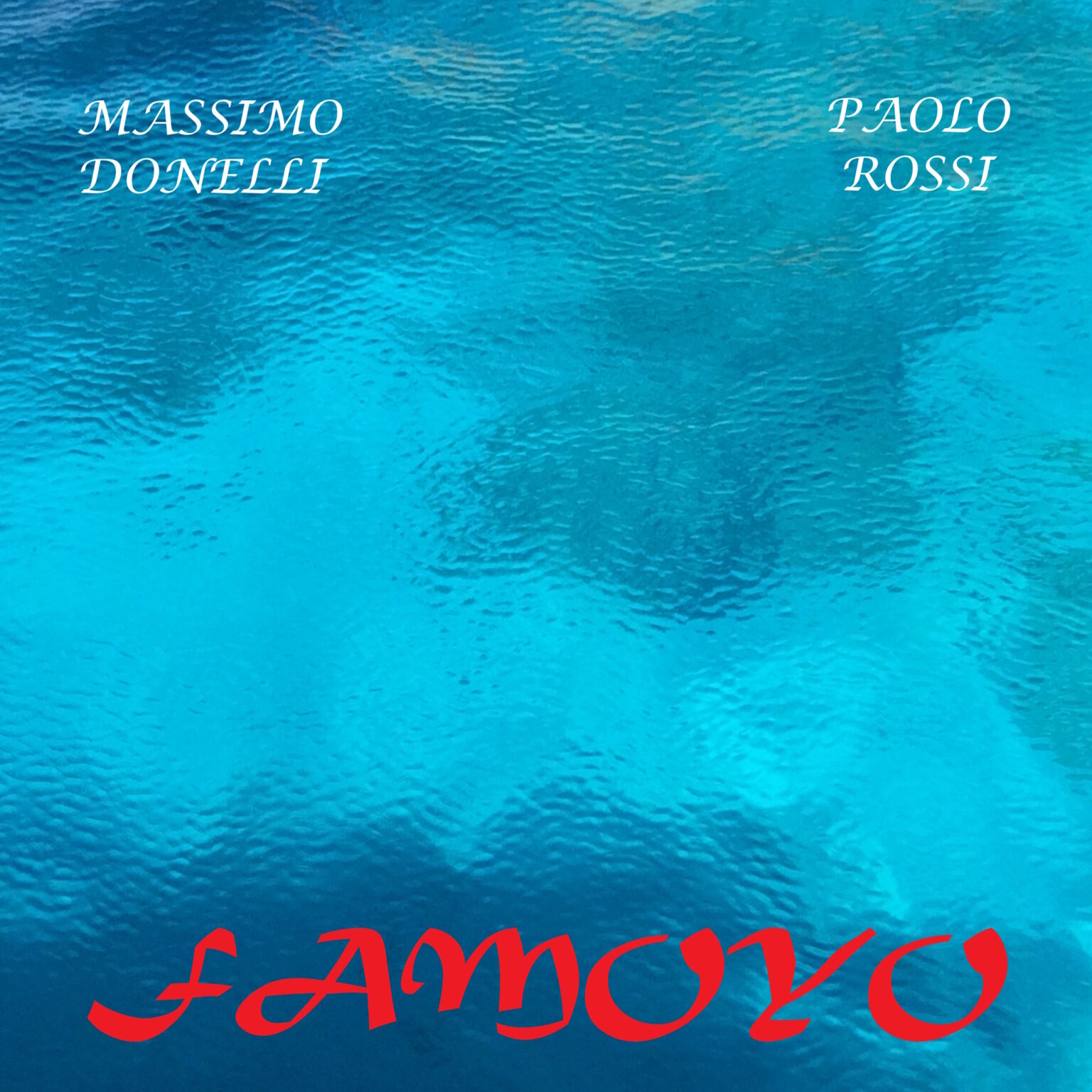
Concept albums often aim to illuminate ideas, emotions, and philosophies through music. FAMOYO, the collaborative album by Massimo Donelli and Paolo Rossi, belongs firmly within this tradition. Rooted in the philosophical teachings of George Ivanovich Gurdjieff, the record unfolds like a spiritual map that charts the many dimensions of human existence. Drawing from progressive rock, jazz fusion, world music, and contemporary experimentation, the album functions as a contemplative sonic narrative. Across its eleven tracks, the duo guide listeners through the symbolic “four ways” described by Gurdjieff: the paths of the Fakir, the Monk, the Yogi, and the Astute Man. Through thoughtful arrangement, textured instrumentation, and poetic lyricism, FAMOYO becomes an ambitious exploration of body, emotion, spirit, and balance.
The album opens with “Guarda dentro,” a striking introduction that sets the thematic tone while immediately showcasing the duo’s stylistic ambition. The track begins with orchestral flourishes, where cello and violin lines weave together before being twisted through subtle distortion. This technique produces a compelling tension between classical elegance and modern experimentation. As the rhythm settles, a danceable groove emerges, blending hints of pop, disco, and funk with darker tonal accents. The vocals glide alongside the bass line, creating a hypnotic effect that pulls the listener inward—appropriately echoing the title’s meaning, “look inside.” From the very first moments, the album signals its intention to blur boundaries between genres and emotional states.
The first conceptual movement, inspired by Gurdjieff’s “Way of the Fakir,” explores the physical dimension of existence—pain, endurance, and bodily awareness. Tracks like “Il Fachiro – Gestation and Birth,” “Il Fachiro – Potere del corpo,” and “Il Fachiro – L’essenza” are charged with energetic contrasts. The music often leans toward pop-rock frameworks, yet it refuses to remain within a single stylistic box. Desert-like tonalities, tribal percussion, and fragments of neoclassical instrumentation drift through the arrangements. These elements combine to evoke the rawness of physical struggle and transformation. The sound design in this section feels restless and exploratory, mirroring the bodily discipline associated with the Fakir’s path.
As the album transitions into the “Way of the Monk,” the emotional palette shifts dramatically. Songs such as “Il Monaco – Feeling and Love,” “Il Monaco – Risvegli,” and “Il Monaco – Toujours” immerse listeners in themes of affection, vulnerability, and inner awakening. Here, the musical structure leans toward alternative rock textures, but the duo embellish the style with delicate melodic halos and expressive rhythmic curves. Middle Eastern tonal influences slip subtly into the arrangements, lending a warm sensuality to the tracks. The result is a sonic atmosphere that feels intimate yet expansive—capturing the delicate balance between personal feeling and universal compassion that defines the monk’s spiritual orientation.
The album’s third philosophical stage, the “Way of the Yogi,” delves into meditation, spirituality, and the search for transcendence. “Lo Yogi – Thought and Meditation” stands out as one of the most immersive pieces on the record. The track unfolds gradually, its layers tightening into an intense spiral of sound. Instruments build and collapse around one another, creating an almost trance-like effect that reflects the focused intensity of meditation. The follow-up, “Lo Yogi – Ricerca,” expands on this mood with a similarly evolving structure, allowing moments of sonic chaos to resolve into contemplative calm. These compositions demonstrate how effectively Donelli’s musical arrangements and Rossi’s lyrical themes can mirror philosophical concepts through sound.
Within this same Yogi section, the album reveals some of its most atmospheric moments. “Lo Yogi – Filo d’acciaio” flows like a long melodic drift, its gentle progressions carrying a sense of open space and quiet momentum. The piece feels perfectly suited for reflective listening, its subtle variations encouraging the mind to wander. In contrast, the track’s brightness also evokes a sense of vitality—as though the listener is travelling through an unseen landscape of thought and sensation. The instrumentation remains fluid and expressive, demonstrating the duo’s ability to craft musical narratives that unfold patiently without losing emotional engagement.
The concluding piece, “L’uomo astuto – Balance and Completeness,” embodies the final philosophical concept: the integration of body, emotion, and spirit into a balanced human experience. Musically, the track brings together many of the album’s earlier influences. Funk-infused rhythms bounce beneath bright melodies, while blues-tinted vocal phrases lend a playful, celebratory quality. Moments of near-acapella arrangement briefly strip the song down before the full groove returns, reinforcing the theme of harmony between contrasting elements. It feels like the culmination of the album’s spiritual journey—a lively affirmation that balance is not static but dynamic.
One of the most compelling aspects of FAMOYO is the collaborative synergy between Donelli and Rossi. Donelli’s compositions form the architectural framework of the album, weaving together progressive experimentation with accessible melodic ideas. Rossi, a poet by background, contributes lyrical depth that aligns beautifully with the philosophical structure of the record. The integration of artificial intelligence into the development of music also adds an intriguing modern dimension. Rather than dominating the creative process, the technology functions as a tool that reshapes and enhances the compositions, allowing the artists to explore new sonic possibilities while preserving the human emotional core.
Ultimately, FAMOYO stands as an ambitious and thoughtfully executed concept album. Its greatest strength lies in its willingness to merge intellectual philosophy with vibrant musical storytelling. Listeners may approach it from many angles: as a progressive rock experiment, a cross-cultural fusion of genres, or a meditation on spiritual growth. Yet regardless of how one interprets it, the album rewards attentive listening. Each track contributes a piece to the larger philosophical puzzle, encouraging reflection on the delicate interplay between physical existence, emotional life, and spiritual awareness.
By the album’s conclusion, Donelli and Rossi succeed in transforming abstract philosophical ideas into an immersive musical experience. The journey through Fakir, Monk, Yogi, and the Astute Man unfolds with a sense of curiosity and reverence, reminding listeners that self-understanding is rarely a straightforward path. Instead, it is a complex dance of discipline, compassion, introspection, and balance. Through its layered arrangements and reflective storytelling, FAMOYO invites the audience not only to hear the music but also to contemplate the deeper currents of human experience that run beneath it.
For more information, follow Massimo Donelli-Paolo Rossi:
FACEBOOK – SPOTIFY – YOUTUBE – INSTAGRAM