
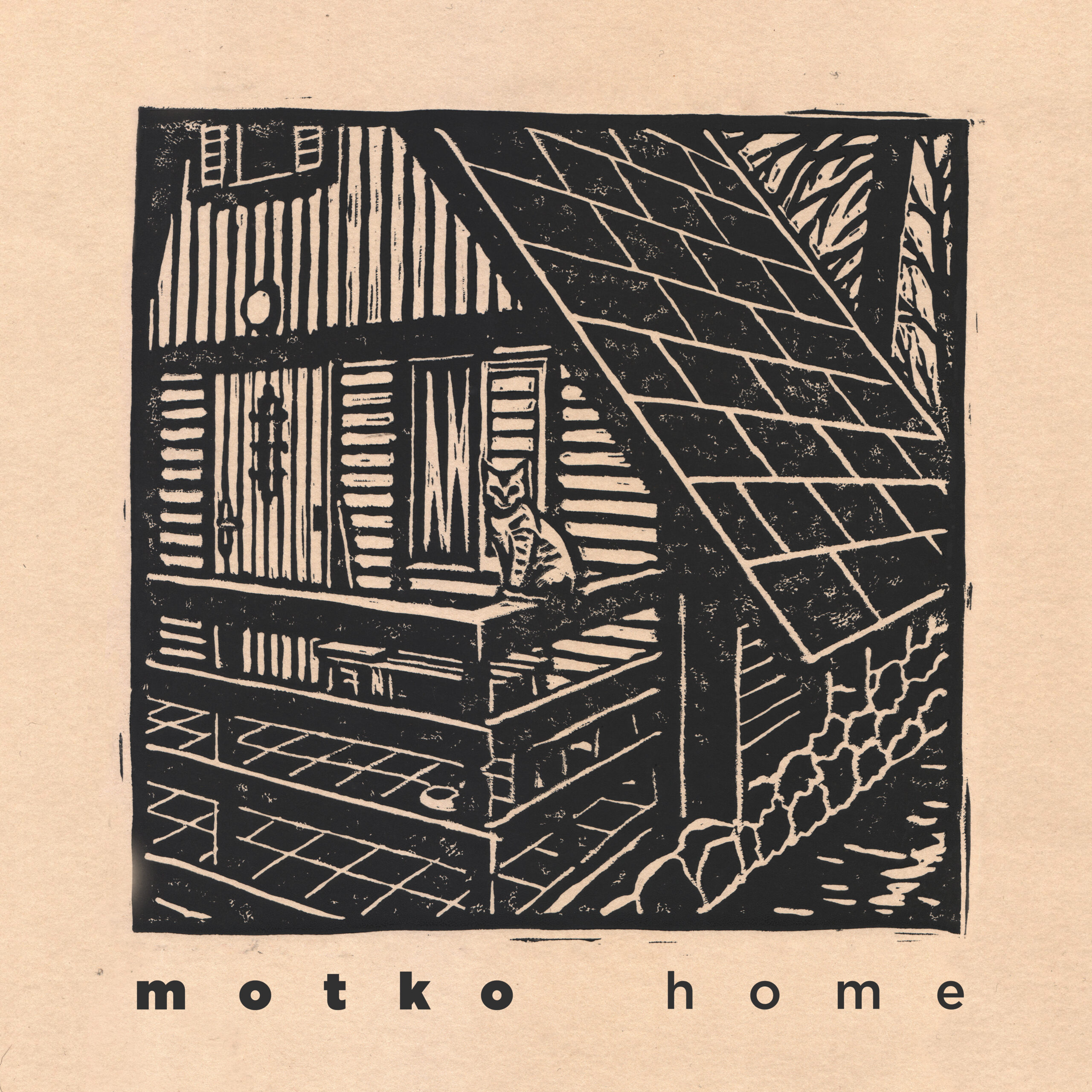
Motko’s presentation of the idea of home is immediately revealing. The lowercase title is deliberate, understated, almost deliberately anti-ceremonial, and that same sensibility runs through this nine-track album. There’s no big announcement at the beginning of the record, no attempt to drown the listener in an obvious statement of intent. Instead, home creeps up and says, ‘May I come in? Don’t eat me!’ motko is the solo project of Bratislava-based musician Shorty and is a major departure from his years of playing in bands such as Millhouse, Symbiosis and Ions. Having spent so much time making music in a collective, he’s turned inward to find out what happens when the room is all his. The result is a 41-minute alternative rock record that draws from post-rock and darkwave while remaining emotionally elusive. It’s slow, where contemporary music often feels obliged to be immediate; spacious, where other records might crowd every second; and cinematic without spectacle. “Movies for your ears” is more than just a handy way to describe them. home is a film in the true sense of the word: scenes blend into scenes, emotional motifs resonate, there are scenes of tension and silence, and the longer you stay with it, the clearer the narrative becomes.
The title track “wake up” is a good intro. It doesn’t sound like a typical opening single. It is less than three minutes, and it operates almost like the first shot of a film: brief, atmospheric, and deliberately incomplete. It feels like you arrive somewhere without a map. The title itself is suggestive of awakening, but not necessarily of a triumphant reawakening. It feels more like the awkward process of becoming aware of what is going on inside. That pensive mood continues naturally into “ready when you are,” which adds gravity without abandoning the album’s patient pacing. Here motko starts to show the muscular side of his sound, giving guitars and rhythm more room while keeping the emotional core relatively subdued. Then there’s “birds were telling us all the time”, where the album really begins to stretch its limbs. The guitars build density slowly, and the drums add a sense of anticipation beneath them. The song displays one of motko’s great strengths: he knows a crescendo means more when you’ve earned it. Rather than throwing the listener into distortion, he builds tension so the heavier moments feel like an emotional consequence instead of a production trick.
That patience is at the core of home, for the album is less focused on spinning a coherent narrative than on emulating the emotional cadences of memory. Shorty seems not to be too interested in delivering every thought in a nice lyrical statement. Instead, he creates environments in which such thoughts can exist. And even as the instrumental surroundings get denser, the vocals still feel close and human. There’s an interesting contrast here of intimacy and scale. It is as if the narrator is standing in a private room, and the outside world is getting louder. This gives the album a very cinematic feel. There are controlled guitar builds that show the influence of alternative rock and post-rock, but there is also a darker atmospheric sensibility that leans toward darkwave. The genres never feel like boxes motko is trying to tick. They are less individual flavors than they are different takes on one emotional theme. The result is a record that understands mood as structure. A quiet passage is not simply a quiet passage in the music; it is the preparation for what the loud passage will mean when it arrives.
It’s especially interesting to hear “liberation” because the title suggests release, freedom, and relief, but the music won’t make liberation sound easy. That complexity serves the album’s larger argument beautifully. Sometimes you leave because you can no longer stand being there. But distance does not bring answers by itself. You can leave a place, a relationship, a habit, an identity, or an emotional pattern and still carry its architecture inside you. That contradiction keeps coming home again. The album is about leaving far enough away to finally learn how to stay. That idea gives “liberation” an emotional tension that a more conventional freedom anthem might miss. The track is movement, but not straightforward celebration. There is uncertainty about the escape. Where do you go when the thing you’ve left behind has shaped so much of who you are? What does freedom look like when you don’t know what to do with it yet? Motko leaves those questions unanswered. The album has no interest in pretending personal transformation happens in a straight line, and that honesty makes the journey that much more believable.
Then there’s “sailing,” which naturally calls to mind distance, open water, and departure, and given the context of home it’s another entry in the record’s reflection on movement. Motko continues to play with the tension between the desire to go and the desire for somewhere to go back to. The album is built around a beautiful contradiction: home is what you leave and what you spend the journey trying to understand. “sailing” occupies that emotional space with a suitably expansive sensibility, offering the record space to breathe before turning toward one of its most important statements. Arguably the emotional centerpiece of the album is “old,” which deals with a fear that becomes more recognizable with time: the possibility of becoming rigid. The song isn’t just about the physical process of aging. But it’s more about what happens when experience becomes bitterness, when caution becomes defensiveness, when a person stops being curious because certainty is safer. “old” is dark and slow-burning with brooding guitars and textured drums, but the darkness doesn’t feel superficial. It embodies the anxiety at the heart of the song’s question: what if aging is about being robbed of the openness that once made you feel alive?
Whereas “old” asks what happens when the self is closed, “love” asks the more difficult question of what happens when you are forced to face your relationship with yourself. One of the most compelling moments on the album, its arrangement a reflection of the emotional discovery within it. The tune opens on a Hindu drone, establishing a meditative mood that feels a little disconnected from the heavier alternative-rock vocabulary that surrounds it. Then bass and acoustic guitar gradually slide in, laying down something intimate and rooted before the track eventually blossoms into high-gain riffs and more forceful vocals. That transformation is key. The peaceful beginning isn’t meant to stay peaceful, for self-examination rarely is. The deeper you go, the more uncomfortable the questions become. At the core of “love” is the deceptively simple question, “do you love yourself?” motko does not dress up that question in inspirational language. He leaves it there, with all its complications. The change from meditation to anger implies self-worth isn’t always a peaceful find. Sometimes it takes confronting resentment, disappointment, fear, and frustration before anything like acceptance can emerge.
That emotional architecture continues for the last leg of home rather than trying to tie everything up neatly. “wellness” is an interesting title for an album so concerned with the inner struggle, because wellness here doesn’t feel like a trendy lifestyle concept or a neatly packaged destination. It’s part of the larger search for balance that permeates the record. Wellness becomes an additional aspect of learning how to inhabit oneself authentically, following the confrontation with stagnation, self-worth, distance, and emotional uncertainty. The closing “you better run” then adds to the urgency of the project. Its title is almost menacing, but in the larger conceptual frame of the album, it can also be heard as an ultimate burst of instinct. The realization that sometimes you need to move before you get trapped by the very things you have been trying to understand. That’s where it ends, so “home” doesn’t get too comfortable. Motko does not offer the listener a neat resolution where all inner conflicts are resolved. Instead, the album ends on the notion that movement itself can be a kind of survival.

One of the best things about the project is how Motko combines his experience as a former band musician with the vulnerability that comes from working alone. There’s clearly an understanding of arrangement here—the songs know how to build, when to hold back, and how to make guitars feel physical without letting them swamp the emotional narrative. But there is also something raw about the project, in the proximity of the vocals and the willingness to leave emotional questions open. That mix makes home feel neither like a polished reinvention nor a stripped-back experiment. It’s just the sound of a seasoned musician testing his own instincts without the safety net of a band around him. Even the accompanying zine adds another layer to the world-building, allowing listeners to explore the ideas behind the music beyond the music itself. It reinforces the idea that home is intended to be a singular artistic statement, not simply a collection of nine songs. It’s like a movie with sticky notes on it, visual cues, and details that invite you to listen more closely.
Ultimately, home is an album about the peculiar distance between leaving someplace and truly moving on. Its greatest achievement is that it never reduces “home” to a mere physical place. Instead, Motko transforms the word into a psychological question: Where do you belong when you have changed enough that the old version of home no longer fits? The nine tracks flow through awakening, anticipation, memory, liberation, distance, aging, love, wellness, and urgency but never feel like discrete chapters. They’re one landscape of emotion. That landscape is sometimes heavy with distorted guitars and dark textures and elsewhere quiet enough for a single idea to ring out. The album’s slow pace is not a flaw but part of its identity. home takes time, because the questions it asks can’t be answered at streaming speed. It is music for headphones, for solitary walks, for late-night reflection, for those weird times when you are not sure if you are escaping something or finally moving toward yourself. Motko’s first solo statement does not promise that leaving will make everything easier. It reveals something more truthful: sometimes you’ve got to get far enough away from what you know before you can figure out what you really need. In that sense, home is about becoming someone who finally knows where “back” should be.
For more information, follow motko
WEBSITE