
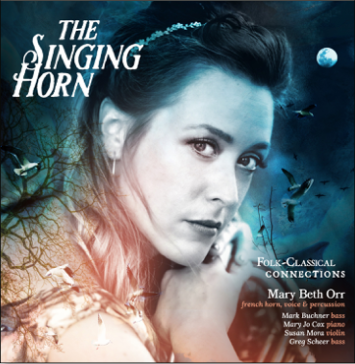
Every so often, a song arrives that feels less like a piece of music and more like a lived moment captured in sound. Mary Beth Orr’s “Good and True,” recorded with guitarist Greg Scheer, is exactly that—a piece born of resilience, creativity, and an almost ceremonial intimacy. Known primarily as a passionate classical hornist and folk vocal artist, Orr is intent on forging human connection through music. Her performance background is formidable—currently 3rd Horn of the Grand Rapids Symphony, she has also performed with the Detroit Symphony, Charleston Symphony, and Breckenridge Music Festival. Yet “Good and True” finds her not in the orchestral spotlight but in the deeply personal space of postpartum reflection, balancing artistry with the raw immediacy of motherhood. Recorded just six weeks after giving birth and featured in Zachary Rumley’s documentary “A Redux Renaissance,” the song is as much a testament to human endurance as it is to musical expression.
What makes “Good and True” extraordinary is the way Orr allows life’s chaos to shape the music itself. She has spoken about writing the horn parts with her infant son strapped to her, composing in 15-minute intervals to keep him soothed. That dual act of nurturing—mother and musician—permeates the song’s very core. The synergy of voice and horn becomes more than an arrangement; it is an embodiment of balance, of carrying both vulnerability and strength in equal measure. Scheer’s guitar offers a grounding simplicity, steady and supportive, against which Orr’s horn lines soar like ancestral voices. The result is a song that feels timeless, its folk roots anchored in Appalachian tradition while also drawing upon universal themes of life, birth, and renewal.
The lyrical and thematic inspiration stems from the birthing song of the Dagara Tribe, as described by writer and teacher Sobonfu Somé. By weaving this influence into her own Appalachian folk identity, Orr bridges traditions, creating a cultural and spiritual dialogue. Listening to “Good and True,” one can hear both the personal and the communal at play: the intimacy of Orr’s own journey, and the collective human ritual of music as a guide through transformation. It is folk music at its most elemental—not designed for polish or performance, but for presence, storytelling, and connection. The horns carry a reverent, almost hymn-like quality, while her vocals maintain an earthbound honesty that invites listeners into the experience.
Placed within the frame of “A Redux Renaissance,” a documentary examining the tension between dynamic range recording and the compressed sheen of radio standards, “Good and True” becomes an act of quiet resistance. It celebrates nuance, breath, and imperfection—qualities often erased in modern production. In doing so, the track feels aligned not just with folk traditions but with a broader artistic movement that values authenticity over uniformity. Much like her acclaimed orchestral and competition performances, Orr demonstrates both technical mastery and emotional honesty, and she does so in a stripped-down environment where every note feels like an extension of breath itself.
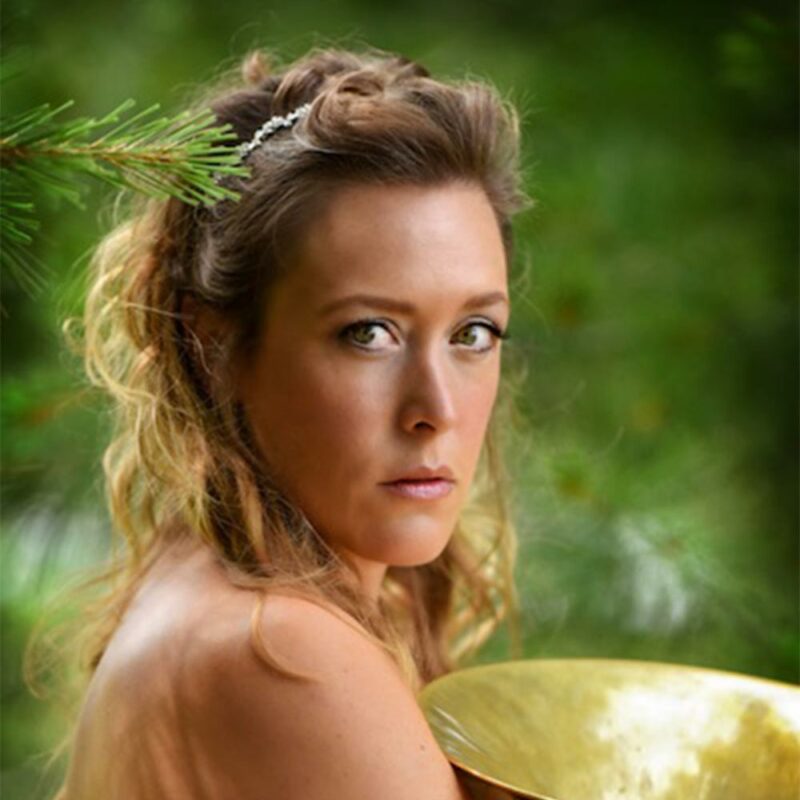
Ultimately, “Good and True” is a folk song and a piece of lived testimony, born at the intersection of personal upheaval, cultural tradition, and artistic daring. It carries with it the legacy of Orr’s Appalachian roots, the influence of global traditions, and the spirit of a mother making art in stolen minutes between care. With Greg Scheer’s supportive guitar work and the spiritual heft of her horn, Mary Beth Orr has created something deeply personal and widely resonant. In a career already marked by high achievements—Carnegie Hall premieres, international prizes, and symphonic collaborations—”Good and True” stands out not for grandeur but for its raw, unguarded truth. It is, in every sense of the phrase, both good and true.
For more information, follow Mary Beth Orr:
Spotify – Instagram – Facebook