
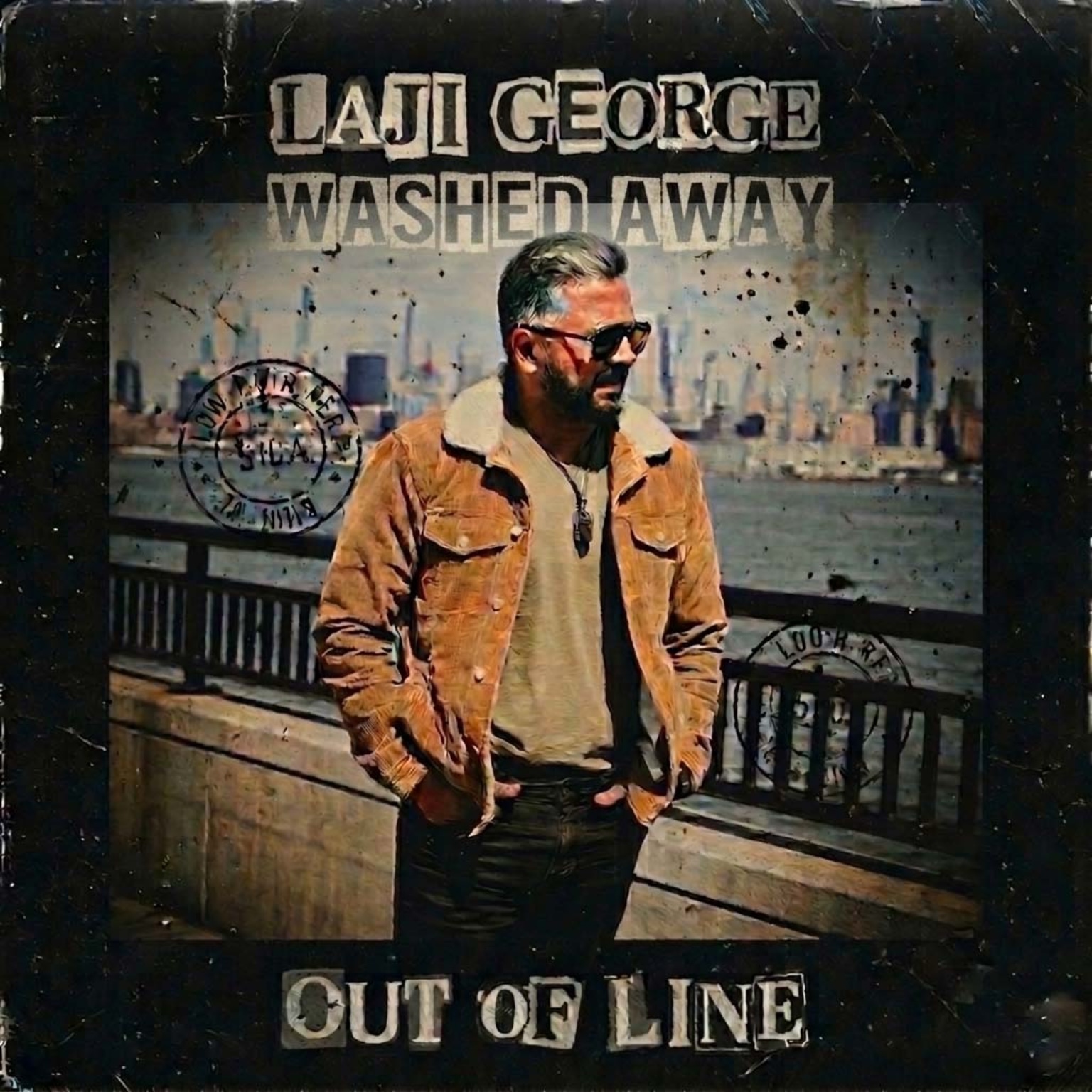
There is a particular kind of heartbreak that does not end when the relationship does. The person may be gone, the conversations may have stopped, and the physical evidence of the relationship may gradually disappear, yet memory has its own stubborn way of keeping the past alive. Laji George’s “Washed Away” steps directly into that uncomfortable territory, asking a question that sounds simple until its emotional consequences begin to unfold: if you could erase someone from your mind, would you actually want to? Drawing loosely from the premise of Eternal Sunshine of the Spotless Mind, George turns that science-fiction-like proposition into something intimate and recognizably human. This is not a song about wishing heartbreak away through some convenient emotional shortcut. Instead, it examines the strange contradiction between wanting relief from pain and knowing that the memories causing that pain are also evidence that something once mattered. George, a New York City alternative rock artist and frontman of Pseutopia, approaches the subject with an impressive sense of emotional clarity. There is no attempt to make grief sound glamorous or to package healing as a clean, predictable process. “Washed Away” understands that moving forward can involve carrying parts of the past rather than successfully deleting them. That idea lends the song its emotional gravity from the beginning, because the listener is not simply hearing someone mourn a lost relationship; they are hearing someone wrestle with whether the very memories they might want to escape are worth preserving.
Musically, “Washed Away” builds its emotional argument through contrast. The opening acoustic guitar creates an intimate frame, immediately making the record feel closer to a private confession than a grand rock statement. George’s voice enters with restraint, carrying melancholy without turning every phrase into a theatrical performance. That choice matters. When a song deals with heartbreak, there is always a temptation to overstate the feeling, but George understands that quiet pain can sometimes be more revealing than an enormous vocal outburst. As the arrangement develops, padded electronic textures begin to add atmosphere around the guitar, while percussion gradually increases the sense of pressure. The track does not remain frozen in its opening sadness; it grows. By the time the choruses arrive with greater force, the shift feels emotionally justified because the arrangement has been preparing for that release all along. It resembles the internal experience of trying to remain composed while reflecting on something that still hurts, only for the carefully maintained composure to eventually crack. George’s soaring vocals provide that larger emotional release, giving the chorus a physical quality that the quieter passages deliberately avoid. The recording therefore succeeds not because it simply becomes louder, but because its changing intensity mirrors the subject. The melancholic verses feel like thoughts kept inside, while the fuller choruses feel like those thoughts finally become impossible to contain. Produced and mixed between George’s home studio and Jonah Brockman’s studio, the track retains an independent intimacy while possessing enough sonic weight to sit comfortably within contemporary alternative rock. Brockman’s contribution is particularly effective in maintaining that balance between closeness and scale.
There are unmistakable echoes of 1990s grunge in the emotional language of “Washed Away,” but the song is not dependent on nostalgia. George’s musical touchstones include Soundgarden, Pearl Jam, Nirvana, Jeff Buckley, The Beatles, and Radiohead, and traces of that broad listening history can be felt in the way fragility and power are allowed to coexist. Still, “Washed Away” never sounds as though it is trying to recreate another era. Its emotional premise is far too universal for that. The guitars and vocal grain may suggest alternative rock’s heavier traditions, but the central dilemma belongs to anyone who has experienced a breakup and discovered that forgetting is not necessarily the same thing as healing. That is where the Eternal Sunshine connection becomes more than a clever reference. The film’s premise asks what happens when painful memories can be removed, but George’s song is interested in the emotional price of that possibility. If every painful recollection disappeared, what else would vanish with it? The first laugh, the private joke, the places visited together, the moments of genuine tenderness—all of those experiences would potentially be erased alongside the hurt. George does not resolve that contradiction for the listener, and that restraint strengthens the song. Instead of declaring that memories should always be preserved or that forgetting is always desirable, he leaves the conflict alive. There is wisdom in that uncertainty. Real healing often does not follow the neat logic of a three-minute chorus. Sometimes a person desperately wants to stop remembering, but at the same time fears what losing those memories would say about the significance of the relationship itself. “Washed Away” gives that emotional paradox a musical form without reducing it to a simple lesson.
George’s vocal performance is central to making that complexity believable. His voice carries a roughened edge that suits the alternative-rock setting, but there is also vulnerability beneath the grit. He does not sound as though he is performing heartbreak from a safe distance. The quieter sections have an almost conversational quality, allowing the listener to feel the uncertainty behind the words, while the bigger passages open into something more expansive and impassioned. That movement provides the song its sense of narrative even without relying on elaborate production tricks. The instrumentation follows the emotional contour rather than competing with it. Acoustic guitar provides the initial foundation; electronic color expands the atmosphere; percussion introduces momentum; and the fuller choruses allow George’s vocal to rise above the arrangement. Everything seems designed to make the internal conflict audible. There is also something fitting about the independent production environment. A song concerned with memory and emotional authenticity might lose some of its character if it becomes excessively pristine. Instead, the home-studio element helps preserve a sense of human proximity, while Brockman’s studio work gives the recording enough depth and definition to make the larger moments land. That combination allows “Washed Away” to occupy an appealing middle ground: intimate enough to feel personal, but expansive enough to feel like a proper alternative-rock single. George’s experience with Pseutopia and his work toward his debut solo album, Out of Line, also gives the track the sense of an artist establishing his individual voice rather than simply stepping away from a band environment. This feels like a deliberate solo statement, one built around emotional honesty rather than spectacle.

Ultimately, “Washed Away” succeeds because it understands that heartbreak is rarely about simply losing another person. It is also about losing a version of yourself, a collection of shared experiences, and a future that once seemed possible. George takes that broader sense of loss and compresses it into a four-minute alternative rock song that feels both vulnerable and muscular. The most compelling idea running through it is the refusal to treat forgetting as an automatic form of freedom. Pain is difficult, but the absence of pain is not necessarily the same as peace, especially if achieving it requires destroying everything that gave the relationship meaning. That tension gives the song its staying power. The arrangement begins close to the ground and gradually rises, mirroring the emotional movement from private reflection toward cathartic release, while George’s soaring delivery ensures that the central question never becomes merely philosophical. It remains personal. “Washed Away” does not offer the listener an easy escape route, and perhaps that is precisely why it feels honest. Healing is not presented as an act of washing everything away until nothing remains; it is a slower process of deciding what to carry, what to release, and what memories can exist without controlling the present. For an artist shaping a solo identity around alternative rock, George has chosen a remarkably human subject with which to make that introduction. The result is a song that can satisfy listeners looking for guitar-driven emotional intensity while still giving them something to contemplate after the final note. “Washed Away” leaves behind no neat emotional verdict—only the lingering question of whether we would truly want to forget the people who hurt us, if forgetting also meant erasing the parts of ourselves that once loved them.
For more information, follow LAJI GEORGE
WEBSITE – FACEBOOK – SOUNDCLOUD – BANDCAMP – YOUTUBE