
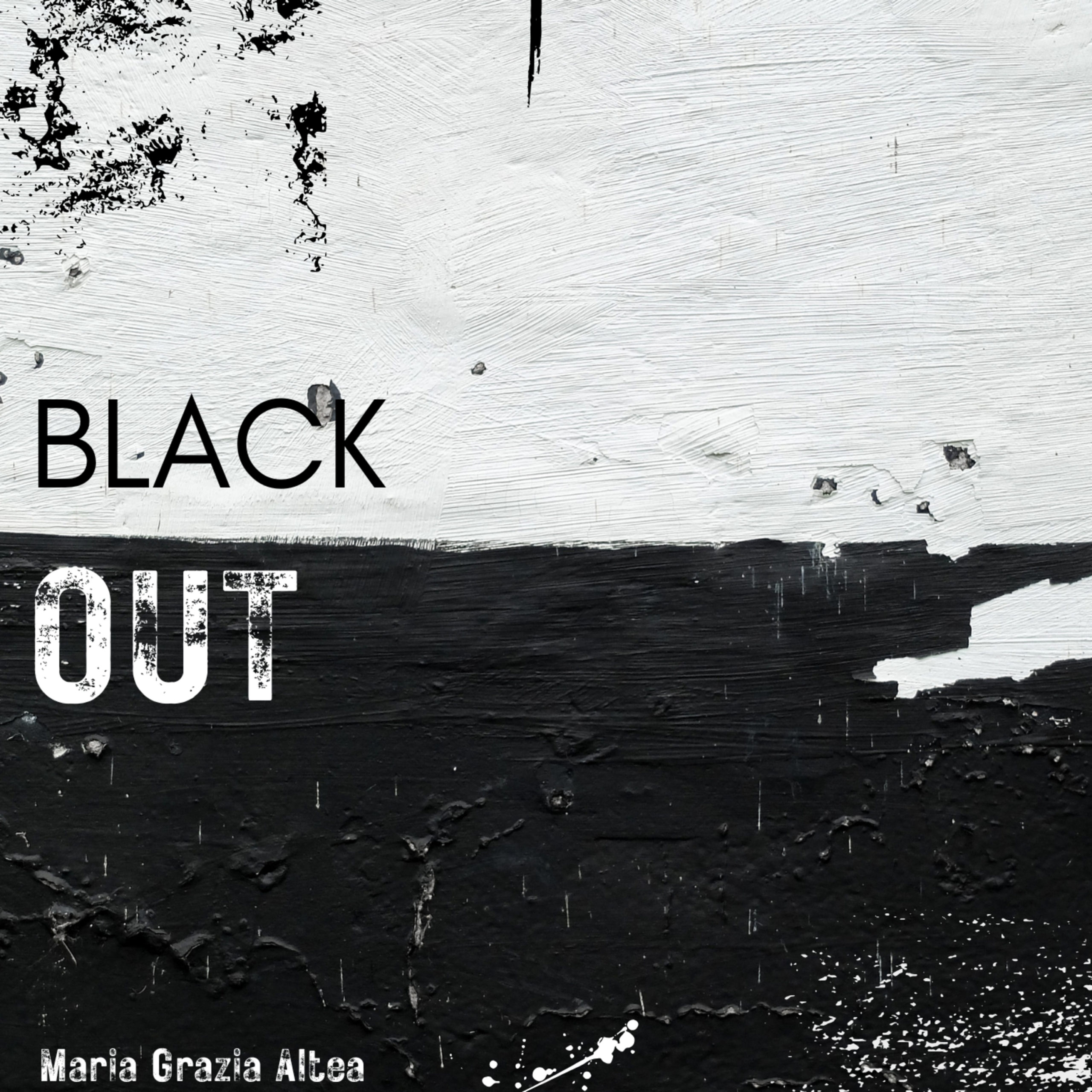
There’s an instant appeal in an artist who won’t hide behind unnecessary production polish, and Maria Grazia Altea’s “Black Out” is just that sort of conviction. The single, which came out on 30 July 2026, feels like a deliberate step away from the slick artifice that can make modern music technically perfect but emotionally distant. Born in Arzachena, Italy, and recording in the small studio surroundings of Tempio Pausania, the Sardinian town of her birth and upbringing, Altea brings a sense of place and personal history to her music without making it decorative. “Black Out” cares less about spectacle and more about honesty. Its strength is in the sense that the songwriter is inviting the listener to stand beside her, not sing from some unreachable emotional platform. That philosophy is important because Altea’s musical identity has been shaped by artists as dramatically different as Jeff Buckley, Leonard Cohen, the Velvet Underground, Nirvana, Portishead, and Italian singer-songwriters, and yet the track never feels like a collage of borrowed identities. Rather, those influences appear to have informed an instinct for atmosphere, vulnerability, and close observation. Altea wrote the lyrics and melody and contributed her signature lead guitar to the arrangement; Benedetta Sotgiu produced and mastered the song. The result is a recording that sounds human by design. There’s space for imperfections, for emotional edges, and for the kind of small details that remind us there is actually a person behind the microphone.
What gives “Black Out” its emotional weight is the worldview that exists below its musical surface. Altea is fascinated by fragile moments, by the uncomfortable speed at which the present becomes memory. Her comment that “the present fast becomes past” is almost a quiet key to understanding the single. It suggests an artist concerned with time not as an abstract philosophical subject, but as something experienced every day, often without our noticing it. A conversation is over. A place you know changes. A moment that we thought would last becomes something we can only remember. That awareness gives the track an undercurrent of melancholy, but “Black Out” does not have to collapse into despair to convey it. To recognize the fragility of life is not the same thing as to say that because life is fragile, life has no meaning. Altea appears much more intrigued by the opposite possibility: perhaps, impermanepreciselyexactly what makes some moments worth holding onto. Her philosophy of writing, which emphasizes connection over hierarchy, lends support to that notion. She does not speak down to her audience from a pedestal, pretending to have all the answers. Instead, she comes to her listeners eye to eye, knowing that the uncertainties and emotional contradictions examined in the song are ours all. That’s a way of making the track intimate that is becoming increasingly difficult to fake. “Black Out” feels more like an experience being shared than a statement being made.
The guitar is particularly important in this atmosphere, giving Altea another way to articulate what the lyrics cannot quite say. Her choice to track the signature lead guitar herself gives the instrument a sense of being part of the song’s emotional vocabulary as opposed to another layer of production. There are so many influences at work here that it’s tempting to look for the obvious fingerprints of Buckley’s intensity, Cohen’s poetic weight, Nirvana’s rawness, or Portishead’s darker atmospheric impulses, but “Black Out” is better appreciated through the sensibility that those artists represent than through outright imitation. There’s a desire to leave some emotional space around the song, to resist smoothing every rough edge into something commercially anonymous. This is where the production work of Benedetta Sotgiu is important. Authenticity is not about sloppily recording something and declaring the flaws meaningful. It is about deciding what to preserve and what to improve on. “Black Out” seems to understand that difference. The production doesn’t overshadow Altea’s creative vision, allowing the song’s personality to come through. In an era of flawless vocal correction, limitless layering, and production techniques that can make anything sound enormous, there is real character in a record that values intimacy instead. That’s a feeling bolstered by Altea’s small-studio approach. This intimate environment becomes part of its identity, rather than making the recording feel limited, and adds a grounded feel to the music that fits the subject matter. The song doesn’t seem to be trying to escape its humanity; it seems set on holding on to it.
There’s also something quietly brave about writing a song based on observation, not obvious answers. “Black Out” doesn’t need to tell the listener what to feel, as the emotional premise is broad enough for personal interpretation. Anyone who has felt the strange shock of realizing a moment that seemed important is already behind them can walk into the song through a different door. Altea’s choice to write from a place of equality with her audience helps with that universality. The listener is not viewed as a consumer to be wowed but as another person living in the same ephemeral world. It’s a method that lends the single an almost conversational intimacy even as its themes deepen. There is melancholy here, but there is also curiosity and vulnerability, but also a refusal to act as if that vulnerability were a weakness. Altea’s music seems especially concerned with the coexistence of opposing feelings. Life is beautiful because life is not static. Memories hurt because they were once meaningful. That tension gives ‘Black Out’ more legs than a song built around a single emotional color. Its narrative can remain long after the music has ceased because it speaks to something that most listeners know instinctively. We are always living through the moments that will one day become the stories we tell ourselves. There are times when we only realize how important a moment was when it’s gone. Altea’s songwriting conveys that uncertainty without over-explaining.
Ultimately, “Black Out” introduces Maria Grazia Altea as an artist who understands that sincerity is not a marketing slogan but a creative choice. The single is this principle in action: personal writing, self-performed lead guitar, an intimate recording environment, a refusal of artificial polish, and a desire to connect with the listener. The song’s greatest victory isn’t that it sounds different from everything else, but that it sounds like something that was made for the right reasons. Altea isn’t chasing a manufactured image of authenticity; she’s letting the music carry the imperfections, the memories, the doubts, and the observations that make authenticity possible in the first place. Her wide-ranging influences have given her a broad musical vocabulary, but “Black Out” shows her real strength is in how she uses that vocabulary to explore the fragile business of being alive. The present becomes the past; this is an unavoidable fact, but Altea turns that fact into an invitation to pay closer attention. Listen. “Remember now. Feel now, for the moment is already going off. “Black Out” is thus intimate and expansive at the same time—a song grounded in the view of a single Sardinian songwriter that ultimately strives for a universal truth. Everything passes, but music can stop time for a few minutes.