

Occasionally the most powerful musical moments arrive from the darkest corners of personal experience, emerging like sunlight breaking through heavy clouds after a long stretch of uncertainty. There is something profoundly human about the desire to start again, to release the weight of financial struggles, disappointments, and unanswered questions, and to believe that somewhere beyond the turbulence there is a cleaner, brighter horizon. It is this emotional territory that gives Meghanne Storey’s “Wash Away” its intriguing foundation, transforming a composition born from a difficult chapter in someone’s life into a vibrant, soulful listening experience. Released on 24 July 2026, the single introduces a distinctive musical direction within Storey’s catalogue, embracing an unusual fusion of grunge, jazz, and indie pop that allows contrasting textures and moods to coexist naturally. Hailing from Bonney Lake, United States, Storey brings an appealing sense of authenticity to the independent music scene, working alongside creative partner and co-songwriter Brandt Parke, drummer Matt Fury, and producer Lynn Sorensen, whose previous association with Bad Company adds another compelling dimension to the collaboration. The story behind “Wash Away” begins approximately a decade ago, when Parke wrote and composed the song during a particularly challenging period marked by financial hardship and personal uncertainty. It was a time when the idea of renewal was an emotional necessity. When he eventually introduced the composition to Storey, she immediately connected with its underlying sentiment, recognizing something in its message that deserved to be brought into the world. That connection became the starting point for a collaborative transformation, with Storey’s interpretation helping to renew a song that had waited years for the right opportunity. There is something especially appealing about that journey. Rather than sounding like a composition manufactured around a fashionable musical formula, “Wash Away” carries the emotional history of its creation, combining an older songwriting idea with the energy and personality of a new creative partnership. Its central theme of letting go and moving forward feels particularly relatable because almost everyone has experienced moments when life seems to demand a fresh beginning. Storey approaches that universal sentiment with an artistic identity that values genuine feeling over manufactured perfection.
One of the track’s most compelling qualities is its willingness to move beyond conventional genre boundaries. The grunge-jazz-indie pop combination might initially sound like an unlikely meeting of musical personalities, but it offers an intriguing foundation for a song concerned with emotional release and renewal. Grunge brings an earthy, slightly rebellious edge, jazz introduces opportunities for instrumental color and expressive movement, while indie pop provides the melodic accessibility that allows the composition to connect without becoming overly complicated. Rather than allowing these influences to compete for attention, the creative team appears to understand the importance of balance, giving each element room to contribute to the overall atmosphere. The result is a sound that feels soulful, colorful, and refreshingly individualistic. The guitar provides an important part of the musical foundation, bringing the kind of expressive presence that suits the song’s underlying emotional tension, while the bass adds depth and warmth to the arrangement. Lynn Sorensen’s contribution is particularly compelling, as his involvement extends beyond production to include bass and violin performances. The violin is an especially welcome addition because it introduces a different emotional texture, offering the possibility of melodic movement that can soften the rougher edges of the grunge influence without sacrificing the song’s individuality. Its presence adds another dimension to the arrangement, reinforcing the sense that “Wash Away” is interested in musical contrast rather than predictable genre conventions. Matt Fury’s drumming provides the rhythmic backbone, anchoring the composition with precision and groove. There is something satisfying about an arrangement in which every instrument has a clearly defined role, yet the overall experience remains cohesive. Instead of allowing the production to become a dense wall of sound, the team places emphasis on instrumental separation and clarity. Guitar, violin, bass, drums, and vocals are given sufficient space to be appreciated individually, creating a listening experience in which the musicianship becomes part of the attraction. That attention to detail gives the track a handcrafted quality, making its musical personality feel organic rather than assembled from interchangeable production elements.
The collaborative chemistry behind “Wash Away” is arguably just as important as its unusual stylistic combination. Meghanne Storey has built her musical identity around the idea that genuine musicianship and human artistry should remain at the heart of the creative process. Working closely with Brandt Parke, Matt Fury, and Lynn Sorensen, she has developed an environment in which individual contributions can strengthen the composition without overwhelming its original intentions. Parke’s songwriting provides the emotional starting point, drawing upon experiences of uncertainty and the longing for a fresh beginning. Storey brings her own interpretative sensibility to that material, finding a personal connection that allows the song to develop beyond the circumstances of its original creation. This relationship between songwriter and performer is particularly important because a composition can change considerably when it passes into the hands of someone who genuinely understands its emotional message. Storey’s immediate response to the song suggests that she recognized an opportunity to communicate something meaningful rather than simply record another release. Sorensen’s involvement adds another layer of creative flexibility. His work as producer, bassist, and violinist provides him a particularly hands-on relationship with the arrangement, allowing production decisions and instrumental choices to work together rather than exist as separate considerations. His willingness to explore different recording environments, something the group particularly enjoys about working with him, also hints at a creative process that values experimentation and atmosphere. Meanwhile, Fury’s drumming ensures that the arrangement retains its sense of movement, preventing the song’s reflective subject matter from becoming musically static. The emphasis on music that is entirely human-made and human-played is another defining part of the group’s identity. In an increasingly automated musical environment, Storey and her collaborators are making a clear statement about the value of real musicians interacting, responding, and contributing their individual personalities to a recording. This does not mean that technology has no place in modern production; rather, it reinforces the belief that the emotional character of a performance often comes from the subtle imperfections, instincts, and spontaneous decisions that musicians bring into the studio. “Wash Away” benefits from that philosophy, presenting itself as a collaborative musical experience rather than a showcase for technical polish alone.
Beyond the recording studio, Storey’s commitment to authenticity extends into her relationship with the community around her. Her involvement in organizing a sock drive for YouthCare, a Seattle-based organization supporting young people experiencing or at risk of homelessness, reveals an artist who understands that having a platform can create opportunities to make a practical difference. With collection boxes available at her shows and an Amazon wishlist through MeghanneStorey, she has turned an element of her musical activity into a way of encouraging direct community participation. It is a thoughtful initiative, particularly because something as ordinary as a pair of socks can become an important practical necessity for someone facing housing insecurity. This sense of compassion provides an interesting context for a song like “Wash Away,” whose emotional foundation revolves around hardship, renewal, and the possibility of moving beyond difficult circumstances. Although the song is not simply a soundtrack to charitable activity, its underlying message sits comfortably alongside an artist who appears interested in the human experiences that connect people. Her performances at intimate venues such as Rhubarb Sumner also suggest a preference for maintaining a close relationship with audiences, allowing music to become a shared experience rather than a distant performance. There is an appealing consistency between that approach and the group’s commitment to human musicianship. Both reflect a desire to preserve the personal qualities that can sometimes disappear when music becomes too focused on commercial presentation or technological convenience. Storey is not merely presenting songs for passive consumption; she is building a creative identity around connection, participation, and genuine artistic expression. In that sense, “Wash Away” becomes part of a wider picture, demonstrating how a song can carry an emotional message while the people responsible for creating it remain engaged with the world beyond their music. The combination of thoughtful songwriting, collaborative performance, and community-minded activity gives Storey’s work an identity that extends beyond the recording itself.
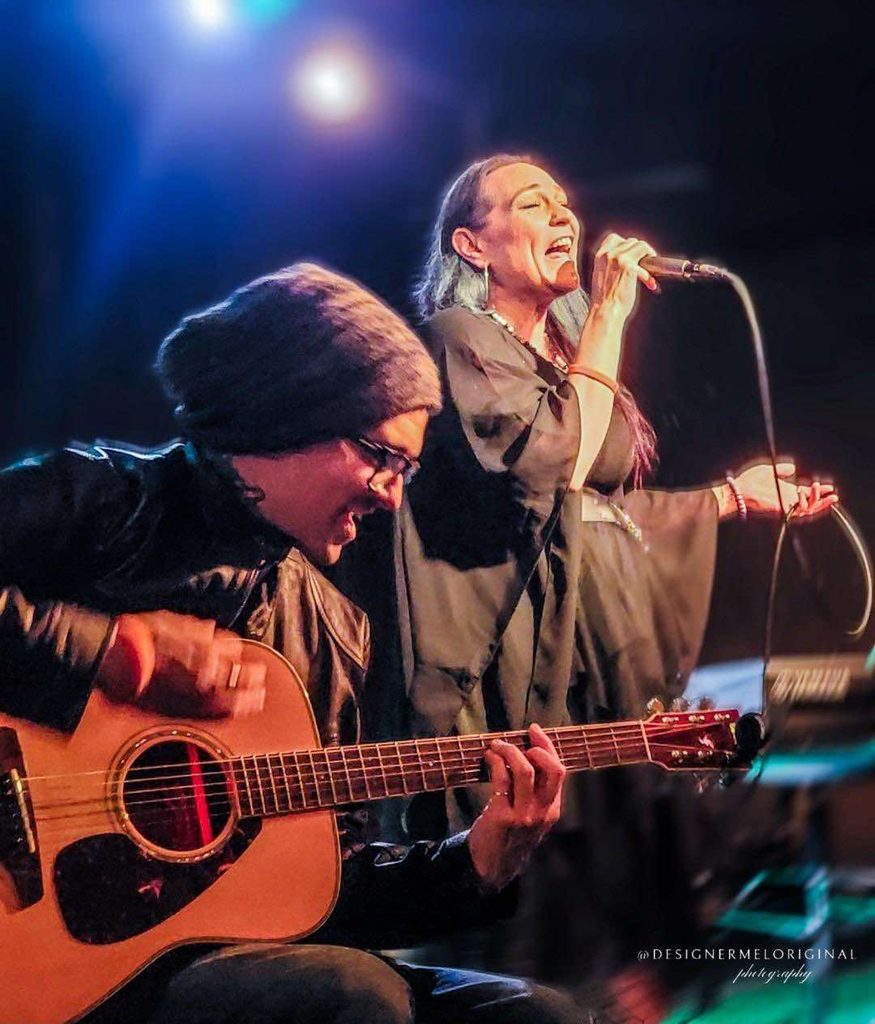
Ultimately, “Wash Away” is an engaging example of what can happen when an older composition finds new life through the right creative partnership. Brandt Parke’s original inspiration, shaped by financial difficulties and personal uncertainty approximately ten years ago, has evolved into a contemporary recording that balances emotional reflection with a lively and distinctive musical personality. Meghanne Storey’s connection to the material provides the human center of the track, while Lynn Sorensen’s production and instrumental contributions, together with Matt Fury’s precise and groove-conscious drumming, give the arrangement its character and movement. The grunge-jazz-indie pop fusion is an engaging departure from more predictable indie songwriting, allowing the track to explore contrasting textures without losing sight of its melodic accessibility. Just as importantly, the emphasis on clearly articulated instruments provides the recording with the recording a sense of space and individuality, rewarding listeners who appreciate hearing the personality of each musician rather than simply absorbing an indistinguishable production. Its underlying theme of renewal is perhaps its greatest strength. Life seldom provides a clean slate, and difficult circumstances persist even when we decide to leave them behind. Sometimes moving forward requires patience, resilience, and the willingness to recognize that a different future is still possible. “Wash Away” captures something of that emotional journey, transforming a period of uncertainty into a composition that feels soulful, uplifting, and genuinely human. There is a lovely sense of rediscovery in the fact that a song written years earlier has found its voice through a new interpretation, almost as though the passage of time has allowed its original message to acquire another layer of meaning. For Storey and her collaborators, this release is more than an exercise in genre experimentation; it is a celebration of musicianship, creative connection, and the enduring power of a well-written song. With its colorful instrumental character, collaborative spirit, and thoughtful emotional foundation, “Wash Away” leaves a positive impression while reminding listeners that sometimes the most meaningful fresh starts begin with the simple decision to let the past loosen its grip.