
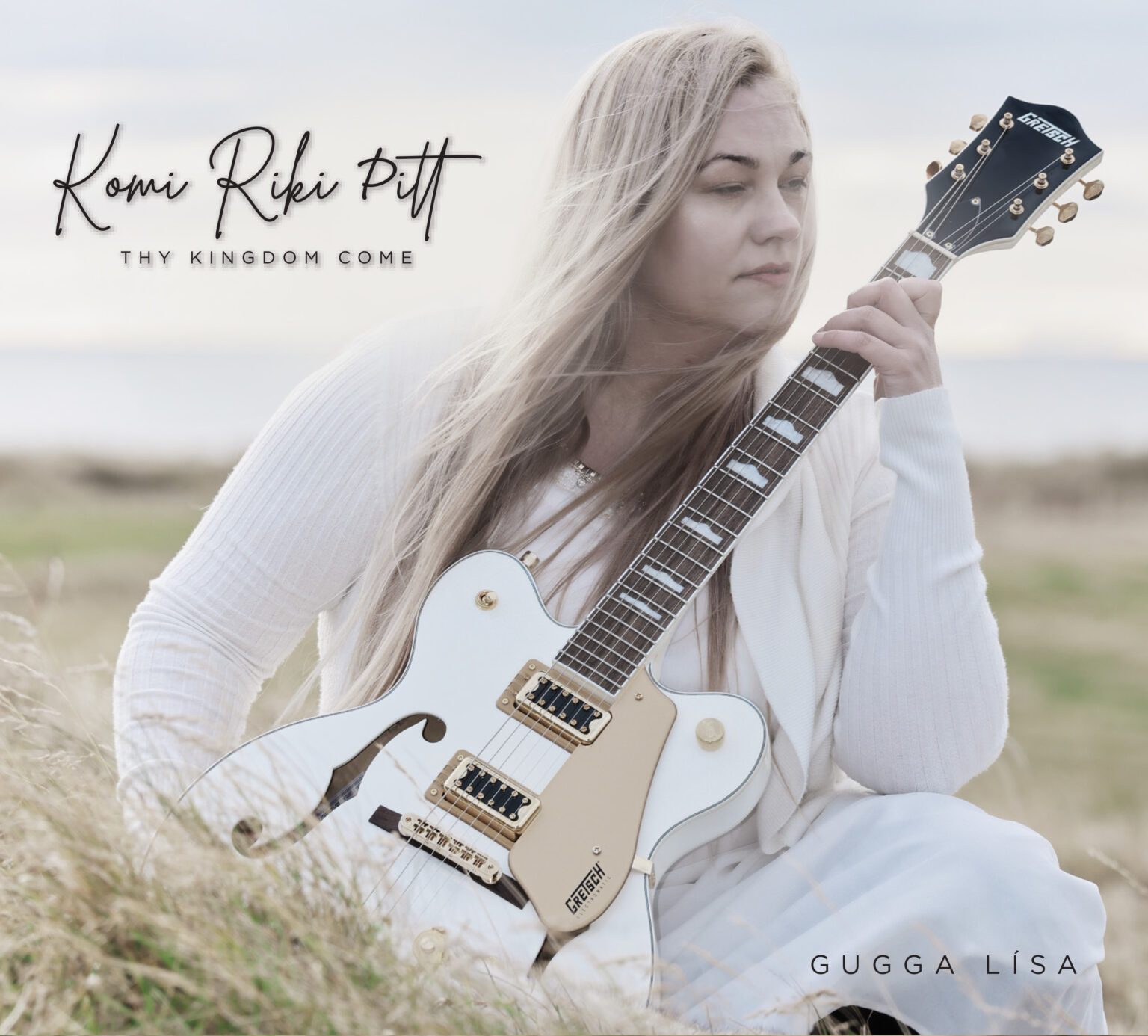
Gugga Lísa’s “Virgin” is not a song that flirts with ambiguity or irony, but moves straight toward the sacred with open hands and an exposed heart. As part of her debut album Komi Ríki Þitt (“Thy Kingdom Come”), the track stands as one of the project’s most intimate spiritual confessions. Rather than leaning on grand declarations or overt preaching, Gugga Lísa crafts a repetitive, mantra-like meditation that feels closer to prayer than performance. From the opening line—“I wanna be with you / I wanna be like you”—the listener is ushered into a space of longing, humility, and devotion. The music itself mirrors this intention: restrained, reverent, and emotionally uncluttered, allowing the words and their weight to take center stage.
Sonically, “Virgin” is built on simplicity and patience. The arrangement never rushes, allowing the phrases to repeat and sink in like breath cycles during meditation. This repetition is crucial because the song isn’t trying to tell a story with a beginning, middle, and end; instead, it circles a single desire: closeness to the divine. Gugga Lísa’s vocal delivery is soft but unwavering, conveying vulnerability without fragility. There is no sense of performance bravado here—only sincerity. The track feels intentionally stripped of excess, as if anything ornamental would distract from the core act of offering oneself fully. This minimalism reinforces the song’s emotional gravity and aligns perfectly with its spiritual focus.
Lyrically, “Virgin” draws heavily from biblical symbolism, particularly the parable of the wise virgins in Matthew 25. The repeated lines “fill my cup” and “fill my cup with oil and let it overflow” directly echo scriptural imagery of readiness, anointing, and spiritual preparedness. Oil, in this context, represents faith actively nurtured rather than passively claimed. The song’s insistence on preparation—“get myself prepared / so that I can be with you”—frames devotion not as a static belief, but as a conscious, ongoing act. Gugga Lísa is not asking for divine presence without responsibility, but acknowledges the cost of readiness and willingly embraces it. The lyrics thus become a theological statement about participation, not entitlement.
The most striking—and potentially misunderstood—element of the song is the repeated line, “Let me be your virgin.” In a secular pop context, the word “virgin” is often tied to sexuality, possession, or power dynamics. Here, however, it is reclaimed as a spiritual metaphor. Gugga Lísa uses the term to express purity of intention, surrender of ego, and a willingness to be shaped anew. This is not about innocence as naivety, but about devotion untainted by distraction or self-interest. When she sings, “I am nothing without you / But I’m everything when I’m lost in your presence,” she articulates a paradox at the heart of mystic spirituality: losing the self to become whole. The “virgin” state becomes symbolic of spiritual openness—empty, receptive, and fully available to transformation.

Ultimately, “Virgin” succeeds because it refuses to dilute its message for comfort or accessibility. It is unapologetically devotional, yet emotionally universal. Even listeners who do not share Gugga Lísa’s Christian faith can recognise the human longing embedded in the song—the desire to belong, to be filled, to find meaning beyond the self. The ache of being “torn apart” when separated from what gives life purpose is a feeling that transcends religious boundaries. In this way, “Virgin” becomes a personal prayer and a collective mirror, reflecting humanity’s search for grounding in an unstable world. Quietly powerful and spiritually fearless, the track confirms Gugga Lísa as an artist unafraid to let faith, vulnerability, and artistry exist in the same breath.
For more information, follow Gugga Lísa:
Facebook – Spotify – YouTube – Instagram