

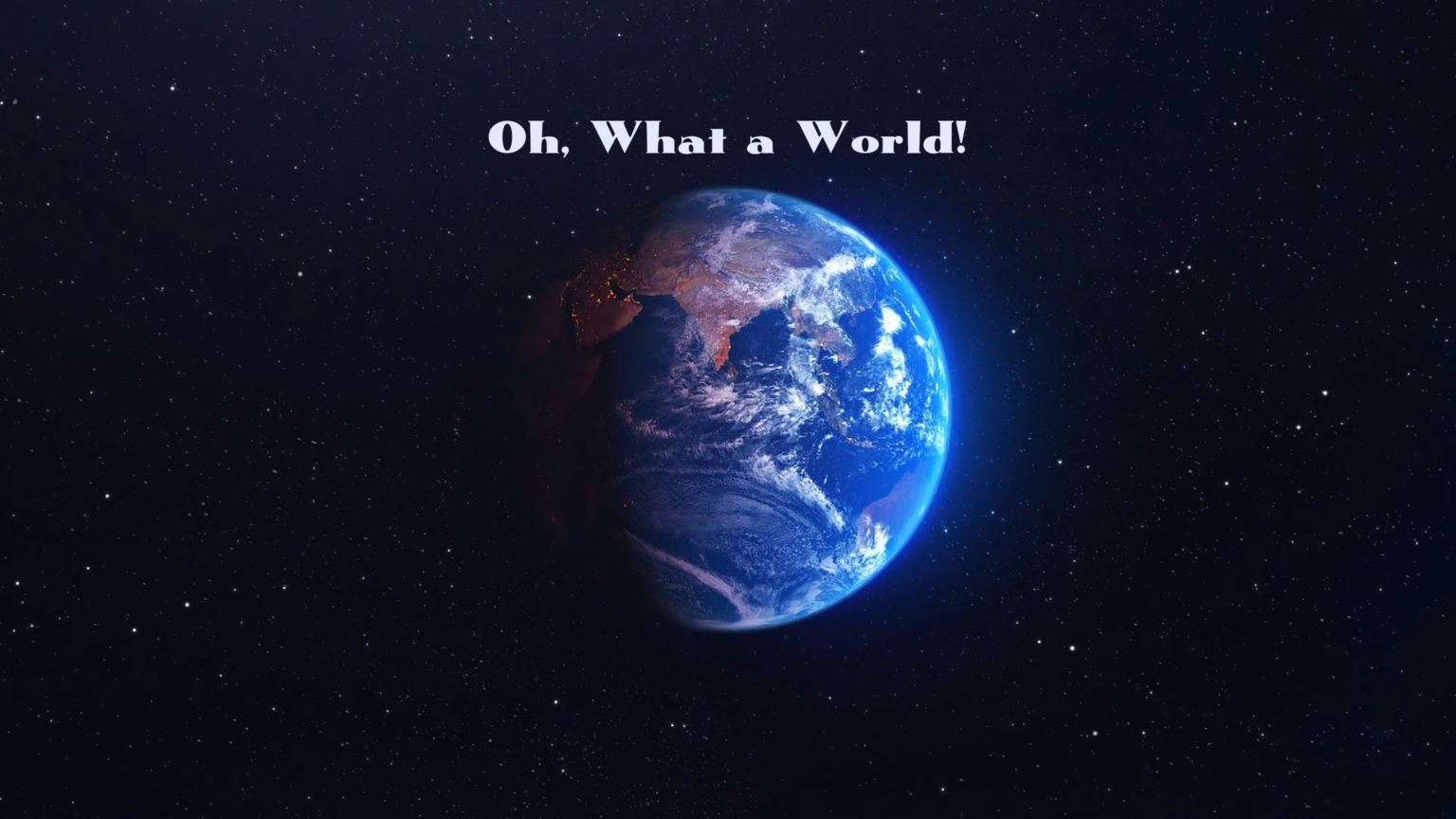
There is something quietly powerful about a song that encourages us to pause, look beyond the noise of everyday life, and appreciate the extraordinary beauty hiding in ordinary moments. Rusty Reid embraces that spirit in his interpretation of “Oh, What a World,” bringing his indie folk-country-rock sensibilities to a composition originally written and released by Kacey Musgraves in 2018, with Daniel Keyes Tashian and Ian Fitchuk. Featured as the concluding track on Lone Stardust (Masterworks of Texas Songwriters), Reid’s rendition does more than provide a pleasant final chapter to an ambitious double album; it offers a thoughtful reminder of why music can make even a familiar world feel new again. Where Musgraves’ original floats through an airy, almost surreal atmosphere, Reid grounds the song in the warmth of Americana, allowing its sense of wonder to emerge through earthy instrumentation, expressive vocals, and a performance that feels personal rather than overly polished. The result is a vibrant, emotionally generous cover that respects the spirit of its source while establishing a distinct identity of its own. It is not an attempt to outshine the original but an invitation to experience its message from another perspective.
Reid’s decision to close Lone Stardust with this particular song feels especially meaningful when considered alongside the broader journey that brought him here. His independent ethos has remained central to his career, even as his musical direction has evolved over the years. Last year’s double album, The Unreasonables, allowed him to revisit the classic rock sounds that first inspired him more than four decades ago. By stripping away unnecessary distractions and returning to the straightforward excitement of making music, Reid reconnected with the instincts that had initially drawn him to the guitar. Lone Stardust, his fifth album, takes a different approach, turning away from an emphasis on original compositions to celebrate the remarkable songwriting heritage associated with Texas and its musical neighborhoods. Its selections bring together an impressive range of artists, including Buddy Holly, Roy Orbison, Johnny Nash, Jimmy Webb, J.D. Souther, Townes Van Zandt, Shake Russell, and ZZ Top, alongside Musgraves. Rather than treating these songs as museum pieces, Reid approaches them as living works that can continue to evolve through interpretation. “Oh, What a World” occupies a particularly distinctive place within that collection: it is the only song on the album written by a woman, and its appearance at the very end gives the project a final burst of perspective, tenderness, and optimism. Musgraves’ East Texas roots make the selection a natural fit for an album devoted to the region’s songwriters, but the song’s deeper appeal lies in its ability to connect personal reflection with a broader appreciation of existence.
Musically, Reid makes an effective choice by taking a more grounded route than the original. Musgraves’ recording has an airy, dreamlike quality, with its surreal textures reinforcing the feeling of discovering something magical in the world around us. Reid retains that expansive outlook without attempting to reproduce the same atmosphere. Instead, his version draws strength from a rich guitar tone, a gentle Americana twang, and a full-band arrangement that allows the composition to breathe. Jason Roller’s electric guitars provide color and lift, while Chris Condon’s acoustic guitars bring an inviting warmth to the foundation. Dane Bryant’s keyboards add another layer to the arrangement, creating space around the central melody rather than crowding it. The bass by Jay Gorman and the drums by Robert Blair give the performance a steady, natural pulse that helps the song move forward with ease. Each contribution serves the song’s emotional purpose, and the interplay between acoustic intimacy and electric brightness gives the music a pleasing sense of movement. There is a naturalness to the arrangement that suits Reid’s roots-driven approach: the instrumental passages have room to expand, the guitars can rise without overwhelming the vocal, and the performance never loses sight of the composition’s underlying simplicity. Rather than surrounding the song with unnecessary drama, the musicians allow its warmth to accumulate gradually, creating a sound that feels welcoming, reflective, and quietly uplifting.
At the center of the recording is Reid’s vocal performance, which gives the song its own emotional character. His approach feels grounded and sincere, favoring a sense of lived-in conviction over the ethereal lightness that defines Musgraves’ interpretation. That difference matters because a cover becomes compelling when the performer brings something personal to the material, and Reid finds his way into the song by leaning into its humanity. The track’s celebration of the world is not presented as an abstract philosophical statement but feels closer to the experience of someone who has travelled through uncertainty, encountered the inevitable frustrations of life, and emerged with a renewed appreciation for what remains beautiful. His earthy delivery reinforces that impression, while the surrounding instrumentation allows the song to open outward into something more expansive. The emotional balance is one of the recording’s strongest qualities. Its sense of wonder remains intact, and the sentiment stays appropriately grand. Instead, Reid finds a comfortable middle ground between contemplation and celebration. The song invites listeners to consider the natural wonders surrounding them, the value of human connection, and the simple gift of being alive. These ideas may sound straightforward, but their familiarity is part of their strength. In a musical landscape that often prizes spectacle, Reid’s interpretation makes a convincing case for the enduring power of sincerity, melody, and gratitude.

Reid has explained that “Oh, What a World” connects with his spiritual dimension, making it the ideal song to conclude Lone Stardust after the emotional roller coaster of the preceding tracks. That intention comes through in the recording’s overall effect. Rather than ending the album with another dramatic statement or allowing its accumulated intensity to dissipate into silence, he chooses a song that encourages reflection while leaving the listener in a hopeful frame of mind. The fact that it is a reinterpretation rather than an original composition does not diminish its significance; if anything, it underlines the value of recognizing a song’s potential to speak differently through different voices. Musgraves, Tashian, and Fitchuk created a composition with an unmistakable sense of wonder, and Reid honors that foundation while filtering it through his own musical experience. His collaborators help make the transformation convincing, giving the song enough instrumental richness to feel substantial without sacrificing its emotional clarity. As the final statement on a double album devoted to Texas songwriting, the track becomes more than a tribute to an admired contemporary artist. It serves as a reminder that musical traditions remain alive because artists continue to find fresh meaning in them. “Oh, What a World” closes Reid’s latest chapter with warmth, conviction, and a renewed appreciation for life’s everyday miracles. Its message is gentle but lasting: sometimes, the most meaningful thing a song can do is remind us to look around, recognize the beauty we have overlooked, and allow ourselves to be grateful for the world we inhabit.
For more information, follow RUSTY REID
WEBSITE – FACEBOOK – TWITTER – YOUTUBE – SPOTIFY