


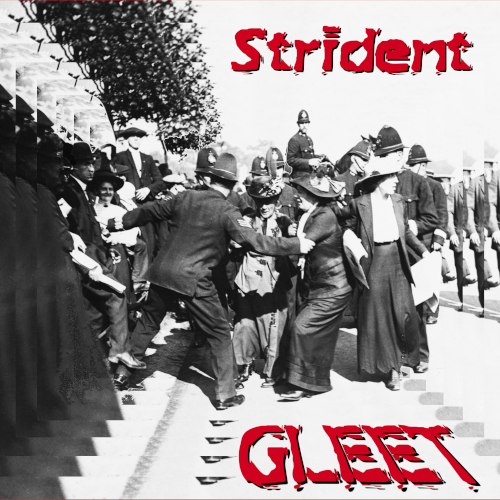
Never has GLEET been a band for comfortable listening, and with Strident, they continue that tradition with a remarkable sense of urgency and purpose. More than just a politically charged post-punk anthem, the track is a sharp examination of the language society uses to undermine women who speak with confidence and conviction. The central insight of the band is as simple as it is illuminating: The word “strident” is often used to characterize outspoken women, while men displaying similar attributes are often praised for being assertive, decisive, or strong. That imbalance provides the basis for a song that explores not only misogyny itself but also the insidious ways in which prejudice is compounded in everyday conversation. Language is not neutral, and GLEET reveals it as a tool to manipulate perceptions and suppress dissent. This approach makes “Strident” so much more than a cry of frustration. It is an act of reclamation that takes a loaded label and turns it into a symbol of resistance. In doing so, the band shows how politically engaged music can be intellectually stimulating and still have the visceral energy that first made protest rock such a compelling artistic force.
Musically, “Strident” delivers its message in an abrasive yet well-controlled sonic environment that fits the topic perfectly. Confrontation, not chaos, are the pounding rhythms, jagged guitar work, and snarling vocal performances. GLEET says the track is less of a “wall of sound” than many of their previous releases but doesn’t lose any of the band’s trademark intensity. Instead, the relatively restrained arrangement creates greater space for both the lyrical message and the innovative production techniques to breathe. Raw textures conjure the spirit of classic protest punk but with gothic undertones and experimental flourishes that keep the song from sounding derivative. There are hints of the uncompromising edge of industrial music and the rebellious urgency of post-punk, creating a sound that is both familiar and distinctive. The recording has a rare authenticity in today’s music world, embracing the rough edges rather than sanding them down to gain commercial polish. That willingness to preserve imperfections strengthens the emotional honesty at the core of the composition, making every shouted refrain and every distorted instrumental passage feel genuinely earned rather than artificially manufactured.
One of the most striking things about “Strident,” however, was its atypical creative process. Instead of a traditional studio performance, GLEET built the song around the voice messages of friends from London, Bangkok, and the US after explaining the underlying concept of the song. These recordings interlace throughout the composition, forming a chorus of geographically dispersed voices united by a common response to inequality and misogyny. This teaming is more than an engaging production gimmick. It serves to reinforce the song’s main point by turning individual viewpoints into a collective voice of resistance. The voices become representative of a larger dialogue that transcends the band itself, implying that the frustrations discussed in the lyrics are prevalent across cultures and communities, not individual experiences. The approach also places GLEET in the great tradition of experimental artists who have challenged the conventions of song structure with inventive uses of recorded sound. The band credits pioneering work by Brian Eno and David Byrne and artists such as Negativland and Nocturnal Emissions as creative influences, but “Strident” never sounds like a copy. Instead, it continues that experimental legacy and makes of it a separate identity rooted in contemporary social concerns. The production is therefore indivisible from the message itself, exemplifying how artistic innovation can enhance the political commentary rather than detract from it.
And the lyric “Strident,” in particular, is at its best because it doesn’t sugarcoat it. The song makes a direct reference to the online resurgence of misogynistic rhetoric, especially the modern manosphere and the disturbing normalization of ideas that question women’s rights and participation in public spaces. But for all the seriousness of these subjects, GLEET doesn’t allow the song to turn into a laundry list of grievances. Instead, the songwriting follows an emotional arc that reflects the lived experience of many women facing dismissive attitudes. It starts with measured reasonableness that is unfairly labeled as “strident” before building toward a truly fierce response provoked by persistent condescension and hostility. The composition thus takes on a remarkable emotional momentum. At the song’s climax the word, once used as an insult, becomes an assertion of strength and self-possession. There is never any sense that the band’s frustration is performative, because it stems from a well-articulated understanding of the cultural dynamics they wish to expose. In a time when political discourse all too often rewards outrage over thoughtful analysis, GLEET manages to be both emotionally charged and intellectually clear. The result is a protest song that encourages as much reflection as it does defiance, showing that conviction and nuance need not be at odds.

Ultimately “Strident” is one of GLEET’s most compelling and relevant releases, marrying overt political statements with overt musical exploration in a way that feels both of the moment and timeless. It explores gendered language, online misogyny, and the power of collective resistance, which makes the song relevant beyond its energetic post-punk framework. At the same time, its innovative use of voice recordings, raw production style, and dynamic songwriting still make the track artistically engaging even for listeners approaching it from a purely musical perspective. The spontaneity of its creation, taking shape outside the conceptual boundaries of the band’s upcoming Thames Sea album, only lends to its emotional authenticity, capturing a moment of true outrage before it could be diluted through over-planning. For a band with decades of collaborative history and an extensive archive of unreleased material, “Strident” demonstrates that GLEET continues to evolve creatively while remaining steadfast in its commitment to challenging social and political complacency. It’s a bold reminder that music continues to have the capacity not just to entertain but to spark meaningful conversation, to challenge deeply held assumptions and to reclaim language that too often has been used to silence instead of empower. In reclaiming the word “strident,” GLEET transforms it from a dismissive label into an unapologetic badge of conviction and, in the process, delivers one of their most vital statements to date.
For more information, follow GLEET
WEBSITE – FACEBOOK – SPOTIFY – SOUNDCLOUD – BANDCAMP