
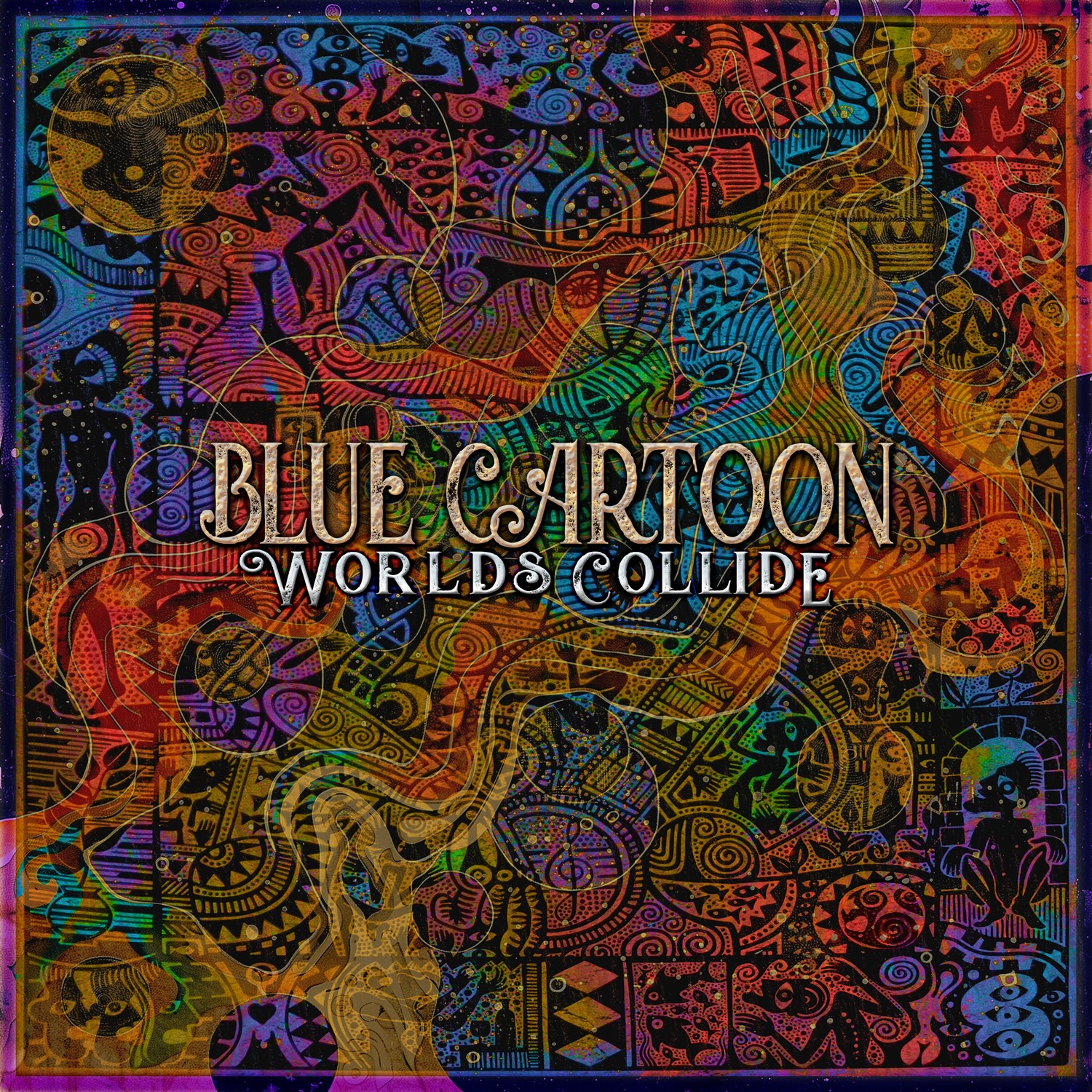
Blue Cartoon’s Worlds Collide is the kind of album that rewards listeners willing to leave familiar musical territory behind and follow a band wherever its instincts lead. Rich in melody but never overly concerned with staying within conventional song structures, this double-disc release explores folk, psychedelia, rock, Americana, world music, alt-blues, and electro-acoustic experimentation with an adventurous spirit that makes its sprawling collection feel surprisingly cohesive. Returning after a 13-year hiatus, the Austin-based band brings together songwriting developed over many years by Lee Elliott and David Loren, reconnecting with the power-pop sensibility that has always informed their musical identity while opening the doors to something considerably more expansive. Unlike its companion album Stars Align, which offers a more accessible introduction to the group’s renewed creativity, Worlds Collide feels like an invitation to wander, discover, and occasionally lose one’s bearings in the best possible way. Its charm lies in the balance between experimentation and familiarity, between unexpected sonic detours and melodies that remain firmly lodged in the mind long after the music stops.
The album’s unusual history adds another layer to its character, because these songs were not conceived as a straightforward Blue Cartoon comeback record. Lee Elliott initially began developing the material on his own before bringing David Loren into the process, with the pair working together under the name The Spandrels in Lee’s home studio. Without a drummer available, they relied on drum machines, programming, and plugins, while a handful of musician friends contributed along the way. Eventually, the project was shelved when Blue Cartoon reunited for “Are You Getting On?” in 2013, and it remained dormant until that incarnation of the band ran its course. Lee’s move to California in 2016 complicated matters further, with files travelling back and forth between states as the two continued to revisit their work. Mike eventually brought real drums into the recordings, adding a more organic dimension to material that had initially been built through electronic means. With the rest of the band supportive of the decision, Lee and David revived the Blue Cartoon name, and the accumulated songs ultimately became 32 tracks spread across two companion albums. That lengthy journey gives Worlds Collide a distinctly lived-in quality, as though the songs have spent years gathering ideas, influences, and emotional textures before finally finding their proper home.
“Everdream/Sleeper Theme” establishes the album’s adventurous intentions immediately, opening with a hypnotic, meditative atmosphere that gradually draws the listener into a strange and beautiful landscape. Spoken-word passages drift across light rhythmic thumps, delicate drip-drop effects, and spacey electronic textures, creating a sense of suspended time that feels almost cinematic. Eastern-inspired sounds mingle with acoustic tones and synth experiments, while the gradual movement toward the “lady began to sing” moment introduces ghostly vocals that transform the composition into something hauntingly memorable. The second half shifts gears, bringing brisker guitars, subtle strings, and exotic vocal flourishes into a more expansive arrangement that never loses its sense of mystery. There is a remarkable patience to the piece, allowing its various elements to emerge naturally rather than forcing them into an obvious structure. It is both a statement of intent and a showcase for the band’s ability to embrace unconventional ideas without sacrificing atmosphere or musicality. As an opening track, it makes clear that Worlds Collide will not be content simply to deliver pleasant songs; it wants to create worlds, and this first excursion is particularly compelling.
The album’s folk influences are equally captivating, particularly when Blue Cartoon leans into the traditional sounds and storytelling qualities that have informed so much British and American songwriting. “The Good Ship Widdershins” begins with the sound of waves and strummed acoustic guitar before Lee’s vocals arrive in an old-fashioned folk style that immediately evokes a sense of maritime folklore and wandering adventure. It is one of the record’s strongest moments, not because it is especially complicated, but because it understands the emotional power of simplicity. “Matty Groves” similarly revisits traditional folk territory, while “When The Devil Drives” takes a much more energetic approach, moving at a fast, stomping pace with a mischievous attitude and an infectious groove that practically demands movement. “My Romany Love” adds clap-driven rhythms and a frolicking charm, its lively arrangement offering a refreshing contrast to the album’s more atmospheric passages. Elsewhere, “Sorrytown” combines unusual experimental textures with straightforward folk songwriting, its slightly offbeat character carrying hints of 1990s indie without losing the band’s distinctive melodic touch. These tracks reveal how comfortably Blue Cartoon moves between historical musical influences and modern sensibilities, treating folk not as a museum piece but as a living language that can be reshaped, reimagined, and made exciting all over again.
For all its exploratory instincts, Worlds Collide never forgets the importance of a good song, and its more approachable moments are often among its most affecting. “I Can’t Make You Cry” is a beautiful example, slowing things down with a ballad arrangement built around vocal vulnerability, twangy guitars, stately piano, and serene string textures. The lyric’s weary admission of “getting tired of working it out for you” carries an understated emotional weight, allowing the song to communicate frustration and tenderness without resorting to melodrama. “Down In The Trenches” moves in a different direction, delivering tight, lively pop-rock with a folky edge and a melody that quickly becomes difficult to shake. “Ghost Writer” settles into a relaxed groove, while “Here Come The Hard Times Again” brings a reflective tone to the album’s early sequence. The interplay between these songs and the more adventurous compositions is one of the record’s greatest strengths. Blue Cartoon understands that experimentation becomes more effective when grounded in strong songwriting, and even their more conventional tracks feel carefully considered rather than merely serving as breaks between ambitious musical excursions. There is a warmth to the performances that prevents the album from becoming overly cerebral, ensuring that its ideas remain accessible even when its arrangements become unusual.
As the record unfolds, its stylistic diversity becomes increasingly impressive, with the band continuing to explore different musical identities while maintaining a clear sense of cohesion. “Shitstorm,” “Between The Silences,” and “Jezebel ’68” contribute to the album’s shifting moods, while “Making Time Stand Still” offers a quieter, more intimate moment that feels particularly welcome amid the surrounding variety. “The Great Divide” stands out as one of the album’s finest songs, beginning with a lush acoustic arrangement before building into a warming vocal narrative filled with images of headlights on a highway and a thousand miles left to go. It possesses an effortless sense of movement, combining folk, pop, and country-rock into something that feels both comforting and quietly expansive. The contrast between its acoustic opening and the band’s broader rock instincts demonstrates just how effectively Blue Cartoon manages dynamics, allowing songs to grow organically rather than relying on abrupt changes for impact. “Only Following Orders” also makes a strong impression, leading into “Dark Eyes,” which might be the most entertaining track on the album. With xylophone-like melodic touches, crunchy guitars, and some of the most muscular drumming across either companion release, it feels like a lively collision between 1960s pop-rock and 1990s alternative country. The song is playful, energetic, and wonderfully unpredictable, showing a band that clearly enjoys the freedom of following an idea wherever it might lead.
The final stretch continues to reveal new facets of the band’s personality, with “Already Lost,” “This Pantomime,” and “The Elephant Song” reinforcing the album’s appealing blend of folk, pop, and country-rock. Each track contributes to the sense that Worlds Collide is less concerned with presenting a single defining sound than with exploring the many possibilities contained within Blue Cartoon’s musical vocabulary. The arrangements are consistently inventive but never so elaborate that they obscure the melodies at their heart. There is a genuine sense of craftsmanship in the way the band balances acoustic instruments, electronic textures, vocal harmonies, and rock arrangements, creating an album that feels carefully assembled despite its sprawling ambitions. The production deserves particular praise for allowing these contrasting elements room to breathe, from the clap-laden brightness of “My Romany Love” to the stranger sonic details scattered throughout the more experimental songs. Rather than sounding like a collection of unrelated musical exercises, the tracks feel connected by an underlying sensibility that values melody, atmosphere, humor, and emotional honesty in equal measure. This is the sound of musicians who have spent years developing ideas and are finally able to present them without worrying too much about fitting into expectations.
Closing track “Somewhere There’s A Place…” brings the album to a fitting conclusion, taking its time to build toward something powerful and emotionally resonant. Its gradual progression mirrors the broader journey of Worlds Collide, moving patiently through its musical ideas before arriving at a satisfying sense of resolution. By the time the final moments unfold, the listener has travelled through folk traditions, psychedelic haze, country-rock warmth, experimental pop, and unexpected sonic landscapes, yet the album never feels as though it has lost its direction. Blue Cartoon has created a record that celebrates curiosity without sacrificing the fundamentals of songwriting, and that balance is what makes it so rewarding. Worlds Collide is an ambitious, generous, and thoroughly engaging double album, one that captures the excitement of rediscovering music after years away while embracing the freedom that comes from having nothing left to prove. Lee Elliott and David Loren’s creative partnership shines throughout, and the band’s willingness to let these songs evolve across time has resulted in a collection that feels both deeply personal and wonderfully open-ended. It is an excellent album from start to finish, a richly melodic adventure that proves sometimes the most interesting musical journeys happen when artists allow their worlds to collide.
For more information, follow BLUE CARTOON
WEBSITE – FACEBOOK – SPOTIFY – YOUTUBE – INSTAGRAM