


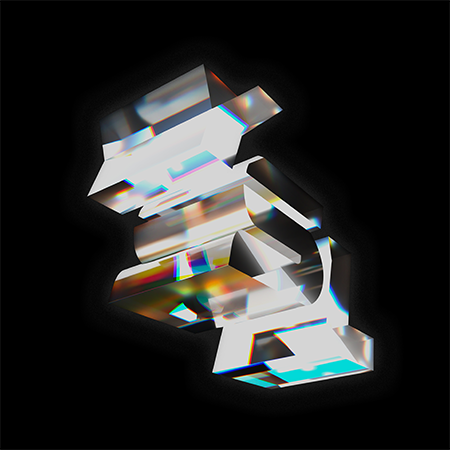
“Pantheon (Radio Edit)” by Yves-$aint-Lambert is an atmosphere, a psychological state, and a ritualistic loop of sound designed to infiltrate the listener’s mind rather than entertain it. From its first moments, the track establishes itself as something hypnotic and unsettling, rooted in repetition rather than progression. Built on a deliberately unresolved and haunting melody, Pantheon refuses catharsis, opting instead for obsession. This is trance nots not the euphoric, hands-in-the-air kind, but the darker, internal kind — the kind that seduces slowly, quietly, and persistently. Yves-$aint-Lambert doesn’t invite the listener into a narrative, but traps them inside a sonic ritual where meaning emerges through immersion rather than structure. The result is a track that feels less like a composition and more like a psychological mechanism, a looping mantra that imprints itself through repetition and atmosphere.
Stylistically, “Pantheon” exists in a fascinating liminal space between genres and eras. You can hear the nonchalant cool of Baxter Dury, the hypnotic groove of Cerrone, and the dramatic tension of Gainsbourg, but none of these influences dominate — they dissolve into something distinctly modern and singular. There’s a raw French Touch rigidity in the mechanical pulse of the rhythm, paired with a more symphonic, cinematic sense of tension-building. The production constructs a dense, layered sound space where each element feels intentionally placed, not for melody’s sake, but for psychological effect. Nothing feels decorative, but functional. The groove is sober, restrained, and relentless — a steady backbone that refuses emotional release, allowing the textures and melody to build an atmosphere that is simultaneously grandiose and disturbing. It feels ceremonial, as if the track is less a song and more a sonic invocation.
What makes “Pantheon” so compelling is its aesthetic of suspension. Yves-$aint-Lambert deliberately avoids traditional structure: no explosive drops, no emotional climax, no narrative arc. Instead, the track embraces stasis — a state of constant tension without release. This creates a strange duality: the music feels both calm and threatening, seductive and toxic, beautiful and poisonous. The melody, described as a “poisonous motif,” functions exactly as that — something that doesn’t resolve, but embeds itself deeper with every repetition. It’s not meant to comfort the listener, but to haunt them. The repetition becomes ritualistic, turning the track into a trance-state experience rather than a linear composition. This is music that doesn’t move forward, but circles, loops, and descends inward.
The radio edit format makes this even more fascinating, because it compresses this ritualistic philosophy into a more accessible frame without diluting its identity. Rather than softening the track’s darkness, the edit sharpens its psychological focus. It becomes more distilled, more concentrated — like a controlled dose of obsession rather than an extended immersion. This makes it uniquely effective both for attentive listening and the club environment. In a club, the track functions as a hypnotic force — not explosive, but controlling. In headphones, it becomes intimate and introspective, a kind of sonic psychological space where tension replaces emotion and repetition replaces narrative. Few tracks manage to operate convincingly in both spaces without compromise; Pantheon does so by refusing to belong fully to either.
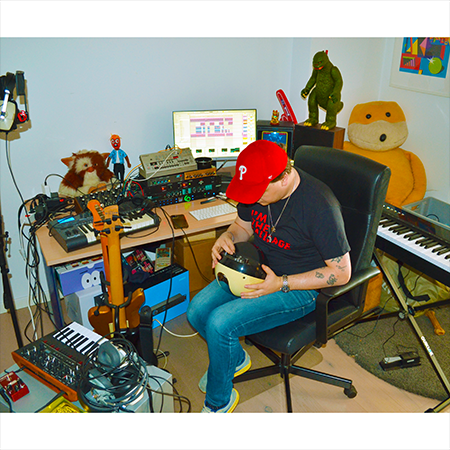
Ultimately, “Pantheon (Radio Edit)” stands as a statement of artistic intent rather than a bid for accessibility. Yves-$aint-Lambert is not interested in comfort, familiarity, or emotional resolution. He is exploring obsession, ritual, ambiguity, and tension — the space between attraction and unease, between light and poison. This is trance as philosophy, electronica as psychological architecture, club music as conceptual art. The track doesn’t try to move you, but tries to hold you. It doesn’t seek your attention — it slowly claims it. In a landscape dominated by instant gratification and predictable structures, Pantheon feels radically patient, deliberate, and dangerous in its restraint. It is music that achieves it through repetition, depth, and atmosphere. Yves-$aint-Lambert constructs a state of mind, and once you’re inside it, the exit is intentionally unclear.
For more information, follow Yves-$aint-Lambert:
WEBSITE – SPOTIFY – YOUTUBE – SOUNDCLOUD – INSTAGRAM