
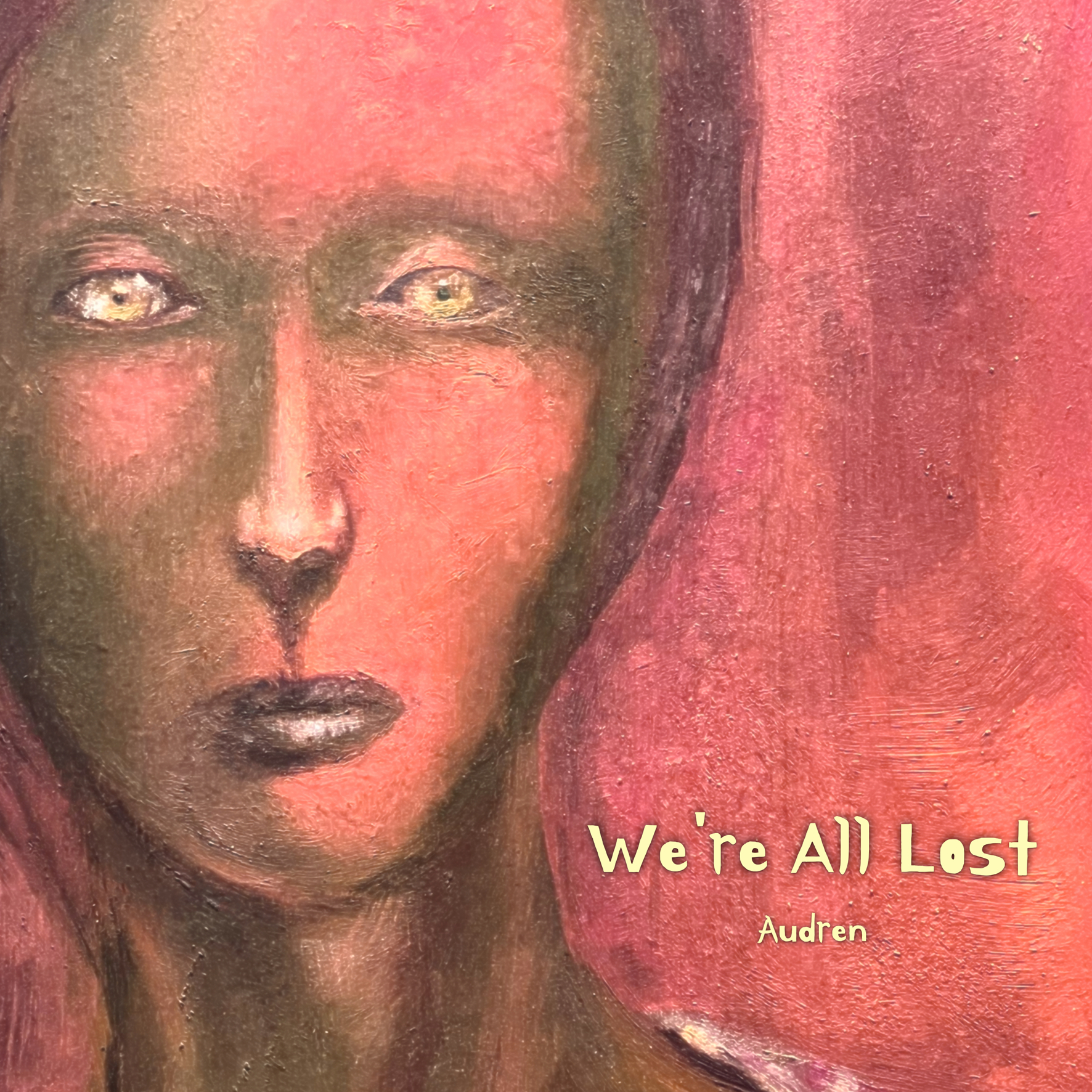
Audren’s “We’re All Lost” arrives as a gentle hand on the shoulder—a quiet, knowing gesture offered in a world that feels increasingly loud, fractured, and hurried. From its very first notes, the track establishes itself as an intimate confession rather than a performance. A solitary piano introduces the song with patience and restraint, allowing space for Audren’s voice to emerge unguarded and human. There is no rush to impress, no immediate crescendo; instead, the song invites the listener to sit still and listen. This approach feels deeply intentional, reflecting Audren’s long-standing resistance to commercial imperatives and her devotion to music as a healing, human exchange rather than a product.
Vocally, Audren carries a rare emotional clarity that feels lived-in rather than performed. Her voice is warm, slightly weathered, and rich with experience, conveying vulnerability without fragility. You can hear the weight of her journey in every phrase—her disappearance from the music world due to illness, her rebirth as a writer, and her resilient return to song. Yet “We’re All Lost” never turns inward to the point of isolation. Instead, Audren uses her personal truth as a gateway to something universal. The lyric “we’re all lost” is not sung with despair, but with recognition, as if she is naming something we already know but are afraid to admit. In doing so, she dissolves the distance between artist and audience, transforming confession into communion.
The arrangement unfolds gradually, mirroring the emotional arc of the song’s message. The piano remains a constant presence, anchoring the track like a steady breath, while the guitar enters as a quiet conversational partner—never dominating, always responding. This instrumental dialogue feels almost therapeutic, like two wise companions offering reassurance through sound. The fretless bass deserves special mention, adding a poetic fluidity that softens the song’s edges and deepens its emotional resonance. Meanwhile, the drums provide a light yet dependable framework, allowing the music to lift without ever losing its grounded intimacy. Each instrument feels chosen not for virtuosity, but for its ability to serve the song’s emotional truth.
As the track progresses, Audren and producer-guitarist Chris Rime’s emphasis on improvisation becomes increasingly evident. Rather than tightening the arrangement toward a predictable pop climax, the music opens outward. The choir and band enter not as a dramatic flourish, but as a collective breath—a shared moment of release. This jazz-infused outro feels like the song’s philosophical resolution, where vulnerability gives way to connection. It’s here that Audren’s intention to heal through music becomes most tangible. The musicians’ freedom translates into a sense of trust, gently guiding the listener toward the idea that safety and meaning are not found in control, but in presence and love.

Lyrically, “We’re All Lost” resonates deeply with the current moment without resorting to slogans or moralising. Audren’s reflections on confusion, fear, and the pressure to pretend everything is fine feel painfully accurate, yet the song refuses to wallow in hopelessness. Instead, it offers a quiet reframing: being lost is not a failure, but a shared human condition. The closing image of “the road of love” is not presented as a grand solution, but as an invitation—one small step at a time. In this way, the song becomes a beacon rather than a sermon, encouraging listeners to soften, to listen, and to remember what truly sustains them.
Ultimately, “We’re All Lost” stands as a testament to Audren’s artistic integrity and spiritual generosity. It is a song made by musicians, for humans—crafted with care, depth, and an unwavering belief in the power of sincerity. In a world obsessed with certainty and speed, Audren offers something far more radical: permission to pause, to admit uncertainty, and to choose love anyway. This is a space to rest, reflect, and heal—and in that sense, it feels profoundly necessary.
For more information, follow Audren:
Website – Facebook – Spotify – YouTube – TikTok