
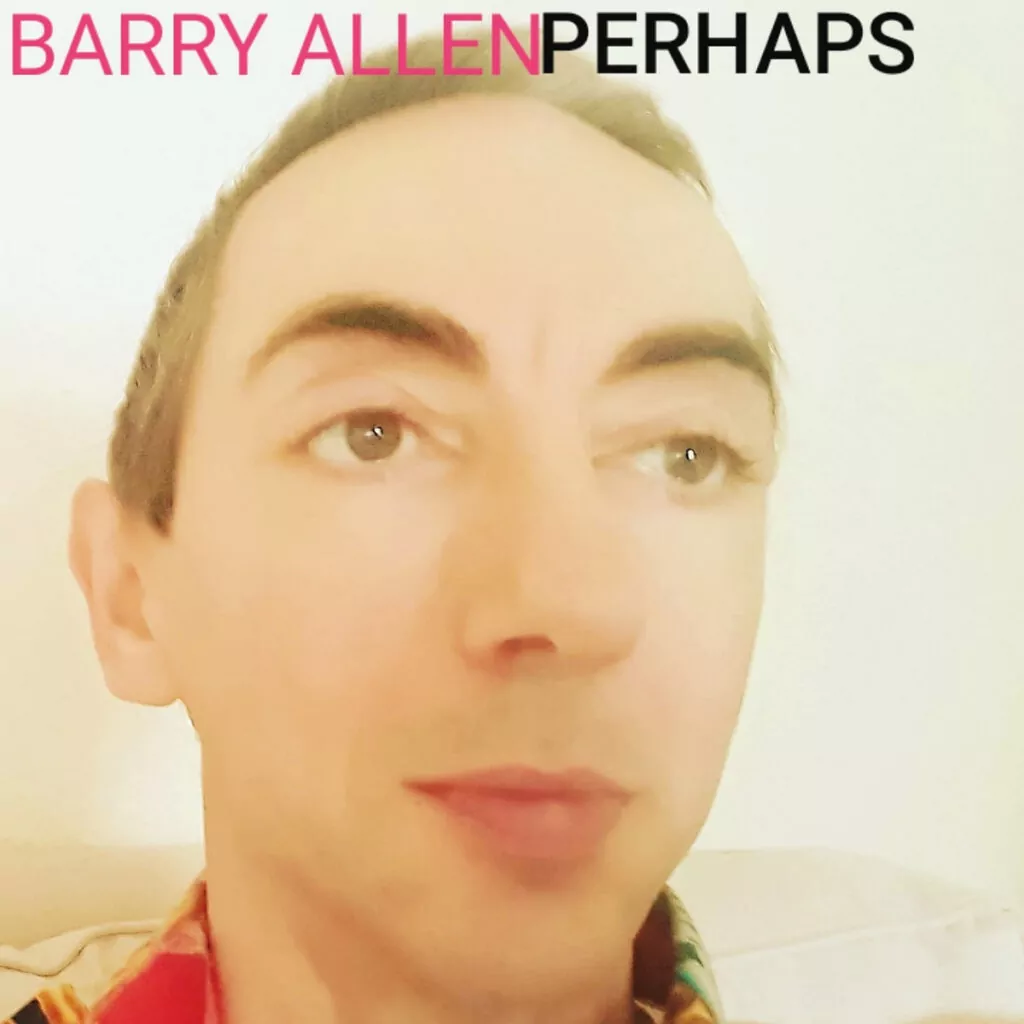
Barry Allen’s Perhaps is an album that unfolds as a quiet conversation held late at night, when the world has slowed enough to let honesty rise to the surface. Released in May 2021, the record stands as a deeply personal document from a singer-songwriter rooted in Streatham Hill, London, whose approach to music favours emotional truth over polish or theatrical excess. From the opening moments, Perhaps establishes itself as an introspective folk album shaped by reflection, vulnerability, and lived experience. It invites patience, asking the listener to sit with its moods, stories, and questions. In doing so, Barry Allen reveals a body of work that feels intimate, searching, and quietly courageous.
At the heart of the album is Allen’s songwriting partnership with producer and classically trained pianist Mike Cliffe, whom he met at the YMCA—an origin story that mirrors the album’s understated humanity. Allen writes his songs on acoustic guitar, and Cliffe helps expand them into fuller arrangements, adding piano, strings, and subtle textures that never overwhelm the core emotion. The production, recorded at Cliffe’s home studio in Chessington, is modest but thoughtful, allowing space for songs to breathe. There is a theatrical quality to some arrangements—almost Broadway-adjacent at times—, but it feels sincere rather than showy. This careful balance gives Perhaps a distinctive character: folk-rooted at its core, but unafraid to borrow from classical, choral, and cinematic traditions.
The album opens with “Stay,” a song born from a period of emotional turbulence during Allen’s mother’s illness. Its gentle guitar strumming and restrained percussion create a fragile foundation for lyrics that linger on presence and devotion: “What would I be doing, if I wasn’t here with you.” Allen’s voice, unmistakably British and unconventional in tone, may initially surprise some listeners, but it quickly becomes one of the album’s defining strengths. There is a vulnerability in his delivery that feels unguarded, even exposed. This emotional candour continues into “Beautiful Thing,” a lilting, melodic track with arpeggiated guitar and piano lines, where longing and acceptance coexist. Lines like “beautiful thing, let me in” capture the album’s recurring plea: to be seen, understood, and allowed to feel deeply.
The title track, “Perhaps,” serves as the album’s thematic centre. Built on a confident rhythmic structure and enriched with floating strings, the song meditates on duality, uncertainty, and the spaces between absolutes. Allen’s lyrics rarely offer firm conclusions; instead, they dwell in ambiguity, reflecting a mind trying to make sense of opposing emotions and experiences. This sense of emotional complexity is heightened in “Secrets,” which opens a cappella before expanding into a cinematic arrangement of keys and strings. Here, Allen explores the weight of unspoken truths, particularly in the context of love and identity. The track’s slow build and ethereal atmosphere reinforce its confessional tone, making it one of the album’s most emotionally resonant moments.
One of the boldest statements on Perhaps is “We’re Here, We’re Queer,” an unapologetic anthem addressing LGBTQI visibility and resilience. Introduced with a delicate piano motif, the song gradually grows in intensity, layering strings, percussion, and guitar as it builds toward its defiant refrain: “We’re here, we’re queer, we’re not going away.” While the arrangement moves at a measured pace, its message is unwavering. Allen approaches the subject not with anger, but with dignity and resolve, framing the song as both a declaration and a demand for recognition. It stands as a reminder that Perhaps is not solely inward-looking; it also engages with broader social realities, filtered through deeply personal expression.
Spiritual reflection plays a significant role in the album’s latter half, particularly on “The Life of Jesus” and “High and Lowly.” These tracks do not feel preachy or doctrinal; instead, they suggest a personal spiritual awakening shaped by curiosity and humility. “The Life of Jesus” blends prayer-like lyrics with gentle instrumentation, inviting contemplation rather than instruction. “High and Lowly” contrasts images of beauty and inequality, shifting between major and minor motifs to underscore its message about overlooked grace and social imbalance. Allen’s faith, like his emotions, is presented as something lived and questioned rather than declared with certainty, reinforcing the album’s overarching tone of introspection.
Songs like “The Two of Us” and “Marvellous” reveal Allen’s softer, more tender side. “The Two of Us” is brief and delicate, built around subtle keyboard textures that feel almost like whispered thoughts. “Marvellous,” with its hymn-like chord structure, leans into romantic vulnerability, offering a gentle pause in the album’s emotional arc. Meanwhile, “Envy” explores possessiveness and comparison with stark honesty, its heavier guitar strumming and steel guitar accents adding a touch of tension. Allen’s lyrics here are disarmingly plain, naming emotions many prefer to disguise. These songs may feel like scenes from a stage musical, but they remain grounded in real, often uncomfortable feelings.

The album’s closing stretch, particularly “No Time to Dance” and “In the Darkness,” reinforces its emotional gravity. “No Time to Dance” reads like a meditation on survival—whether from war, loss, or daily struggles—ending abruptly, as if cut short by reality itself. “In the Darkness,” one of the album’s most affecting tracks, uses imagery of Christmas lights and distant bells to evoke grief, hope, and fragile comfort. Written during a time of personal hardship, the song captures the quiet resilience required to endure loss. The final track, “High and Lowly,” then circles back to gratitude and observation, leaving the listener with a sense of reflective calm rather than resolution.
Ultimately, Perhaps is an album that values sincerity above all else. Barry Allen may not fit the mould of a conventional folk singer, but that is precisely what makes this record compelling. His voice, his stories, and his willingness to confront themes of loss, loneliness, identity, and faith give Perhaps a distinctive emotional weight. Influenced by artists like Joni Mitchell, Roy Orbison, and Kate Bush, Allen channels their spirit of emotional bravery rather than their stylistic signatures. This is an album that does not chase trends or easy answers. Instead, it offers something quieter and rarer: a space to reflect, to feel, and to accept uncertainty as part of being human.
For more information, follow Barry Allen:
FACEBOOK – SOUNDCLOUD – BANDCAMP – WIKIPEDIA